

A practical lens on token user bases in 2025
If you strip away the buzzwords, evaluating a token’s user base and traction boils down to one question: “Are real people actually using this thing, and is that usage growing sustainably?” In 2025, with tens of thousands of tokens across multiple L1s and L2s, you can’t rely on vibes, slick dashboards, or a single bullish tweet. You need a structured, repeatable approach that functions like a crypto token due diligence checklist focused specifically on users and traction.
Over the last decade, we’ve moved from 2013’s handful of Bitcoin forks to a multi-chain ecosystem where a single airdrop campaign can pull in a million wallets. The result: headline numbers—addresses, volumes, “TVL”—are easy to game. The hard part is distinguishing organic, economically meaningful activity from wash trading, bots, and mercenary capital. That’s what this guide is about.
—
From speculative mania to user-centric analysis
Historical context: three waves of user metrics
In rough terms, crypto’s history of “user metrics” has come in three waves.
First wave (2013–2017):
Bitcoin and early Ethereum projects mostly touted addresses and transaction counts. An increase in on‑chain activity, especially during the 2017 ICO boom, was often assumed to equal adoption. There were few standardized analytics tools, and almost no segmentation between retail, institutional, and automated activity.
Second wave (2018–2021):
After the ICO bust, investors got smarter. They started asking how to evaluate crypto project user base quality, not just size. DeFi summer in 2020 made it clear that:
– Liquidity could be mercenary and short-lived
– TVL could spike on the back of unsustainable token incentives
– Transaction counts could be inflated by sybil farms chasing governance tokens
On-chain analytics platforms matured and “on‑chain due diligence” became a norm.
Third wave (2022–2025):
Regulatory scrutiny, multiple market cycles, L2 scaling, and the rise of real-world assets have shifted focus again. Now, serious investors care about:
– Cohort retention (who stays after incentives decline)
– Cross‑protocol behavior (do users interact beyond one farming loop)
– Fee sustainability (is economic activity meaningful or just internal churn)
By 2025, traction analysis is less about raw growth and more about the durability and quality of that growth.
—
Core principles: what “traction” actually means
Beyond vanity metrics
A token’s “user base” is not simply the number of wallets that have ever touched the smart contract. A healthy traction profile usually shows:
– A stable or growing base of returning users
– Increasing integration into other protocols or platforms
– Rising economic throughput relative to token incentives paid out
You can think of traction as the intersection of three vectors:
1. Breadth – how many distinct entities interact
2. Depth – how intensively they use the protocol
3. Persistence – how long they keep using it, and through what market regimes
Any evaluation framework that ignores one of these tends to overrate hype cycles and underrate quiet, sticky growth.
—
Step 1: Define what a “user” means for this token
Before opening a single dashboard, be clear about what “usage” should look like for this specific project. That sounds trivial, but in practice it’s where a lot of analyses go wrong.
– For a payments token, you’re looking for frequent, low‑value transactions across many unique wallets, with growing merchant or app integrations.
– For a DeFi governance token, actual usage is about protocol interactions: borrowing, lending, swaps, liquidity provision, and governance participation.
– For a gaming or NFT-related token, engagement metrics like in‑game actions, session counts, or marketplace trades matter more than bare transfers.
If you don’t map metrics back to a credible usage model, you’ll end up confusing speculative trading volume with genuine product–market fit.
—
Step 2: Start with high-level on-chain activity
Addresses, transactions, and their traps
Wallet addresses are cheap to create. In some campaigns, one motivated user might spin up hundreds of sybil wallets to farm airdrops. So when you see a project boasting “1M+ addresses” in 2025, your first instinct should be to ask how many of those behave like humans, businesses, or real apps.
Still, high-level metrics are a necessary first filter:
– Daily Active Addresses (DAA) interacting with the token or protocol
– Transaction count and value associated with the core contracts
– Token holder distribution: concentration, whales, insiders versus long‑tail holders
The trick is in how you interpret them. Flat DAA over a year in a bear market might be a sign of resilience, not stagnation, especially if the broader chain’s activity has shrunk.
—
Best tools to analyze token on-chain metrics
By 2025, the analytics stack has matured a lot. To keep this practical, focus on categories of tools rather than specific vendors:
– Explorers & block-level data – chain-specific explorers (Etherscan, Solscan equivalents) give you raw detail on holders, transfers, and contracts.
– Query-based analytics – SQL-driven or no-code dashboards that join on‑chain data with protocol-specific labels, letting you build custom retention, cohort, and funnel views.
– Wallet clustering & entity attribution – services that flag exchange wallets, bridges, MEV bots, and known institutional addresses, so you don’t mistake bot swarms for real users.
Most serious investors now use some combination of a crypto investment research platform plus chain-native explorers to cross-check claims. No single dashboard is a source of truth.
—
Step 3: Identify real users vs. inorganic activity
Patterns that signal sybil or inorganic behavior
Once you have the raw numbers, the next filter is behavioral. You’re trying to separate signal from noise:
– Spiky, campaign-driven wallet growth that collapses once an airdrop snapshot passes
– Huge transfer volumes between a small set of addresses, especially if those are unlabeled or recently created
– Short-lived liquidity inflows that vanish as soon as token rewards are tapered
Compare a project’s growth curve to major sentiment events. If 90% of the user base appeared in a single week tied to a marketing push, you should be skeptical about durability.
—
Simple heuristics you can apply quickly
You don’t need to be a quant to catch the worst offenders. When you’re figuring out how to assess traction of new altcoin launches, a few quick checks go a long way:
– Check the share of volume coming from centralized exchanges versus on‑chain usage. Pure CEX speculation often indicates shallow product usage.
– Look at median transaction size, not just average. Extreme outliers can skew averages while most activity is trivial.
– Compare transaction fees paid to token incentives distributed. If users are only there because they’re being paid, that’s not sustainable traction.
These heuristics won’t replace in-depth analysis, but they can help you discard obvious pump‑and‑dump structures early.
—
Step 4: Retention, cohorts, and stickiness
Why retention matters more than acquisition
One-off usage doesn’t build durable value. In Web2 growth teams, retention and cohort analysis are standard; crypto is finally catching up. For a tokenized protocol, a strong user base tends to show:
– New cohorts that stabilize at a non‑zero activity level
– Returning users across multiple market cycles
– Reduced dependence on paid incentives to maintain core metrics
If you only have time for one deep dive in your analysis, do it on retention.
—
How to read cohort charts in a crypto context
When you analyze cohorts in on‑chain dashboards, you want to see:
– Slow decay curves: activity drops from the first month but flattens instead of going to zero.
– Healthy long-tail: cohorts from six–twelve months ago still generate material volume or contract interactions.
– Balanced user mix: whales and power users exist, but they don’t account for 99% of the activity.
If every cohort behaves like a “hit and run” group—appears for an airdrop or yield campaign, then vanishes—the token’s user base is fragile, no matter how big the top-line numbers look.
—
Step 5: Economic quality of usage
Volume vs. value creation
Not all transactions are equal. Moving tokens in circles to farm governance rewards is economically very different from paying fees to access productive loans, hedging tools, or in‑game assets that users actually value.
To judge economic quality, examine:
– Fee revenue and its sources – are users paying to access a real service, or are fees mostly internally rebated via token incentives?
– Token velocity and holding behavior – extreme short‑term flipping suggests purely speculative demand.
– Protocol cash flows relative to token emissions – high emissions with low organic revenue is a red flag for long-term token value.
The goal is to understand whether user activity is likely to persist once “free money” tapers off.
—
Economic sustainability and runway
In practical due diligence, you also care about whether the project can survive long enough for its user base to mature. That involves:
– Treasury health and diversification (stablecoins, majors, not just its own token)
– Burn rate across development, marketing, and liquidity incentives
– Dependence on continued speculative interest to sustain volumes
From an economic standpoint, a smaller protocol with a modest but loyal user base, positive fee coverage, and rational token incentives is often a better bet than a massive ecosystem that burns through treasury to sustain headline growth.
—
Step 6: Ecosystem integration and network effects
Composability as a traction amplifier
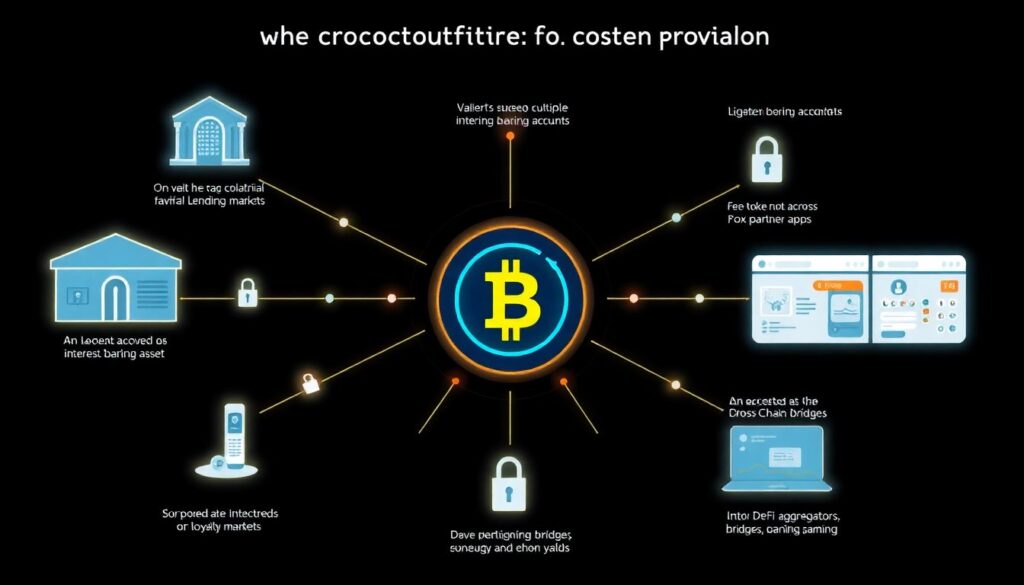
Crypto protocols aren’t islands. The strongest user bases often emerge where a token is embedded into a broader ecosystem:
– Used as collateral in multiple lending markets
– Accepted as a fee token or loyalty asset across partner apps
– Integrated into DeFi aggregators, bridges, or gaming platforms
Ecosystem integration multiplies user touchpoints and reduces single‑app risk. If other protocols are willing to take integration risk on this token, it’s a strong indirect vote of confidence in its traction and staying power.
—
Industry impact and strategic positioning
To understand a token’s long-term traction potential, you need to situate it in industry context:
– Is the protocol part of a sector with structural tailwinds (e.g., real-world assets, infrastructure, L2 scaling, security tooling)?
– Does it address a clear bottleneck (cost, latency, UX, compliance) that will matter more as adoption grows?
– Are regulators, enterprises, or major DeFi ecosystems already aligning around this standard or primitive?
A token with a modest user base today but strong strategic positioning can outgrow a competitor that’s living off short-lived hype. Traction is path-dependent: where the project sits in the industry value chain matters.
—
Bringing it together: a practical mini-checklist
Turn analysis into a repeatable process
If you want something you can apply repeatedly—your own how to evaluate crypto project user base playbook—boil things down to a few key questions:
– Scale & trend
– Are active users, transactions, and volume growing or at least stable across different market regimes?
– How do these metrics compare to peers in the same vertical?
– Quality & authenticity
– Do behavior patterns look human and economically meaningful, or mostly like bots and farmers?
– Is usage diversified across wallets, regions, and counterparties?
– Retention & stickiness
– Do cohorts continue using the protocol after incentives drop?
– Are there clear reasons for users to come back regularly?
– Economic robustness
– Does the protocol generate sustainable fee revenue from real demand?
– Are token incentives additive, or just masking weak organic traction?
– Ecosystem & industry role
– Is the token integrated into other protocols and platforms?
– Does it sit in a segment with credible long-term demand drivers?
Use this as a living document—a crypto token due diligence checklist that evolves as the market and tooling change.
—
Forecasts: how user base evaluation will evolve post-2025
More data, more regulation, higher expectations
Looking forward, several trends are likely to change how we evaluate user bases:
– Richer behavioral analytics: Wallet-level behavior, cross‑chain identities, and privacy‑preserving attribution will make it easier to spot sybils and bots.
– Regulated on‑chain finance: As tokenized securities, RWAs, and regulated DeFi become mainstream, transparent and audited user metrics will become a compliance requirement, not a marketing bullet point.
– Institutional benchmarking: Funds and enterprises will expect standardized KPIs for traction, much like SaaS metrics (ARR, churn, LTV/CAC) in Web2.
Investors asking how to assess traction of new altcoin candidates will increasingly compare those projects against sector benchmarks, not just their own hype.
—
Practical workflow for individual investors
How to act on all of this without a quant team
You don’t need institutional resources to benefit from this framework. A reasonable, individual-level workflow looks like this:
1. Initial screening
– Read the docs and whitepaper to define what “legit usage” should look like.
– Scan an explorer and a crypto investment research platform for holder distribution, DAA, and basic charts.
2. Behavioral sanity check
– Identify major spikes tied to marketing or listings and see if usage persists afterwards.
– Look for obvious wash trading or circular flows around a small cluster of wallets.
3. Economic and ecosystem validation
– Check fee revenues, protocol emissions, and treasury status where available.
– Map integrations: where else is this token used, and by whom?
4. Decision and monitoring
– If a project passes your initial test, size your exposure modestly and monitor key traction metrics over time.
– Be willing to update your view as incentives change and new cohorts come in.
Over time, this habit builds intuition. You move from reacting to narratives to evaluating data-driven user base dynamics.
—
Closing thoughts: traction as a moving target
User base and traction analysis in crypto will never be a finished science. The space evolves too fast, and metric gaming is an arms race. But the direction of travel is clear: from raw counts toward behavioral depth, economic quality, and ecosystem role.
If you combine high‑level stats with skeptical pattern recognition and a clear mental model of what real users *should* be doing with a given token, you’ll be far ahead of most market participants in 2025. Tools will change, chains will rise and fall, but the underlying question—“who uses this and why would they keep using it?”—will remain the most important test any token has to pass.