
Why privacy in crypto wallets is getting harder (and more important)
If you used Bitcoin in 2015, “privacy” mostly meant “don’t reuse addresses and you’re fine.”
Today that’s fantasy.
Exchanges log everything, analytics companies deanonymize on‑chain activity, and regulators push KYC into every corner they can reach. If you just want a simple, secure crypto wallet for privacy focused users, you quickly run into a mess of buzzwords and marketing promises.
Let’s go through how to actually choose a crypto wallet with best privacy features – without getting lost in hype – and compare the main approaches people use in real life.
—
Step 1: Decide what “privacy” actually means for you
Before picking any wallet, be brutally honest with yourself: what exactly are you trying to hide, and from whom?
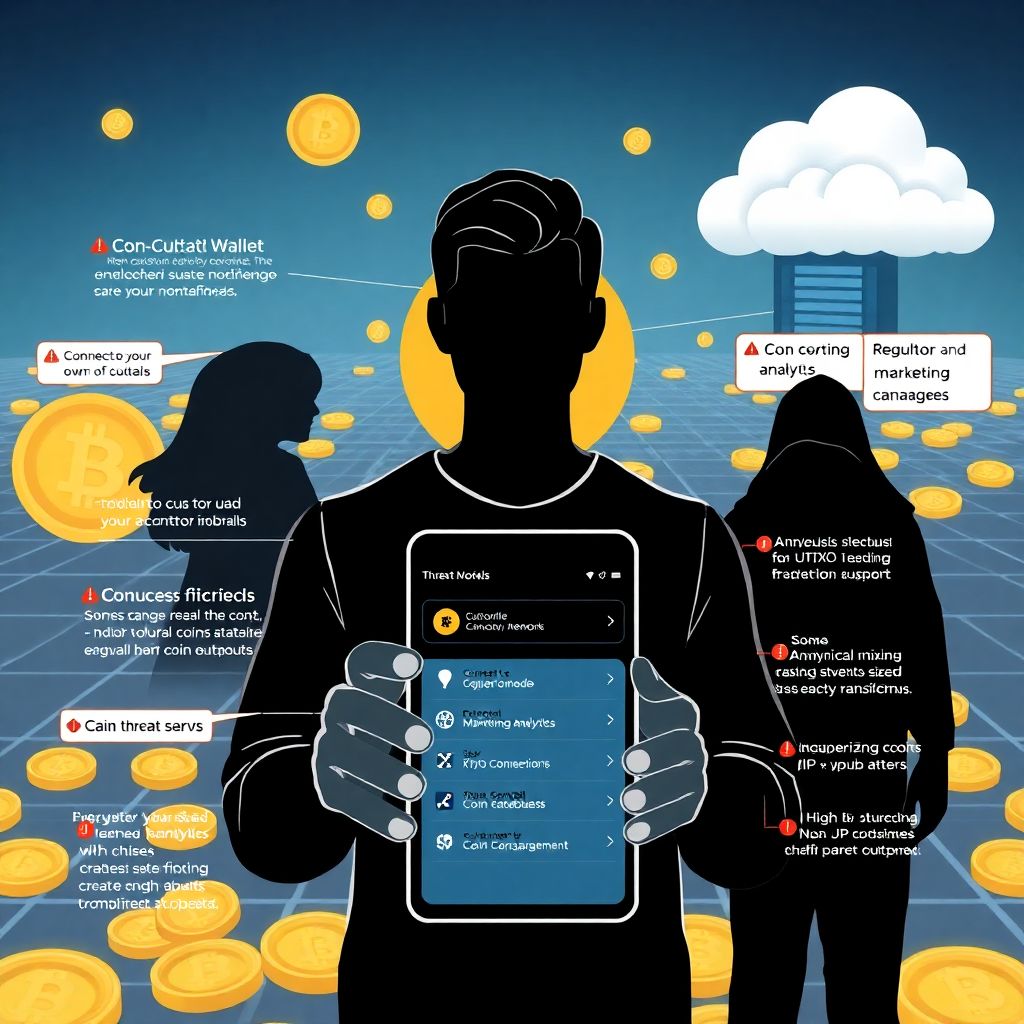
Four common privacy “threat models”
In practice, I see people fall into roughly four groups:
1. Basic curiosity blockers
“I don’t want friends, coworkers, or random people I pay to see my whole balance and transaction history.”
2. Exchange and marketing resistance
“I don’t want exchanges, ad networks, and analytics firms to build a full profile of my holdings and spending.”
3. Regulatory/oversight sensitive
“I want a non KYC bitcoin wallet because I don’t want my identity and all my addresses tied together in some compliance database forever.”
4. High‑risk / high‑value targets
“I’m worried about surveillance combining KYC, IP logs, and on‑chain data to deanonymize me, and maybe even physical coercion.”
The higher you are on that list, the more trade‑offs you’ll accept: more complexity, slower transactions, less convenience, and sometimes higher fees.
—
Step 2: Custodial vs non‑custodial – where privacy starts breaking
Custodial wallets: convenient, but privacy is mostly gone
Anything where “you log in with email” and they hold the keys for you (many exchange wallets, some “cloud wallets”) has three big issues:
– Full KYC in most jurisdictions
– Every move you make is logged under your real name
– They can block, freeze, or disclose your data on request
For privacy, custodial solutions are basically a non‑starter. They might be fine for small trading balances, but they are *not* a private crypto wallet no id verification – they’re the opposite.
Non‑custodial wallets: the minimum requirement
For privacy, you want non‑custodial wallets where:
– You control the seed phrase / private keys
– The app can be deleted or moved without “losing the account”
– You can restore with a 12–24 word phrase or similar
But non‑custodial alone is not enough. Some of these still leak tons of data through servers, analytics, or bad defaults.
—
Step 3: Network-level privacy – how your wallet talks to the blockchain
This is where many “nice looking” wallets quietly fail on privacy.
Centralized servers vs your own node
Most mobile wallets work like this:
– You open the app
– It connects to THEIR server
– It sends your addresses or xpub (extended public key)
– Their server sees your whole wallet history and IP address
From a privacy perspective, that’s almost as bad as a custodian.
Better options:
– Use wallets that can connect to your own full node (e.g., Bitcoin Core, Umbrel, Start9)
– Or use wallets that talk to the network through privacy‑focused protocols (like Tor, or privacy‑preserving light clients)
Real‑world example
A friend of mine was using a popular mobile wallet with a great UI.
Then he spun up his own Bitcoin node and checked logs: the wallet was constantly pinging the vendor’s servers with his public keys. With one subpoena, that company could tie his IP → seed → all transactions. He migrated to a wallet that supports his own node over Tor and stopped that leak entirely.
—
Technical details: how wallets leak data to servers
– Many wallets send your xpub to a remote server, which lets that server derive *all* your addresses and track them forever.
– If this happens over clearnet (not Tor/VPN), the server sees your IP + xpub, which is extremely deanonymizing.
– Even when wallets don’t send xpub, they may request balances for multiple addresses in a pattern that is easy for analytics to cluster.
Look for:
– “Connect to custom node” or “connect to Electrum server”
– Native Tor support or a “Use Tor” toggle
– Clear documentation on whether xpubs are ever sent to third‑party servers
—
Step 4: On‑chain privacy – UTXOs, addresses, and mixing
On‑chain privacy is where you choose between “easy but weak” and “complex but powerful.”
Basic hygiene: the minimum everyone should do
Even if you’re not a hardcore privacy nerd, you should:
– Avoid address reuse – use a new receiving address for each payment
– Not merge coins from different “contexts” (salary, mining, OTC buys) in one big spend
– Avoid sending exact round numbers that are easy to track (“I always pay 0.01 BTC to that service”)
These don’t make you anonymous, but they remove the *most* obvious mistakes.
CoinJoin and collaborative transactions
For Bitcoin, CoinJoin is the main realistic tool if you want a best anonymous crypto wallet experience without going full‑on darknet.
What CoinJoin does (simplified):
– Many users combine their inputs into one transaction
– The transaction then creates many equal‑value outputs
– External observers can’t easily tell which input became which output
Realistically, good CoinJoin rounds can provide a measurable privacy gain. For example, some implementations target anonymity sets of 50–300 outputs per round. With multiple rounds, linkage becomes extremely hard.
Important trade‑offs:
– Fees: your effective fee can be several times a normal transaction
– Time: privacy rounds can take minutes to hours
– UX: you need to understand which coins are “mixed” and which are not
—
Technical details: UTXO management and CoinJoin
– Bitcoin wallets use UTXOs (unspent transaction outputs). Think “individual bills in your wallet,” not “a single account balance.”
– Good privacy wallets show UTXOs separately and let you select which to spend (“coin control”).
– CoinJoin improves the anonymity set: roughly, “how many possible owners could this coin have?” Higher = better.
– Some wallets implement PayJoin or Stonewall-style transactions, which look like normal transactions but actually break common analysis heuristics.
Look for:
– Coin control / UTXO management
– Clear labeling of mixed vs unmixed coins
– Documented CoinJoin or PayJoin implementation with real stats (like average anonymity set, fee ranges)
—
Step 5: KYC vs non‑KYC – separating identity from coins
Buying coins is where a lot of privacy gets destroyed.
Why KYC ruins downstream privacy
Even if you move coins out of an exchange into a nice wallet, the exchange still knows:
– Exactly how much you bought
– When you withdrew
– To which address
– And your full identity (ID, selfie, sometimes even banking data)
This is why many people specifically seek a non kyc bitcoin wallet and non‑KYC acquisition routes: they don’t want their future transactions forever linked to a KYC record.
Non‑KYC acquisition (with realistic expectations)
Ways people get non‑KYC coins in practice:
– Bitcoin ATMs (some allow small amounts with no ID; watch the fees: 7–12% is common)
– Peer‑to‑peer platforms (local meetups, P2P marketplaces)
– Mining or earning directly in Bitcoin or stablecoins
Remember: if you buy non‑KYC coins, then immediately send them to a KYC exchange, you’ve undone most of the benefit.
—
Step 6: Comparing wallet approaches to privacy
Let’s compare the main wallet “types” you’ll encounter.
1. Simple mobile wallet with remote servers
– Pros:
– Easy to use
– Great for beginners and small amounts
– Cons:
– Often send xpubs to central servers
– Usually no CoinJoin, no coin control
– Limited or no Tor support
Use this if: you just need something small and temporary, and your threat model is low.
2. Mobile or desktop wallet with privacy features enabled
Think of wallets that add:
– Tor support
– Coin control
– Some form of CoinJoin/PayJoin
– Option to connect your own node or Electrum server
This is where a crypto wallet with best privacy features starts to be realistic for day‑to‑day use.
Use this if: you care about privacy, but still want a fairly smooth UX.
3. Full-node based setup
You run:
– Your own full node or server (e.g., on a Raspberry Pi or small PC)
– A compatible wallet that connects only to *your* node, ideally over Tor
– Optionally, plugins/services that manage CoinJoin or advanced features
This approach:
– Minimizes data leakage to third parties
– Lets you verify the chain yourself
– Works great for long‑term holdings
Use this if: you’re serious about privacy and okay with some technical work.
4. Hardware wallets in a privacy stack
A hardware wallet alone doesn’t guarantee privacy. Many people plug a hardware device into:
– An exchange’s web interface (terrible for privacy)
– A cloud‑based wallet service (also bad)
But used correctly:
– Hardware wallet + your full node + Tor + good privacy desktop wallet
– Keeps keys offline *and* greatly limits metadata leaks
This often becomes the secure crypto wallet for privacy focused users setup that balances security and privacy for larger amounts.
—
Step 7: What “no ID” really means in practice
A lot of marketing promises “no KYC” or “anonymous,” but you need to check what that really covers.
Private wallet vs private buying method
Two separate components:
1. Wallet stack
– Non‑custodial
– No personal data required to use
– No account, no email, no phone = good sign
– Strong on‑device encryption and PIN/biometrics
2. Acquisition/exit stack
– Non‑KYC exchanges or P2P
– Privacy coins or mixers (depending on your jurisdiction and risk appetite)
– ATM or in‑person deals
A truly private crypto wallet no id verification only covers part (1). Part (2) is where most people unintentionally reveal themselves.
—
Technical details: app telemetry and analytics
Even some non‑custodial wallets:
– Use third‑party analytics SDKs (Firebase, Mixpanel, etc.)
– Log device identifiers, app usage patterns, and sometimes IPs
– Send crash logs that may contain partial data
To reduce leaks:
– Prefer wallets that are open‑source and audited, or at least scrutinized by the community
– Check settings for an “opt‑out of analytics/telemetry” option
– Install from official sources (never random APKs or browser extensions pushed on social media)
—
Step 8: Concrete checklist before you commit to a wallet
When you test a candidate wallet, run through this checklist:
Non‑custodial and minimal data
– Does it give you a seed phrase to back up?
– Does it ask for email, phone, or ID? (major red flag if yes)
– Can you restore on another device *without* logging into an account?
Network and node connectivity
– Can you connect to your own node or custom Electrum server?
– Is there a visible “Use Tor” or proxy/VPN support?
– Do the docs mention anything about sending xpubs to remote servers?
On‑chain privacy tools
– Is coin control available?
– Are privacy tools like CoinJoin/PayJoin or similar documented?
– Does the wallet clearly separate “clean” coins (from non‑KYC or mixed sources) from “tainted” or KYC‑linked coins?
Open‑source and community trust
– Is the code public and actively maintained?
– Do independent reviewers or known privacy advocates use it themselves?
– Does the project have a history of transparent security disclosures?
—
Real‑world scenarios and what actually works
Scenario 1: “I just don’t want my coworkers to see my whole balance”
Goal: keep casual observers and basic blockchain explorers from exposing everything.
Reasonable setup:
– Simple non‑custodial mobile wallet
– Avoid address reuse
– Use separate wallets/“accounts” for salary vs day‑to‑day spending
– Optional: basic coin control when doing larger moves
No need to go extreme, but avoid “login with Google, we hold your coins” apps.
Scenario 2: “I want to stack non‑KYC bitcoin over years”
Goal: build a long‑term position that’s not trivially tied to your legal identity.
Practical setup:
– Acquire via P2P, ATMs with no ID (small weekly amounts), or earning in BTC
– Use a desktop or mobile wallet that can connect to your full node
– Run CoinJoin or similar on the stack periodically
– Store the bulk in a hardware wallet connected to your node
You accept more complexity now for much stronger privacy later.
Scenario 3: “I live in a high‑risk environment”
Here people often:
– Use multiple layers of separation (burner devices, dedicated networks, Tor by default)
– Keep public “decoy” wallets with small, KYC‑linked amounts
– Guard their main stack with both physical and operational security
At this level, “choose the best anonymous crypto wallet” is only one piece of a much larger security model.
—
Putting it all together: how to actually choose
When you stand in front of 15 different apps all claiming “private, secure, non‑custodial,” use this decision flow:
1. Does it hold the keys for you?
– Yes → skip for privacy.
– No → continue.
2. Does it require account, email, or ID?
– Yes → skip; not privacy‑first.
– No → continue.
3. Can it route over Tor or a custom node?
– No → fine for small casual use only.
– Yes → good candidate for serious use.
4. Does it expose coin control and some on‑chain privacy tools?
– No → you’ll be limited, especially for BTC.
– Yes → solid option.
5. Is it open‑source and used by privacy‑minded people you trust?
– No → be cautious, keep amounts small.
– Yes → strong contender.
If a wallet checks all those boxes, you are very close to a realistic crypto wallet with best privacy features for your needs.
—
Final thoughts
Perfect anonymity in crypto is extremely hard and, for most users, overkill.
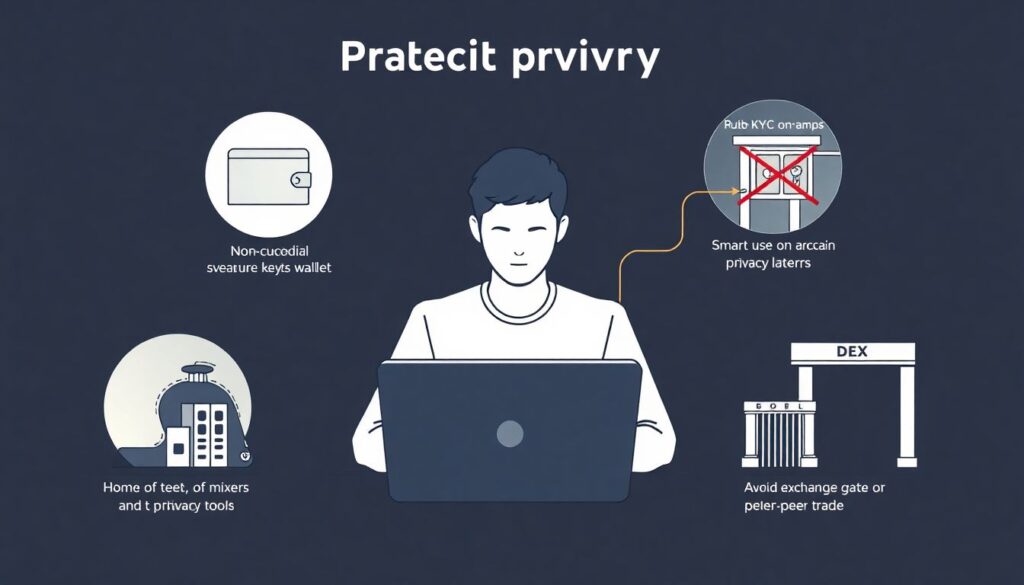
But predictable, robust privacy is absolutely achievable if you:
– Stick to non‑custodial wallets
– Control where your node/data lives
– Use on‑chain privacy tools wisely
– Avoid tying everything back to KYC on‑ramps
The right wallet is not just an app; it’s a set of habits. Combine good software with disciplined usage, and you’ll be far ahead of the average user whose entire financial life is sitting in a single KYC exchange account, one database breach away from total exposure.