
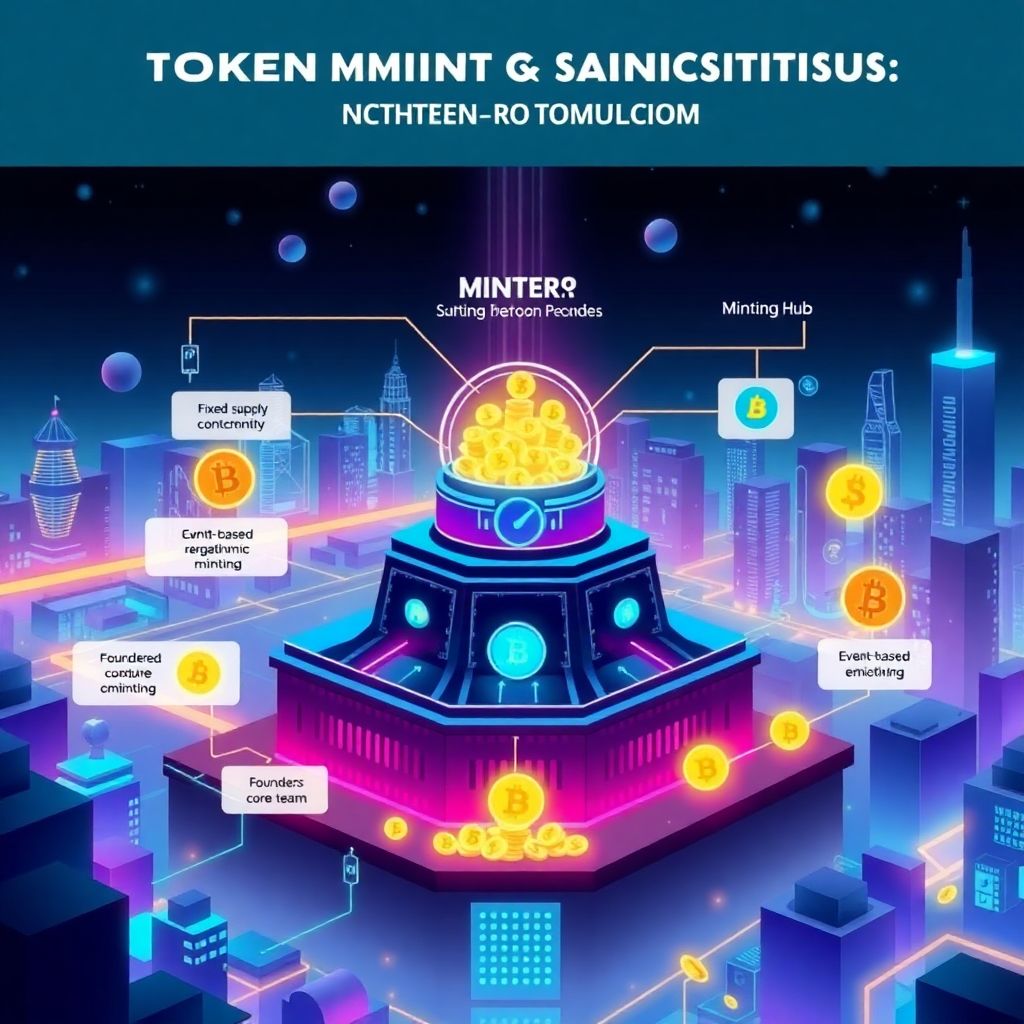
Why token minting and distribution still matter in 2025
If you strip away the buzzwords, token minting and distribution are just two questions:
1) Who can create new tokens, and under what rules?
2) Who gets those tokens, when, and why?
These two mechanisms silently determine power, incentives, and long‑term sustainability in any crypto project. Investors call it “crypto tokenomics,” developers talk about smart contracts and supply curves, but the underlying issue is simple: if you get minting or distribution wrong, everything else breaks, no matter how pretty the UI or ambitious the roadmap.
From Bitcoin mining to programmable minting: a short history
Back in 2009, Bitcoin introduced a very rigid minting model. New coins appeared only as block rewards to miners, with a pre‑defined halving schedule baked into the protocol. No team allocation, no VC rounds, no “community airdrops” — just mining and a capped supply.
As Ethereum went live in 2015, minting became programmable. Instead of one canonical way to issue coins, anyone could deploy a smart contract that defined how to create and mint crypto tokens: fixed supply, capped supply, inflationary, deflationary, or anything in between. ERC‑20 standardised interfaces, not economics. Projects were suddenly free to experiment.
The ICO boom of 2017–2018 took this flexibility and pushed it to extremes. Token minting was often a one‑time event: a contract would create the full supply up front, then allocate tranches to investors, the team, advisors, and a “community pool.” Distribution, however, was often chaotic. Some early ICOs had almost no vesting, leading to instant dumps once tokens hit exchanges.
DeFi’s rise in 2020–2021 brought liquidity mining, yield farming, and a new generation of token distribution strategy for ICO and IDO. Projects began using continuous minting as a way to incentivize liquidity and participation — effectively paying users to bootstrap networks. By 2023–2024, DAOs, L2s, and modular blockchains refined the playbook further: more nuanced emissions curves, better vesting, and governance‑driven updates.
Now, in 2025, token minting and distribution mechanisms are more sophisticated, but the core trade‑offs remain the same: fairness vs. control, predictability vs. flexibility, decentralization vs. coordination.
Key approaches to token minting in 2025
1. Fixed supply minting
This is the “Bitcoin mindset” applied to tokens. The contract mints a predetermined number of tokens, often at deployment, and then disables further minting forever.
This model appeals to investors who like to see a hard cap and a clear maximum dilution. It simplifies analysis and marketing: “Only 100 million tokens will ever exist.” For NFT collections, fixed supply minting is almost the default — a set number of items, no more.
Yet rigidity has a price. If you underestimate future needs — for example, you reserve too few tokens for ecosystem incentives — you may be forced to hack around the constraint with wrapped tokens, upgrades, or migration to a new contract, all of which introduce friction and trust assumptions.
2. Controlled inflation (governable minting)
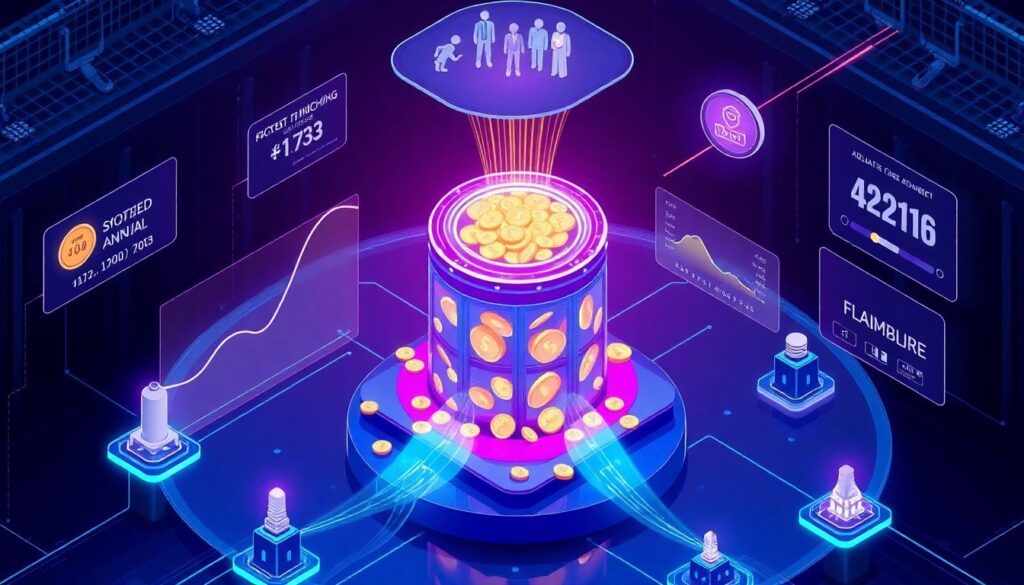
Here, minting is allowed indefinitely, but under specified rules. It might be a fixed annual inflation rate, a decaying emissions curve, or a flexible schedule governed by on‑chain voting.
This is common in DeFi protocols and L1/L2 networks that need a continual incentive for validators, sequencers, or liquidity providers. The idea is to balance token emissions with genuine network growth, so that rewards feel justified rather than purely inflationary.
Governable minting adds adaptability: if market conditions change, the community can vote to slow or speed up emissions. However, it also introduces governance risk — whales or coordinated factions can steer policy, sometimes in ways that prioritize short‑term price action over long‑term sustainability.
3. Event‑based or algorithmic minting
Some projects mint tokens only in response to specific events: reaching usage milestones, burning other tokens, or interacting with external oracles. Others use algorithmic rules tied to system variables like TVL (total value locked), transaction volume, or staking participation.
These designs try to align emissions with real activity rather than abstract timelines. For example, a protocol might mint more rewards when usage is rising and cut back when activity slows, creating a quasi‑automatic “monetary policy.”
The challenge here is complexity. If users can’t understand how supply evolves, trust suffers, and it becomes hard even for experts to model long‑term outcomes.
Distribution models: who actually gets the tokens?
1. Classic ICO/IDO allocations
Even though the hype has cooled, the underlying pattern remains familiar:
1. Team & founders
2. Investors (seed, private, public rounds)
3. Community / ecosystem incentives
4. Treasury / governance reserves
5. Advisors & partnerships
Today, most serious projects pair these buckets with detailed vesting logic baked into smart contracts. A modern token distribution strategy for ICO and IDO tends to limit upfront liquidity to reduce immediate selling, while still providing enough circulating supply for markets to function.
Short paragraphs aside, the big shift since 2017 is transparency: clear cliffs, linear vesting, lockdrops instead of pure giveaways, and on‑chain dashboards showing who has what and when it unlocks.
2. Airdrops and retroactive rewards
Airdrops have evolved from “free money for everyone” to targeted instruments. Protocols often reward users who:
– Provided liquidity or staked over a certain period
– Participated in governance
– Helped test early versions or filed meaningful bug reports
Retroactive distributions are meant to validate early adopters and contributors after the fact, once the protocol has more context on who truly added value. In 2025, many users actively optimize for “airdrop farming,” which forces teams to design anti‑sybil and anti‑gaming measures.
Airdrops can be powerful, but they’re not free: they dilute existing holders and frequently trigger heavy sell pressure if recipients are not genuinely aligned with the project’s future.
3. Liquidity mining and usage‑based incentives

DeFi spun up the idea of distributing tokens directly to those who provide liquidity, stake, borrow, lend, or otherwise use a product. In this model, earning tokens is a side effect of helping the protocol function.
Done well, this type of distribution ties ownership to actual users, and transforms speculators into stakeholders. Done poorly, it turns into mercenary yield chasing where participants farm rewards, dump them, and move on.
The nuance in 2025 is that many protocols now combine short‑term rewards with long‑term locks or boosted multipliers for committed users, trying to filter out pure extraction.
Comparing approaches: central trade‑offs
Decentralization vs. coordination
Fixed rules and immutable caps increase decentralization — nobody can arbitrarily print more tokens. But they also reduce the system’s ability to adapt. Governable minting and flexible distribution bring agility, yet depend on a functioning governance process and a dispersed token base.
For early‑stage projects, a bit of central coordination (via multisig or timelocked admin keys) is often unavoidable if they want to react quickly to problems. The trick is to design an explicit sunset path: clear timelines or conditions under which control is handed over to a DAO or permanently renounced.
Predictability vs. responsiveness
Investors appreciate predictable issuance schedules; they can model dilution, returns, and likely sell pressure. Users and builders, however, sometimes need responsive policy — for example, ramping up incentives during a strategic launch or scaling them down when speculation overheats.
Algorithmic or usage‑linked minting tries to bridge this by encoding responsiveness into transparent formulas. But every extra variable adds cognitive load. In practice, there is a sweet spot where a schedule is simple enough to explain, yet flexible enough not to become a straitjacket.
Fairness vs. capital needs
Community‑first distributions (heavy airdrops, large public sales, small team allocations) look fair and can attract grassroots support. On the other hand, building competitive products often requires serious funding, which means setting aside room for investors and core contributors.
Projects need to be honest about this tension. Over‑allocating to insiders tends to haunt them later in the form of governance mistrust and “VC coin” stigma. Under‑funding the core team risks under‑delivering on the roadmap and eroding all token value.
Pros and cons of popular technologies and patterns
Minting via standard token contracts (ERC‑20, ERC‑721, ERC‑1155)
Using well‑audited standards with minor extensions is still the safest route. It supports easy integration with wallets, DEXs, and analytics, and keeps the surface area for bugs low.
The downside is that “standard” contracts don’t encode your economics. You still need additional logic for vesting, emissions, and distribution, or separate contracts that orchestrate those rules.
Custom minting logic and modular architectures
Some teams implement very custom mechanisms — bonding curves, auction‑based minting, or multi‑asset reward systems. Others go for modular setups where one contract handles issuance, another vesting, another distribution, all coordinated by a protocol‑level manager.
This gives enormous flexibility and can encode sophisticated tokenomics directly on‑chain. Yet complexity is the enemy of security. Every custom line of code is a potential exploit vector, and even when technically sound, complicated systems can be misunderstood by users and investors.
On‑chain governance as a minting controller
In many 2025‑era designs, DAOs can decide how much to mint and where to send new tokens: incentives, grants, buybacks, or treasury. This decentralizes control — at least in theory.
In practice, concentrated token holdings, low voter turnout, and governance fatigue can tilt control toward a small group. Governance‑based minting also introduces latency: even urgent changes must pass through the proposal and voting pipeline, which isn’t ideal in fast‑moving markets.
How to choose a minting and distribution model for your project
Step‑by‑step thinking for founders
1. Clarify your project’s “job” for the token.
Is it mainly a governance token, a utility token, a fee capture asset, or a pure incentive instrument? The clearer this is, the easier it becomes to choose an appropriate supply and distribution model.
2. Map out time horizons.
Ask what the token must achieve in the first 6–18 months versus 3–7 years. Early on, you probably need to attract users, liquidity, and contributors. Later, sustainability and predictable emissions matter more.
3. Estimate real funding needs.
Work backwards from your burn, hiring plans, and runway. Underallocating to the team and treasury is just as dangerous as overallocating. Both extremes lead to misaligned incentives, just in different ways.
4. Stress‑test for worst cases.
Imagine a massive market downturn, or a bug that requires emergency incentives for a migration. Does your model allow the community to respond without compromising core principles?
5. Get external scrutiny.
Independent reviews — from auditors, researchers, or firms that provide crypto tokenomics consulting services — are invaluable. Emotional attachment to your own design can hide blind spots, and specialized reviewers have seen enough failures to recognize repeating patterns.
When to use fixed supply vs. flexible minting
A fixed supply is a good match if your token mostly serves as a store of value or reputation marker, and ongoing operations don’t depend on inflationary rewards. Many governance tokens and social tokens fall into this category.
Flexible minting is a better fit for infrastructure: L1s, L2s, DeFi protocols that must continuously compensate validators, stakers, or LPs. The key is to bound that flexibility: caps on annual inflation, multi‑sig or DAO checks, and clear emergency procedures.
Designing distribution that doesn’t backfire
Think in “stakeholder buckets” rather than arbitrary percentages. For each group — users, builders, investors, public markets — define:
– What behaviour you’re trying to encourage
– Over what time frame
– What form of vesting or unlock pattern supports that behaviour
For example, investors focused on long‑term alignment might accept longer vesting with lower discounts. Active contributors might receive streaming rewards that scale with their on‑chain activity. Airdrops can be sliced into an initial one‑off distribution plus follow‑up rewards tied to continued engagement.
Practical tips for implementation in 2025
Working with token minting infrastructure
Instead of reinventing the wheel, many teams now rely on a specialized token minting service or pre‑audited frameworks. These platforms typically offer:
– Battle‑tested templates for minting, vesting, and distribution
– Admin panels to monitor emissions and unlocks
– Integration hooks for CEX/DEX listings and analytics
The advantage is faster time‑to‑market and reduced technical risk. The trade‑off is less uniqueness and occasional lock‑in to a vendor’s toolkit.
If you go fully custom, prioritize two investments: rigorous audits and well‑written documentation. Without both, you increase the risk of exploits and misunderstandings about how your token actually works.
Smart contracts as the backbone of trust
Because so much depends on correct implementation, smart contract development for token minting and distribution has become a specialized skill set. Engineers need not only Solidity or Move knowledge but also a deep grasp of economic game design.
Bugs in minting logic can be catastrophic — accidental infinite minting, incorrect vesting schedules, or misrouted rewards. Likewise, mis‑implemented distribution contracts can lock up funds or release them ahead of schedule. Formal verification, multiple audits, and extensive testnets are no longer “nice to have” but baseline practice for serious launches.
Don’t forget off‑chain execution
Even the cleanest on‑chain design can be undermined by poor off‑chain behaviour: misleading marketing, opaque OTC deals, or last‑minute changes to allocations. Align your public documentation, legal disclosures, and actual contract logic so that everyone sees and gets the same thing.
In 2025, sophisticated investors routinely diff contract code against public tokenomics docs. Any discrepancy is a red flag and can kill momentum before your token even lists.
Current trends and what’s next (2025 and beyond)
Trend 1: “Earned” tokens over “gifted” tokens
After years of indiscriminate airdrops, projects are gravitating towards earned distributions: smaller initial giveaways, larger long‑term awards tied to measurable contributions. Metrics include protocol usage, off‑chain governance work, development contributions, and even educational outreach verified by attestations.
The goal is to ensure that the people who hold influence actually care about — and contribute to — the protocol.
Trend 2: Multi‑token and multi‑layer designs
Some ecosystems now use multiple tokens: one for governance, one for fees or gas, one for incentives. Others coordinate minting across L1, L2, and app‑chain layers, using shared or mirrored supplies.
These setups allow more granularity but also demand more careful modeling. Misaligned incentives between tokens can split communities or create exploitable arbitrage between layers.
Trend 3: On‑chain reputation and non‑transferable rewards
To combat pure speculation, more teams experiment with soulbound or non‑transferable tokens as part of distribution. For instance, contributors might accumulate reputation points that can’t be sold but affect governance weight, access to special programs, or eligibility for future drops of transferable tokens.
This doesn’t replace conventional tokens but complements them, adding a longer‑term, less liquid layer of recognition and influence.
Trend 4: Professionalization of tokenomics design
Where early projects improvised spreadsheets, many modern teams start with detailed simulations, scenario modeling, and expert reviews. Demand for specialized token architects and independent tokenomics reviewers has led to a broad ecosystem of advisors and firms, far beyond basic legal and technical audits.
This professionalization doesn’t guarantee success, but it reduces obvious pitfalls like misaligned unlocks, unsustainable emissions, or unbounded inflation.
Bringing it all together
By 2025, understanding how to create and mint crypto tokens is no longer a purely technical question. It’s a cross‑disciplinary exercise that blends economics, game theory, software engineering, regulation, and community building.
Minting defines the rules of supply. Distribution defines the initial configuration of power and incentives. Together, they shape how your project will evolve under market pressure — whether it tilts toward speculation and extractive behaviour, or toward durable collaboration and real usage.
If you’re designing a new token, start from first principles: what behaviour do you want, who needs to be empowered, and how should control evolve over time? From there, choose minting and distribution mechanisms that are simple enough to explain, robust enough to handle stress, and transparent enough to be trusted.
Get the mechanisms right, and your token becomes an instrument for coordination. Get them wrong, and no amount of marketing or rebranding will fix the structural imbalance you’ve encoded on‑chain.