
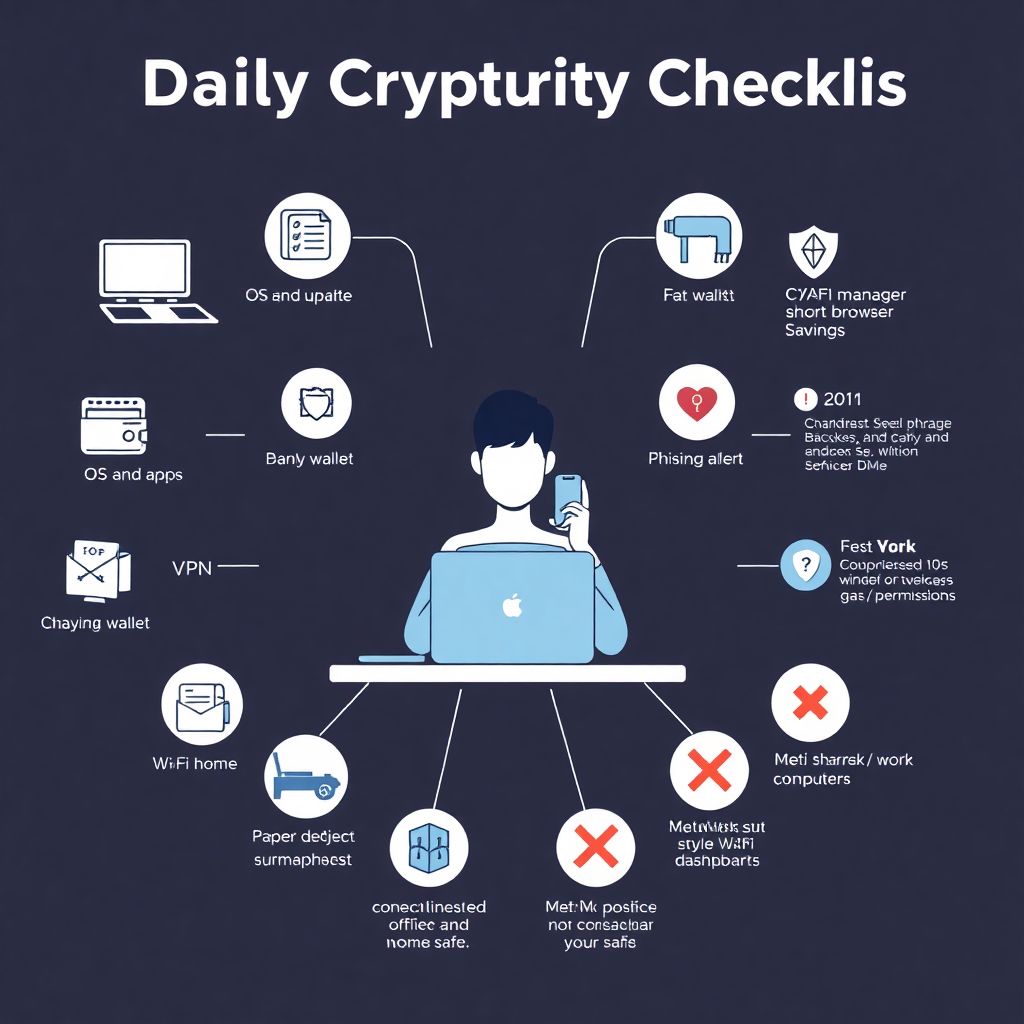
Why a daily security checklist matters
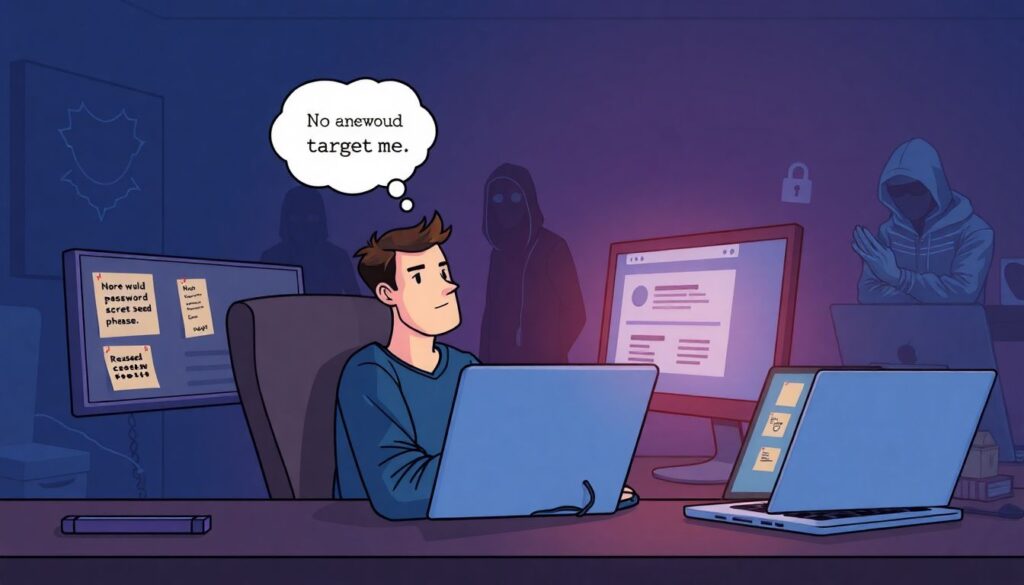
If you think you’re “too small” to be hacked, you’re exactly the kind of target attackers love. Most real‑world crypto thefts I’ve seen weren’t Hollywood‑style exchange hacks, but tiny mistakes: reused passwords, screenshots of seed phrases, or wallets left unlocked on a shared laptop. A simple daily checklist turns protection into routine, not paranoia. Instead of memorizing every exploit, you just verify 15 habits each day and drastically cut your risk, even if you’re new and still googling how to keep your crypto safe from hackers.
Habit 1–3: Device hygiene, updates and app minimalism
Your phone and laptop are the front door to your coins. In one case, a trader lost $12k after postponing OS updates for months; a known browser vulnerability let malware inject a fake MetaMask window. Make it a habit: check that OS, browser and wallet extensions are up to date, and uninstall unused crypto apps. Fewer apps mean fewer attack surfaces, especially for those seeking crypto security tips for beginners who haven’t built strong instincts yet and rely heavily on default settings.
Habit 4–5: Strong auth and password discipline
Every morning, confirm that 2FA still works on your main email, exchanges and DeFi dashboards. Prefer app‑based codes or hardware keys, never SMS. A common failure: storing exchange passwords in browser autofill; one targeted phishing extension read them all and drained multiple accounts. Use a reputable password manager and a unique master password you don’t type on shared devices. When thinking about the best ways to protect cryptocurrency from hacking, solid authentication beats any fancy on‑chain trick and costs only a few minutes to maintain.
Habit 6–7: Wallet segmentation and cold storage
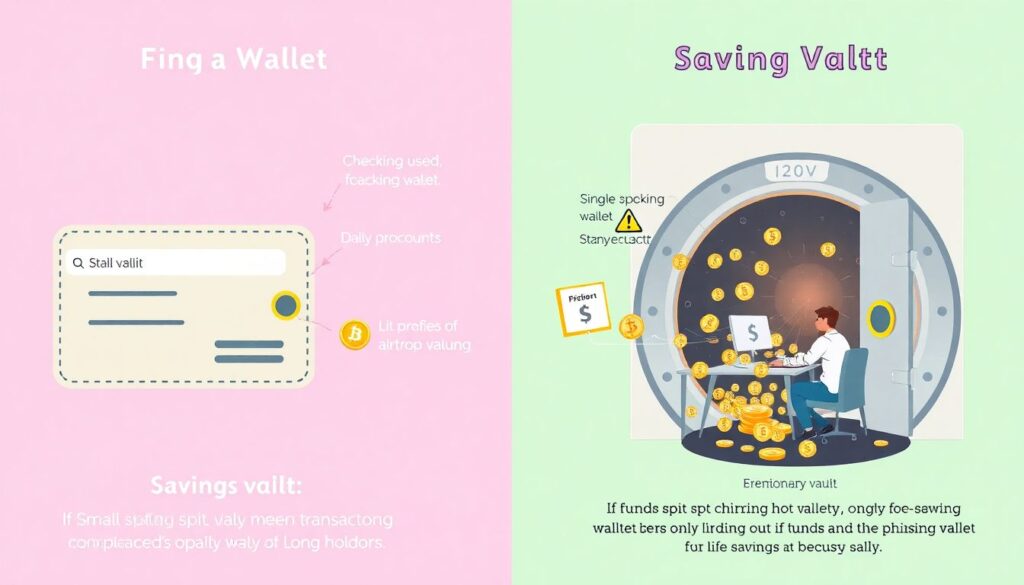
Treat your wallets like bank accounts: a “checking” wallet for daily use, a “savings” vault for long‑term holds. A client who kept everything in a single hot wallet clicked a malicious airdrop link and lost his life savings in one transaction. If he had split funds, he would have lost only his spending stash. Use a hardware wallet to protect crypto from hackers for the vault part; interact with dApps via that device only when absolutely necessary and verify every address on the physical screen before confirming.
Daily quick checks you can automate in your mind
Build a 60‑second morning ritual:
– Confirm VPN or trusted network before opening any wallet
– Open password manager, not a browser, to reach exchanges
– Glance at installed browser extensions and wallets
Later, before any on‑chain transaction, repeat another micro‑checklist:
– Verify contract and recipient address from multiple sources
– Re‑read gas and permission prompts
– Abort if anything feels rushed or “too good to be true”
This rhythm becomes second nature and quietly reduces human error across your entire stack.
Habit 8–9: Phishing radar and communication hygiene
Most people are not “hacked”; they are convinced to unlock the door themselves. One DeFi user I interviewed lost funds after support “staff” on Telegram shared a screen and asked him to reveal seed words “to resync.” Your daily routine should include ignoring unsolicited DMs about bonuses, airdrops or urgent KYC. Type URLs manually or use bookmarks; never follow wallet‑related links from email, Discord or X posts. Over time, you’ll spot language patterns scammers reuse: urgency, exclusivity and fake authority.
Habit 10–11: Backup discipline and recovery drills
Backups save you from both hackers and your own clumsiness. Write seed phrases on paper or metal, never in cloud notes or screenshots, and store them in at least two separate physical locations. One small business recovered from a house fire because they had a second metal backup in an office safe. At least monthly, do a dry run: can you restore a test wallet from backup without guessing? Knowing how to secure bitcoin and crypto wallet also means knowing how to restore it calmly under pressure.
Habit 12–13: Network choices and public devices
Wi‑Fi is often the weakest link. Avoid logging into wallets on public networks in cafés, airports or co‑working spaces. If you must, use a trusted VPN and never approve large transfers outside your home or office. Similarly, refuse to access any wallet from shared or work computers; corporate monitoring tools sometimes capture screenshots and keystrokes. In one real case, an employee’s “side” trading activity on a monitored laptop leaked his seed through recorded clipboard history, giving an opportunistic admin full access to funds.
Habit 14–15: Position sizing and behavioral rules
Security isn’t just tech; it’s also how you behave under stress. Define hard caps: a maximum amount in any hot wallet, a maximum per single transaction, and a cool‑off period before moving large sums. One investor avoided a rug pull simply because his rule was “never more than 5% of net worth into a new contract on day one.” These personal guardrails silently enforce the best ways to protect cryptocurrency from hacking fallout by ensuring that even if you slip once, the damage remains survivable.
Choosing tools, staying current and realistic trends for 2025
When picking wallets and services, favor battle‑tested products with open security reports, active communities and clear documentation. Avoid obscure forks promising magic yields. In 2025 we’ll likely see more wallet‑draining malware specifically tuned to crypto, along with smarter social‑engineering attacks using AI‑generated voices of “support reps.” The core defense, though, remains boring: segmented wallets, hardware devices, skeptical clicking and repeatable routines. If you internalize this daily checklist, you don’t need to be an expert to apply how to keep your crypto safe from hackers in practice.