

Understanding Cloud-Based Crypto Wallets in 2025
As of 2025, cloud-based crypto wallets have evolved significantly from their early implementations in the late 2010s. These digital wallets store private keys online, allowing users to manage their cryptocurrencies through internet-connected platforms. Unlike cold wallets that remain offline for maximum security, cloud wallets prioritize convenience and accessibility. However, this ease of access also raises substantial concerns about security and backup integrity.
A cloud-based crypto wallet typically consists of encrypted private keys hosted on cloud infrastructure managed either by third-party providers (like custodians) or through user-controlled decentralized services. The rise of decentralized finance (DeFi) and non-custodial platforms has shifted focus towards hybrid solutions that combine self-custody with cloud-based redundancy. This evolution reflects a growing need to balance user control with disaster recovery mechanisms.
Historical Context: Lessons from Past Incidents
The importance of securing cloud wallets became apparent after notable breaches in the early 2020s. One infamous case was the 2022 attack on a major exchange-linked wallet service, where compromised API keys and inadequate two-factor authentication (2FA) exposed millions in digital assets. Earlier incidents, like the 2014 Mt. Gox collapse and 2016 Bitfinex hack, predominantly involved centralized storage, but they laid the foundation for future wallet design, highlighting the dangers of poor key management.
As blockchain adoption surged through 2023–2025, governments, enterprises, and individuals increasingly relied on cloud wallets. Regulatory frameworks such as MiCA (Markets in Crypto-Assets Regulation) in the EU began mandating minimum security standards, pushing wallet developers to integrate encryption, multifactor authentication, and regular security audits.
Key Components of Secure Cloud-Based Wallets
Securing a cloud-based wallet involves fortifying multiple layers, from the device interface to the cloud infrastructure. A well-designed wallet incorporates several core components:
– End-to-End Encryption: All sensitive data, particularly private keys, should be encrypted on the client side before transmission to the cloud, ensuring that even the hosting service cannot decrypt the content.
– Multifactor Authentication (MFA): Combining biometrics, hardware tokens (like YubiKey), and time-based one-time passwords (TOTP) greatly reduces the risk of unauthorized access.
– Zero-Knowledge Architecture: Wallets should adopt a model where the provider has no access to user credentials or keys, enhancing privacy and reducing liability.
These components offer defense in depth, minimizing the attack surface whether threats originate from compromised endpoints, network intercepts, or cloud misconfigurations.
Backup Strategies for Cloud Wallets
Proper backup solutions are essential to prevent irreversible loss of funds. Since private keys grant full control over blockchain assets, their integrity and retrievability are paramount. In 2025, state-of-the-art backup systems include:
– Shamir’s Secret Sharing (SSS): A cryptographic method where a private key is split into multiple parts and distributed across different storage environments or trusted individuals. Only a subset of these parts is required to reconstruct the original key.
– Encrypted Cloud Redundancy: Users can store encrypted key backups across multiple cloud providers (e.g., AWS, Google Cloud, and decentralized storage like IPFS), minimizing dependency on a single service.
– Social Recovery Mechanisms: Leveraging trusted contacts or smart contracts to restore wallet access in case of device loss or incapacitation.
Each approach has trade-offs in complexity, cost, and trust. SSS and decentralized redundancy offer higher resilience but require technical knowledge, while social recovery is more user-friendly but less secure if not implemented carefully.
Visualizing Security Layers (Descriptive Diagram)
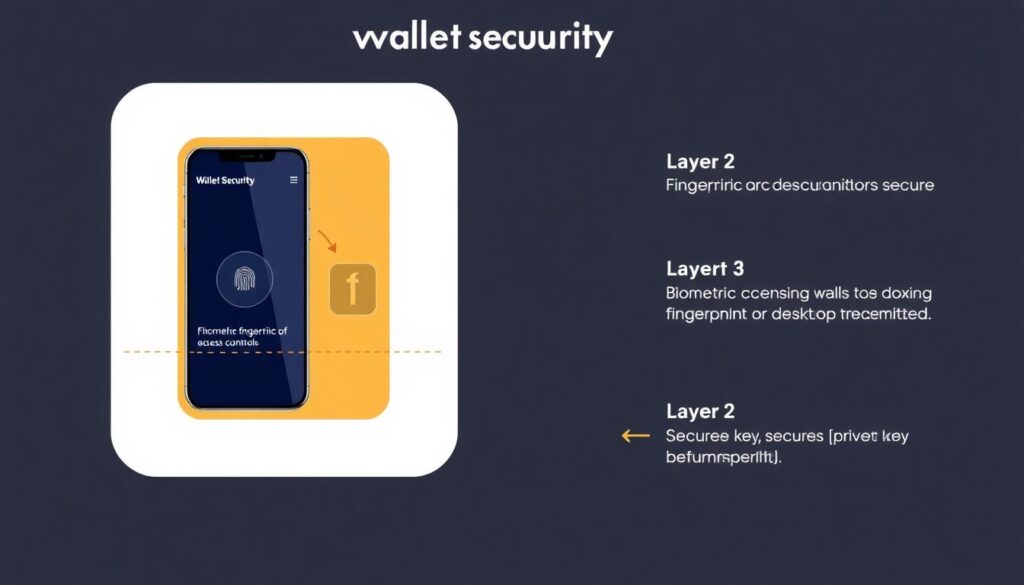
Imagine a three-layer model representing wallet security:
1. Layer 1 – User Interface: This is the wallet application (mobile or desktop) where the user initiates transactions. Securing this involves biometric access controls and OS-level sandboxing.
2. Layer 2 – Local Processing: Before any key leaves the device, encryption is applied here. Encrypted keys are never exposed in plaintext.
3. Layer 3 – Cloud Storage: Keys or recovery phrases are stored encrypted, with access controls tied to MFA and session management.
This vertical security stack ensures that a breach in one layer does not compromise the entire system, enforcing compartmentalization and minimal trust.
Comparing Cloud Wallets to Alternatives
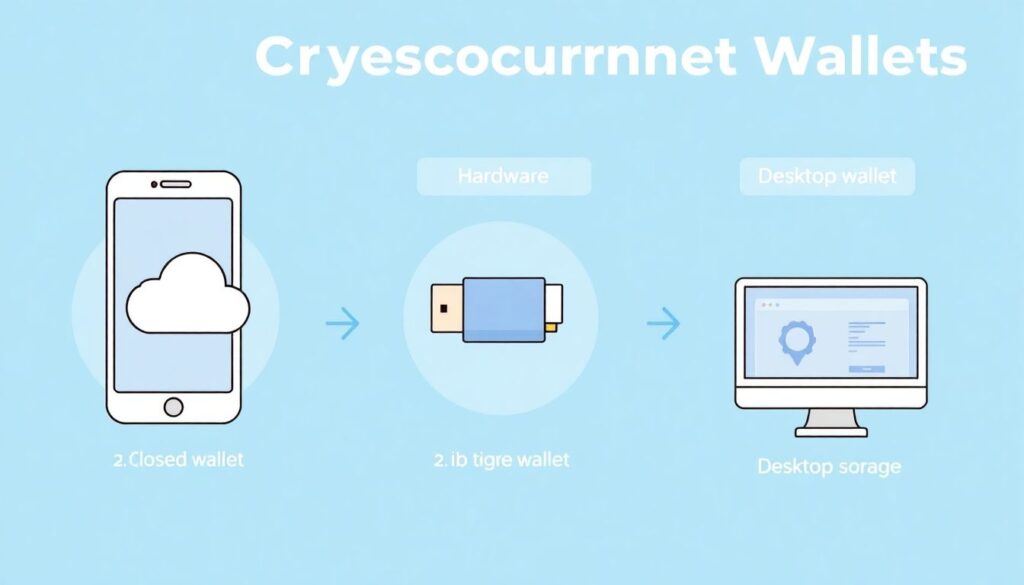
Cloud-based wallets are often compared to:
– Hardware wallets: These offline devices (e.g., Ledger, Trezor) are considered highly secure against remote attacks but lack accessibility and fall short in backup convenience.
– Desktop wallets: Installed on local machines, these offer better user control but are vulnerable to malware and require manual backups.
– Mobile wallets: Highly accessible, especially in emerging markets, but can be compromised if the device is jailbroken or lacks biometric protection.
Cloud wallets offer the best blend of accessibility and backup automation but require strict adherence to security protocols to match the security levels of hardware solutions.
Actionable Steps to Secure Your Cloud Wallet
To effectively secure your cloud-based crypto wallet in 2025, follow these best practices:
– Use wallets with open-source, audited codebases and support for client-side encryption.
– Enable multifactor authentication using physical security keys rather than SMS or email.
– Implement a backup strategy combining SSS and geographic redundancy across cloud services.
– Regularly review wallet access logs and revoke unused device sessions.
It’s also advisable to periodically simulate recovery drills to ensure backups are functional and accessible.
Conclusion: Building Resilient Wallet Systems
As digital assets gain mainstream adoption, safeguarding cloud-based wallets is no longer optional—it is a necessity. The convergence of cryptographic innovation, regulatory pressure, and user demand is shaping a new generation of secure, resilient wallet systems in 2025. By adopting layered defenses, diversifying backup strategies, and staying informed, users can confidently navigate the decentralized financial landscape without compromising control or security.