
Understanding the Power of On-Chain Data in 2025
By 2025, the landscape of digital asset investment has matured significantly. Institutional adoption has surged, and retail investors are now more data-driven than ever. One of the most transformative tools in this evolution has been the use of on-chain data — transparent, immutable, and real-time information recorded directly on blockchain networks. Unlike traditional financial markets, where access to insider metrics is often limited, blockchain offers a level playing field. Every transaction, wallet interaction, and contract deployment is publicly accessible, enabling investors to validate hypotheses with empirical evidence rather than speculation.
The origins of on-chain analysis trace back to early Bitcoin explorers in the 2010s, but it wasn’t until the DeFi boom of 2020–2021 that the practice gained widespread traction. By 2023, platforms like Dune Analytics, Nansen, Glassnode, and Arkham Intelligence had become indispensable tools for analysts. Today, in 2025, on-chain data is no longer a niche utility — it’s a prerequisite for serious investment strategies in the crypto economy.
Inspirational Use Cases: When On-Chain Data Made the Difference
Consider the meteoric rise of Lido Finance between 2021 and 2023. While many dismissed liquid staking as a temporary trend, early on-chain data revealed a consistent increase in ETH deposits, a growing number of unique wallets interacting with the protocol, and increasing governance participation. These metrics foretold Lido’s dominance in Ethereum staking long before it became mainstream. Investors who interpreted these signals early secured significant returns.
Another compelling case is the discovery of Friend.tech in mid-2023. On-chain sleuths noticed an unusual spike in Base network activity, with thousands of new wallets interacting with a previously unknown smart contract. This behavioral anomaly led to the identification of Friend.tech before its social token model exploded in popularity. These examples highlight how on-chain data can serve as a predictive tool, surfacing opportunities before they’re priced in by the broader market.
Developing On-Chain Literacy: From Raw Data to Investment Thesis
To effectively use on-chain data, investors must cultivate a multi-disciplinary skill set. First, understanding blockchain architecture is essential — knowing how Ethereum, Solana, or Layer 2 solutions structure transactions helps interpret raw data meaningfully. Next, proficiency in analytics platforms like Dune or Flipside Crypto allows users to write SQL queries that surface custom insights, such as token velocity, wallet cohort behavior, or protocol TVL fluctuations.
Beyond technical skills, critical thinking is vital. For instance, a spike in token transfers might suggest adoption — or it might indicate wash trading. Similarly, a surge in active addresses could stem from bot activity rather than organic growth. Interpreting these signals requires context, domain knowledge, and skepticism. Investors must triangulate on-chain data with off-chain narratives, such as community sentiment, governance proposals, and macroeconomic conditions.
Key Metrics That Validate Investment Ideas
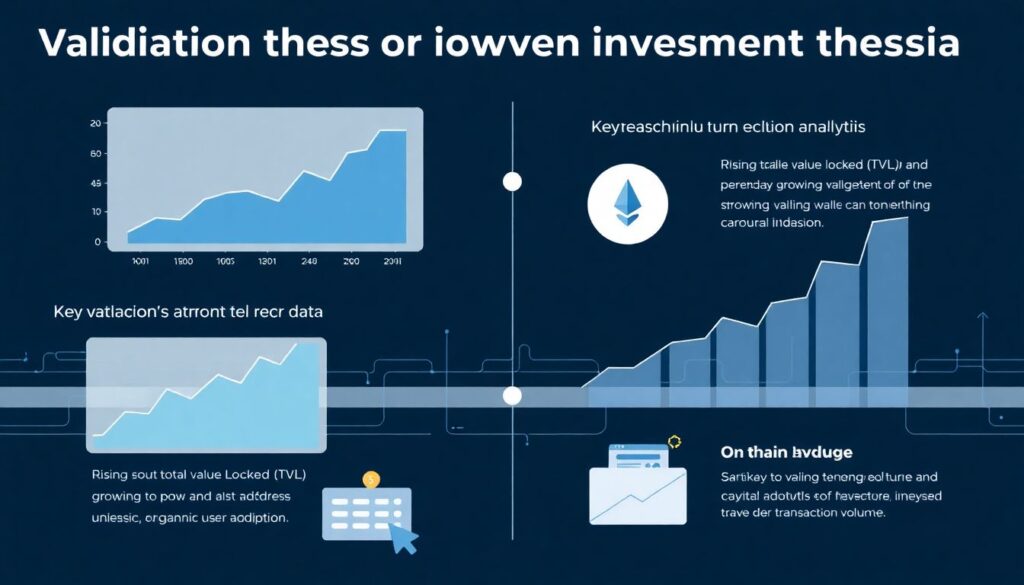
Validating an investment thesis through on-chain data involves tracking specific indicators:
– Total Value Locked (TVL): A rising TVL often reflects increasing trust and capital allocation to a protocol.
– Unique Wallet Growth: A steady increase in unique users suggests organic adoption.
– Transaction Volume and Frequency: High throughput may indicate real usage, especially when correlated with gas fees and contract calls.
– Token Distribution: Analyzing wallet concentration can reveal whether a token is decentralized or dominated by whales.
– Developer Activity: GitHub commits and smart contract deployments can be cross-referenced with on-chain deployments to gauge innovation velocity.
Each of these metrics, when contextualized properly, can confirm or challenge an investment hypothesis.
Success Stories: Projects That Signaled Early Through the Chain
The ascent of EigenLayer in 2024 serves as a textbook example of how on-chain data can validate a narrative. Before mainstream media covered its restaking model, early adopters noticed a steady inflow of ETH and consistent contract interactions. These patterns, coupled with GitHub activity and governance proposals, indicated a serious and committed developer team. Investors who acted on this data outperformed the market significantly.
Similarly, the rise of Celestia as a modular blockchain was preceded by a sharp increase in validator registration and token bridging activity from Cosmos and Ethereum. These on-chain breadcrumbs, when analyzed in real-time, provided early confirmation of growing momentum — long before centralized exchanges listed the token or influencers took notice.
Learning Resources for On-Chain Analysis Mastery
To build fluency in on-chain analytics, aspiring investors should leverage both structured platforms and community-driven resources. Recommended platforms include:
– Dune Analytics: Offers SQL-based dashboards for custom queries.
– Nansen: Provides wallet labeling and behavioral analytics.
– Glassnode: Specializes in Bitcoin and Ethereum macro indicators.
– Arkham Intelligence: Focuses on entity-level tracking and forensic analysis.
For education, communities like the Messari Hub, Bankless DAO, and The Graph Advocates provide tutorials, mentorship, and access to real-time data. Additionally, courses from platforms like Chainshot or Encode Club help bridge the gap between blockchain development and data analytics.
Conclusion: The Future Belongs to Data-Literate Investors
In 2025, the ability to decode on-chain data is no longer optional — it’s a core competency. As the crypto ecosystem becomes more complex and capital flows more dynamic, investors who can interpret blockchain signals with precision will consistently outperform their peers. On-chain data offers transparency, speed, and granularity that traditional finance can’t match. But it also demands rigor, context, and continuous learning.
The next generation of alpha will not come from hearsay or hype. It will emerge from dashboards, data streams, and decentralized ledgers. To validate your investment ideas in this new paradigm, look past the headlines and into the chain itself — because the truth is always on-chain.