
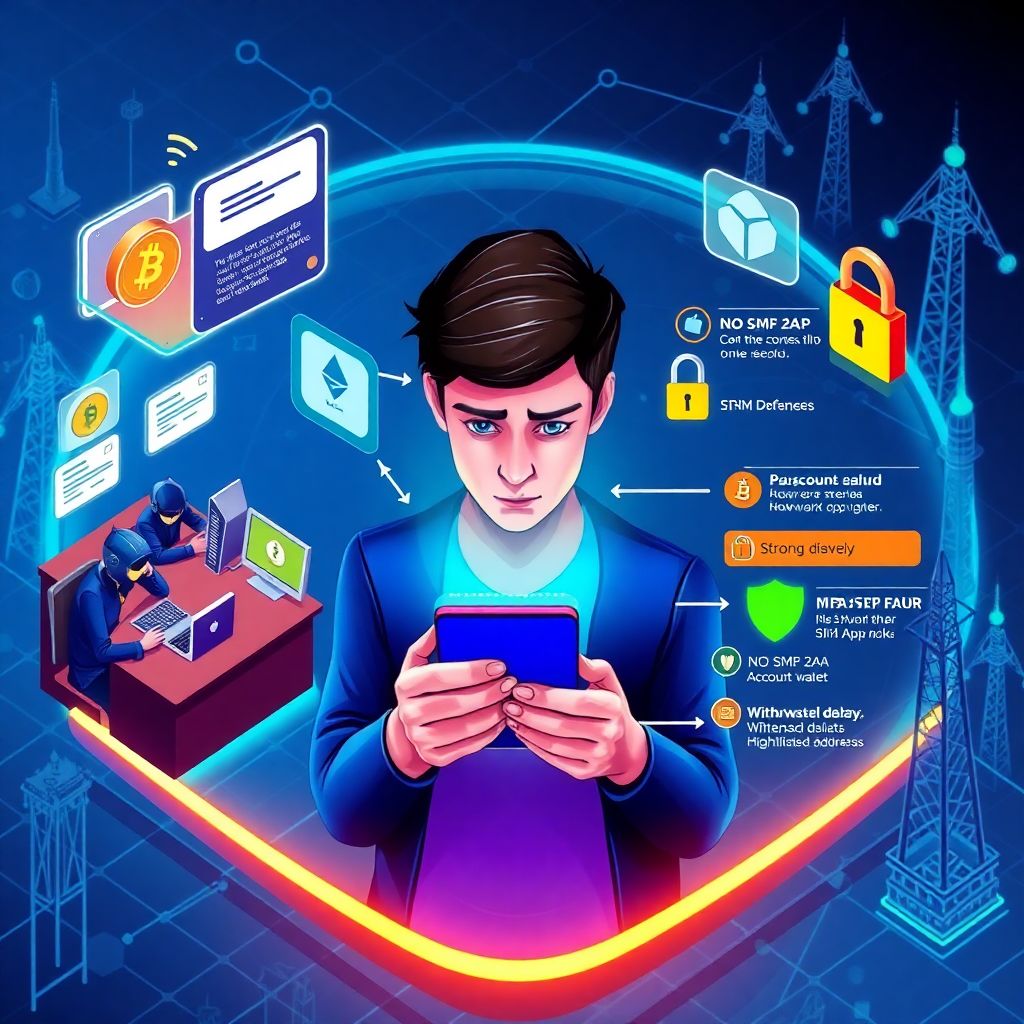
If you hold crypto, you’re automatically on the radar of SIM‑swappers, even if your portfolio isn’t huge. These attackers don’t bother guessing your seed phrase; instead, they convince your mobile carrier to move your phone number to a SIM card they control, intercept SMS and calls, reset exchange logins and drain wallets. Over the last three years SIM swapping has shifted from “weird hacker niche” to a mainstream fraud channel, so treating your phone number like a private key is no longer paranoia, it’s basic hygiene.
What the numbers say: SIM‑swap stats 2022–2024
Public data is patchy, but the trend is clear. Law‑enforcement and telecom regulators in the US and EU report that SIM‑swap complaints have grown by double‑digit percentages every year since 2022, with crypto mentioned in a large chunk of high‑value cases. Industry analysts estimate that global losses tied to SIM‑swap‑enabled crypto theft have been in the low single‑digit billions of dollars over 2022–2024, with average reported tickets ranging from a few thousand to several hundred thousand per victim. And that’s just what people admit to authorities; many smaller incidents never make it into any report.
Why SIM swapping hits crypto users so hard
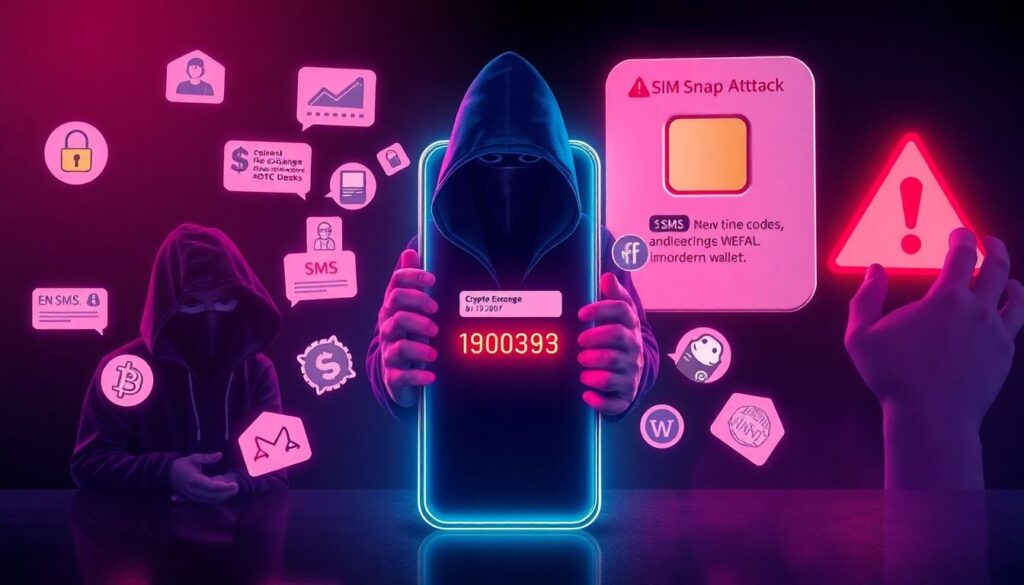
Think about how many crypto services still lean on SMS: exchanges, OTC desks, even some “modern” wallets. For an attacker, your phone number becomes a skeleton key to reset passwords, bypass weak 2FA and capture one‑time codes. A classic story: someone posts about a new NFT win, a SIM swap happens the same week, and within hours their exchange account is hijacked, wallets connected to that email are reset, and coins vanish through mixers. That’s why sim swap protection for crypto wallets is ultimately about cutting any link between your number and critical access paths.
How the attack works in practice
The playbook is fairly simple but brutally effective. First, attackers gather data from leaks, social media and phishing: full name, phone number, maybe last digits of an ID. Then they call or chat with your carrier, pretending to be you, and push for a “legit” SIM replacement, sometimes bribing an insider. Once your number is moved, your phone drops off the network while theirs lights up with your calls and texts. From there they hit password resets, break into email and exchanges, and in bad cases even compromise non‑custodial wallets whose recovery is tied to SMS‑protected cloud backups.
Core principles: how to secure crypto wallet from SIM swap attack
The safest mindset is to assume your phone number will be stolen one day and design your setup so that this alone can’t hurt you. Priority one: never use SMS for anything that can move funds. For exchanges, switch to app‑based 2FA with a separate device, or even better, hardware security keys. For non‑custodial wallets, make sure seed phrases are offline and recovery isn’t tied to your main email or phone. Spread risk: one wallet for everyday spending, another for savings, stored on a hardware device that simply cannot be reset by a text message.
Strengthening defenses: services and carrier settings
On the service side, the best security service against sim swapping for cryptocurrency usually combines strong identity verification, hardware‑key support and explicit controls against password resets via SMS. Some exchanges now allow you to lock withdrawals to pre‑approved addresses or require a 24‑hour delay for new withdrawal targets, which buys time if a SIM swap happens. With your carrier, push for advanced account locks, special PINs and notes that disable remote SIM changes without in‑person ID checks. It’s not perfect, but it raises the effort enough that amateurs move on to easier targets.
Special measures for heavy holders and active traders
If you manage serious capital, treat this as an operational risk problem, not just “good security habits.” Consider a dedicated phone number known only to you and a few critical services, with no social media or messaging accounts tied to it. Combine that with a hardware wallet whose keys never leave the device, plus separate admin email accounts protected by physical security keys. For teams and funds, anti sim swap solutions for crypto investors can include enterprise identity providers, strict role separation, and policies that forbid traders from logging in to key systems from personal phones or public Wi‑Fi.
Forecast: where SIM‑swap and crypto security are heading
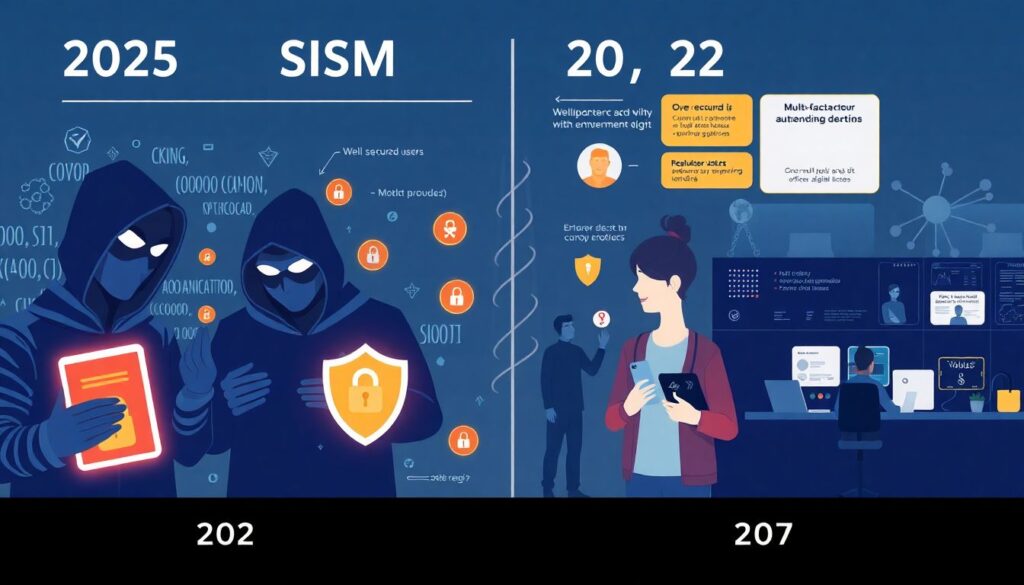
Looking ahead to 2025–2027, most analysts expect SIM‑swap fraud to keep growing, but with a twist: higher technical sophistication and more insider involvement, yet fewer successful attacks against well‑secured users. Regulators are pushing carriers toward stronger identity checks and better monitoring of suspicious SIM change patterns. At the same time, exchanges are under pressure from both customers and authorities to phase out SMS 2FA. In other words, the window where mobile numbers sit at the center of crypto security is slowly closing, but we’re not past that transition point yet.
Economic angles: why attackers love your phone number
From an economic standpoint, SIM‑swapping is attractive because the cost‑to‑reward ratio is wildly skewed. A group might spend a few hours on social engineering and maybe a small bribe, yet walk away with six figures in tokens if they hit a wealthy target. Compare that to classic card fraud, where limits and chargebacks eat into profits. As mobile carrier sim swap protection for bitcoin and crypto improves, the “easy money” phase will taper off, and attackers will likely either move upmarket toward whales or pivot into other forms of account‑takeover, like deepfake‑driven KYC abuse.
Impact on the crypto industry and what changes next
The cumulative effect of SIM‑swap‑enabled theft is more than just individual losses; it erodes trust in exchanges and wallet providers. Each public case pushes regulators to demand stricter security baselines and clearer disclosure of 2FA risks. We’re already seeing sim swap protection for crypto wallets become a marketing point: providers advertise hardware‑key support, SIM‑resilient recovery flows and real‑time fraud detection. For the industry, the direction of travel is clear: less reliance on telecom infrastructure, more emphasis on user‑held keys and robust identity proofing that doesn’t crumble when someone convinces a call‑center agent to press the wrong button.