
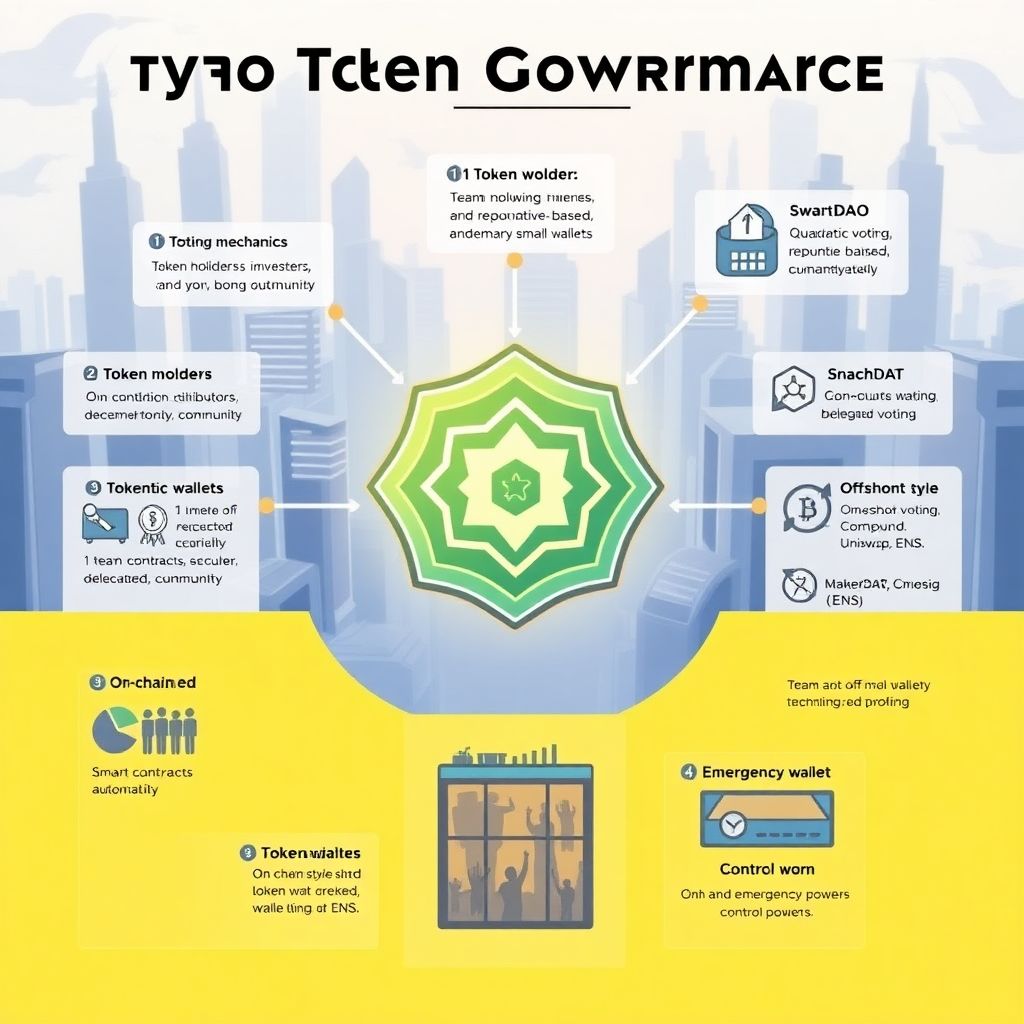
Before you put money into a token, you should be able to answer one simple question: “Who can actually change the rules here, and how fast can they do it?”. That’s what analyzing a token’s governance model is about. For beginners, this often looks intimidating: on‑chain proposals, timelocks, quorums, multisigs, delegates. But underneath the jargon, you’re just mapping power, incentives and procedures. Below is a practical, beginner‑friendly way to approach it, plus comparisons between different governance designs you’ll run into in the wild.
—
Step 1. Map the power: who really controls the protocol?
Start with the token distribution. If 3 wallets hold 60% of the supply, no matter how beautiful the whitepaper sounds, governance is de‑facto centralized. Look at the top 20 holders on a block explorer: are they exchanges, team wallets, venture funds, or hundreds of small wallets? For instance, early in its life, Uniswap had a relatively broad UNI distribution, while some smaller DeFi tokens had over 70% in team and investor wallets, which meant proposals could be steered by a tiny group. Also check if there is a foundation or multisig with “emergency” powers; many “community tokens” still route all upgrades through a 3‑of‑5 or 4‑of‑7 multisig, which is effectively a small board of directors with a crypto twist.
Short version: token‑based voting sounds democratic, but if whales can easily reach quorum alone, you’re looking at oligarchy with extra steps.
—
Technical details: how to inspect concentration
On Etherscan or similar explorers, open the token page → “Holders”. If the top 10 wallets collectively own more than ~50–60%, that’s a red flag for long‑term decentralization. Check labels like “Team vesting”, “Treasury”, “Exchange”. A common pattern in a risky setup: 1) Treasury: 30–40%; 2) Team: 15–25%; 3) Investors: 15–25%; 4) Public: the small rest. In such cases even a single aligned bloc can hit the minimum voting power to pass proposals. Tools used in crypto governance consulting services often compute a Gini coefficient of token distribution; for a healthier governance system you’d like to see lower concentration and significant voting power in the hands of non‑affiliated community members.
—
Step 2. Understand the voting mechanics: 1 token = 1 vote vs. alternatives
Most systems use “1 token = 1 vote”. It’s simple, but it favors whales. MakerDAO and Compound are classic examples: more MKR or COMP equals more influence. The upside is efficiency: big holders are incentivized to care because they have more at stake. The downside is plutocracy risk and the possibility of governance capture, where a fund quietly accumulates tokens and pushes through self‑serving changes. In contrast, some protocols experiment with quadratic voting or reputation‑based systems to reduce whale dominance, but these are more complex to implement and harder for new users to understand. When you analyze a token’s governance model, always ask: “Is voting power purely financial, or is there some mechanism to amplify active, smaller participants?”.
Shorter alternative designs can be surprisingly powerful. For example, delegated governance, used by Uniswap and ENS, lets passive holders assign voting power to dedicated delegates; that improves participation without changing the core “1 token = 1 vote” rule.
—
Technical details: quorum, thresholds, timelocks
Focus on three parameters any solid tokenomics and governance model audit will review: 1) Quorum: minimum percentage of total voting power that must participate (e.g., 4% for Uniswap, 4% for Compound in some configurations). Too high, and nothing passes; too low, and a tiny minority can push drastic changes. 2) Proposal threshold: minimum number of votes required to submit a proposal. Compound requires 1% of COMP supply; this blocks spam but also raises the barrier for ordinary users. 3) Timelock: delay between a proposal passing and its execution, often 24–48 hours or longer. A robust token governance risk assessment service will flag protocols where admins can bypass timelocks or where timelocks are extremely short, because that allows rapid, potentially malicious changes with minimal warning.
—
Step 3. Compare on‑chain, off‑chain and hybrid governance
Not all voting happens on‑chain. Snapshot, for example, allows “off‑chain” votes that don’t cost gas. Many DAOs use Snapshot for signaling and a multisig for execution. This is convenient and cheap, but it depends on social consensus: the multisig signers can, in theory, ignore the vote. Pure on‑chain governance (like Compound’s Governor contracts) binds execution to the outcome automatically, which is safer from a rules perspective but more expensive and sometimes slower. As a beginner, you should identify which parts of the process are code‑enforced and which are “promises”. When a team says, “The DAO decides”, check whether that decision directly triggers a contract action or merely “advises” a group of signers.
Short explanation: on‑chain = strict but costly; off‑chain = flexible but trust‑dependent; hybrid = compromise with its own trade‑offs.
—
Technical details: Governor contracts vs. multisigs
Look for known governance implementations like OpenZeppelin Governor, Compound Governor Bravo, Tally‑integrated contracts, or custom modules in Cosmos and Substrate ecosystems. These contracts usually define proposal lifecycle, voting rules and execution steps. By contrast, a simple multisig wallet (like Gnosis Safe) with no attached on‑chain voting logic means decisions are made elsewhere. A serious blockchain governance framework design service will map signer identities, their affiliations, and replacement rules. For instance, a 6‑of‑10 multisig with 8 signers from the core team and 2 from independent stakeholders is markedly different from a 6‑of‑10 split evenly between team, investors and community representatives.
—
Step 4. Evaluate the role of the team and “emergency powers”
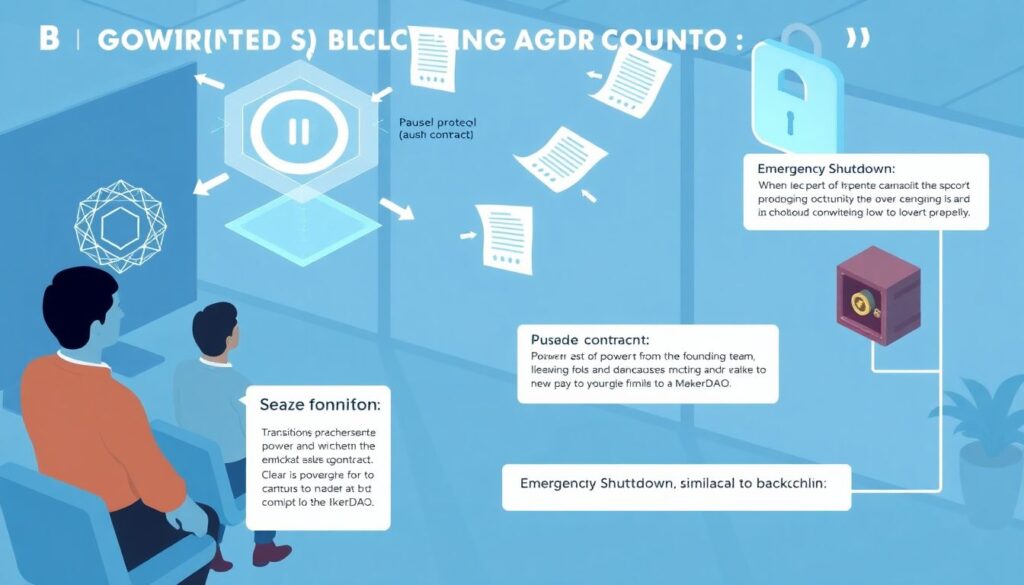
Founding teams rarely give up control on day one. That’s fine, as long as the transition plan is clear and bounded. You want to know: Can the team unilaterally pause the protocol, upgrade contracts or seize funds? Under what conditions? MakerDAO, for example, historically had an “Emergency Shutdown” mechanism tied to MKR holders and specific conditions. In other projects, a “guardian” role can freeze markets if an exploit is detected. This is useful operationally, but if the guardian is a single entity without oversight, you face regulatory, censorship and abuse risks. Comparing designs: Uniswap’s v2→v3 evolution moved toward stronger, time‑locked, DAO‑controlled upgrades, while some smaller protocols still operate like Web2 startups wearing a DAO mask.
Short note: genuine decentralization is gradual, but perpetual “temporary” team control is a warning sign.
—
Technical details: vesting, admin keys, upgradeability
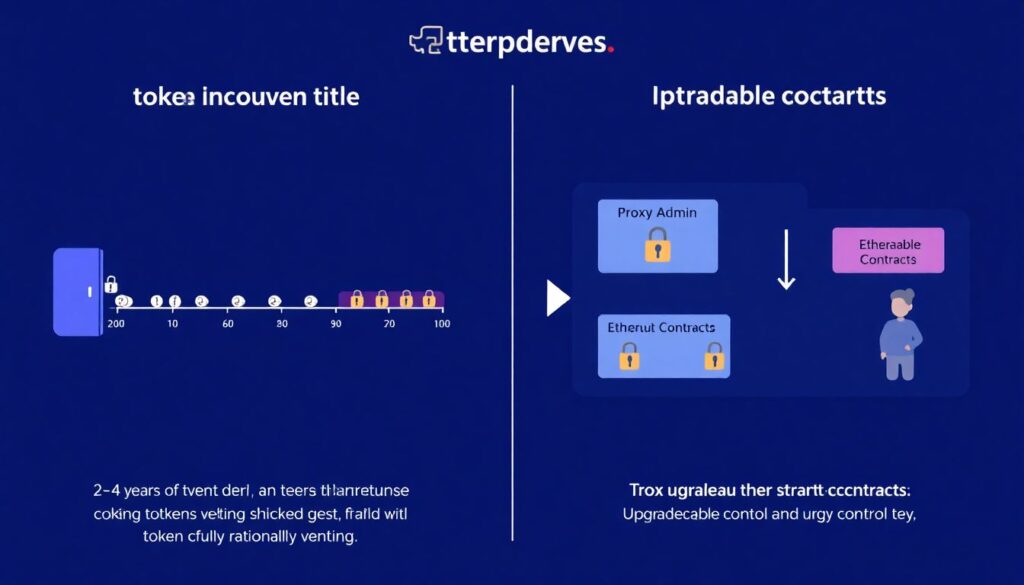
Check vesting contracts: Are team and investor tokens locked and vesting linearly over 2–4 years, or are large chunks already liquid? Look for proxy patterns like TransparentUpgradeableProxy or UUPS; these indicate that contracts are upgradeable. Then see who controls the proxy admin. Many professional DAO governance analysis engagements focus on “admin key risk”: if one compromised private key can change critical logic, it’s a systemic vulnerability. Also verify if there is a requirement for DAO approval before upgrades, or if the admin can act unilaterally. A secure pattern: DAO vote → timelock → upgrade execution by a time‑delayed controller, with no backdoor shortcuts.
—
Step 5. Participation and voter behavior: are people actually voting?
A beautiful governance spec doesn’t matter if nobody shows up. Look at historical proposals: How many total votes? How many unique voters? For example, some major DeFi protocols consistently see under 10% of total voting power participating, and often fewer than 50 active wallets decide multi‑billion‑dollar parameters. Compare that with more engaged DAOs like ENS at certain periods, where hundreds of delegates participated and wrote detailed rationales. Beginner mistake: assuming “DAO = fully decentralized”. In reality, a small set of delegates or whales often dominates, even when the token is widely held. Your goal is to understand whether power is exercised in a transparent, predictable way or whether a sleepy electorate allows insiders to quietly pass critical changes.
Short observation: low turnout plus concentrated holdings is the worst combo.
—
Technical details: metrics to watch
When doing a lightweight personal review (or a formal tokenomics and governance model audit), focus on: 1) Average turnout: votes cast / total supply or total voting power; sustainable systems tend to keep 5–15% for routine matters and higher for critical ones. 2) Voter concentration: how many addresses control >50% of votes in past proposals. 3) Proposal diversity: are proposals only coming from the team and a few big funds, or do community members also propose changes? Tools like Tally, Boardroom, or protocol‑specific governance portals provide these stats. If you see that in 20 past proposals the same 3 addresses determined every outcome, that tells you far more than any “community‑first” slogan on the homepage.
—
Step 6. Compare different governance philosophies
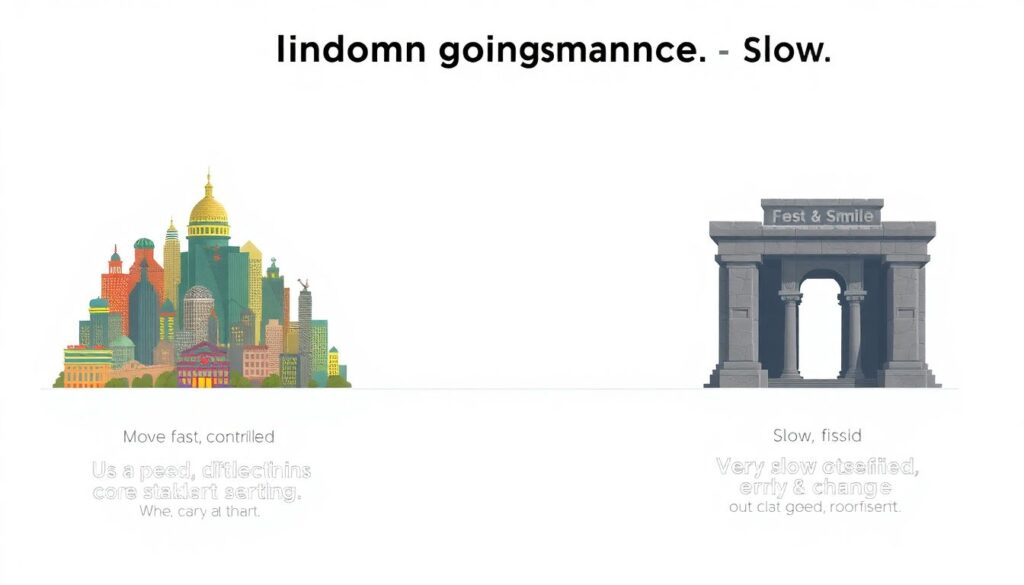
You’ll encounter three broad governance philosophies. 1) “Move fast, controlled”: strong team control and fast upgrade paths, typical for newer or high‑speed chains. Solana’s earlier governance phases leaned closer to this, with significant influence from core stakeholders. 2) “Slow, ossified”: very high quorums, long timelocks and a culture of minimal change; Bitcoin is the archetype here, although it relies on social and client governance rather than token voting. 3) “DAO‑first experiments”: protocols like MakerDAO split into sub‑DAOs, or DeFi protocols that hand major budget and parameter control to tokenholders. Each has trade‑offs. As a beginner, you shouldn’t just ask “Is it decentralized?” but “Which dimension of decentralization does this project prioritize: control of upgrades, control of funds, or control of parameters?”.
Short comparison: speed vs safety, clarity vs flexibility, code rules vs social rules.
—
Technical details: risk vs speed trade‑off
Fast governance: short voting periods (24–48 hours), low quorum (1–4%), short timelocks (0–24 hours). This enables quick reactions to market conditions but can be abused by attackers who borrow tokens (governance attacks via flash loans) or coordinate a surprise vote. Slow governance: weeks‑long voting, high quorum (10–20%), multi‑day timelocks. This resists sudden hostile takeovers but can’t respond quickly to exploits. A balanced configuration often introduces “guard rails”: for example, parameter tweaks can go through a faster lane, while core contract upgrades require longer delays and higher participation. A mature blockchain governance framework design service will categorize decisions by risk level and assign tailored governance processes to each category.
—
Step 7. Practical checklist for beginners
When you open a new token’s docs or whitepaper, walk through a simple checklist: Who holds the tokens? How are votes counted? Where do votes happen (on‑chain, Snapshot, Discord)? Who can propose changes? How long from proposal to execution? Who can bypass the normal path in an emergency? Has the DAO actually rejected team‑backed proposals in the past, or is everything rubber‑stamped? You don’t need to be a solidity expert to answer most of these. With time, you’ll develop a gut feel: some setups are explicitly “founder‑led with a roadmap to decentralize”, others are “DAO‑governed with strong delegates”, and some are, frankly, marketing‑driven facades with a thin governance layer on top.
Short tip: treat governance as part of your risk analysis, not as an afterthought.
—
Technical details: when to ask for expert help
If you’re managing significant capital or building on top of a protocol, it can be worth involving specialists. Firms offering crypto governance consulting services will go deeper: reading governance contracts, simulating voting scenarios, calculating concentration indices, and modeling attack vectors like borrowing large amounts of the governance token to influence a single proposal. They might deliver a detailed token governance risk assessment service report highlighting single points of failure, misaligned incentives, and technical backdoors. Even if you stay a retail user, reading such public reports (when available) is an excellent way to learn how professionals dissect governance systems and which questions matter most.
—
How to use this knowledge in real life
Next time you consider buying or staking a token, don’t stop at price charts and TVL. Open the governance portal, read three recent proposals, look at who voted and how. Compare a couple of different projects: a DeFi blue‑chip like Aave, a newer protocol with team‑heavy control, and a DAO‑centric ecosystem like ENS or a Cosmos zone. You’ll quickly see the contrast between structures that empower broad communities and those that mainly formalize the will of a few insiders. Over time, you’ll develop your own preferences: some investors accept more centralization in exchange for speed; others insist on resilient, community‑driven systems even if they move slowly.
Short closing thought: in crypto, code might be law, but governance decides who writes the code. Learn to read that layer, and you’ll make far more informed decisions.