
Historical Background
The Origins of Blockchain and Cryptocurrency
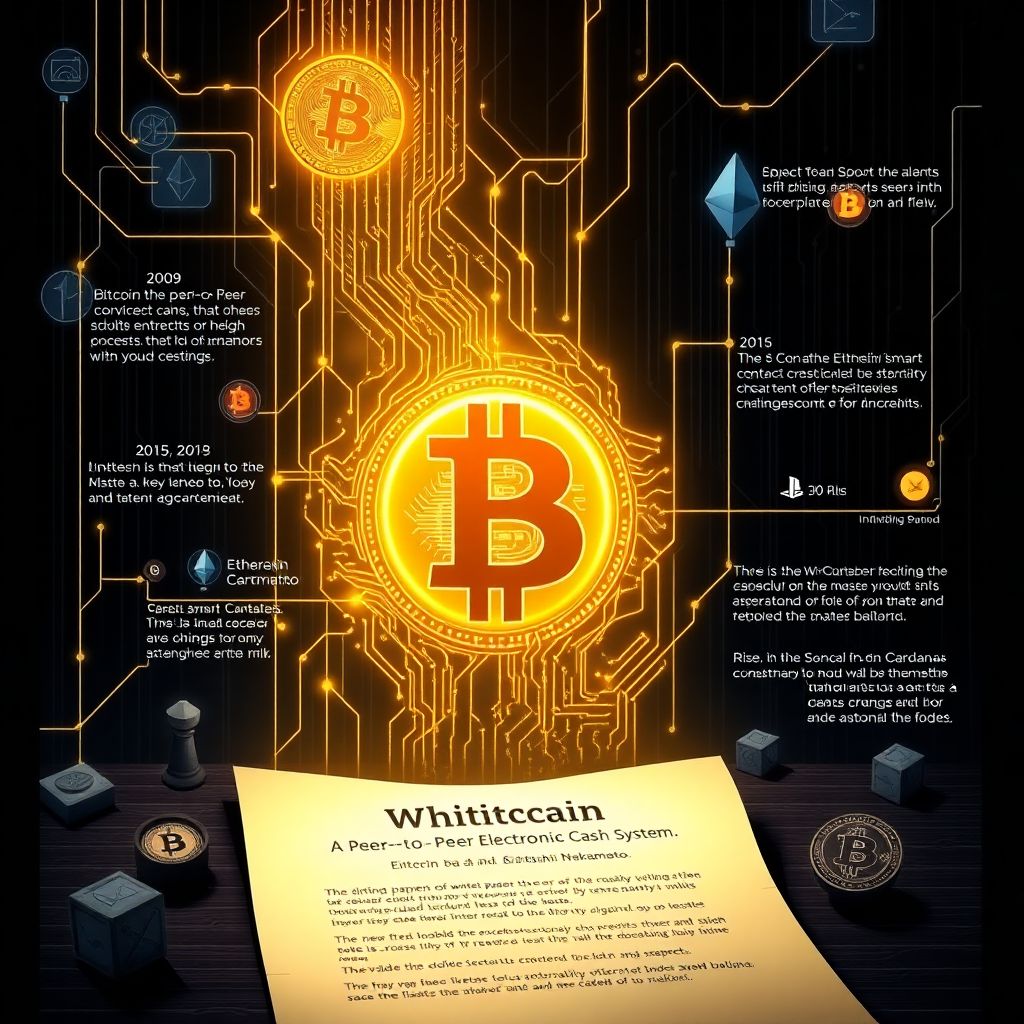
The concept of blockchain was first outlined in 2008 by an anonymous person or group under the pseudonym Satoshi Nakamoto. The whitepaper titled “Bitcoin: A Peer-to-Peer Electronic Cash System” introduced a decentralized method of processing financial transactions without intermediaries. This was the beginning of Bitcoin, the first cryptocurrency, which launched in January 2009. Initially, Bitcoin attracted attention mainly from cryptography enthusiasts and libertarians, but its underlying technology—blockchain—soon found broader interest. Over the years, blockchain evolved beyond financial applications, leading to the development of other cryptocurrencies like Ethereum, which introduced smart contracts in 2015. Understanding this history helps learners appreciate how blockchain shifted from a niche experiment to a foundational technology in decentralized systems.
Core Principles
Understanding the Foundations of Blockchain
At its heart, blockchain is a distributed ledger technology (DLT) that records transactions across a network of computers, ensuring transparency and immutability. Each “block” contains a list of transactions, a timestamp, and a cryptographic hash of the previous block, forming a secure chain. Key principles include decentralization (no central authority), consensus mechanisms (such as Proof of Work or Proof of Stake), and cryptographic validation. In cryptocurrencies, these principles allow for peer-to-peer transfer of value without banks or payment processors. For beginners, grasping these foundational elements is crucial before diving into specific platforms or use cases.
Basic Concepts in Cryptocurrency
Cryptocurrency refers to digital or virtual currencies that use cryptography for security. Unlike traditional currencies issued by governments, cryptocurrencies are often decentralized and based on blockchain technology. Bitcoin remains the most well-known, but others like Ethereum, Solana, and Cardano offer different features and use cases. Wallets, both hot (online) and cold (offline), are essential tools for storing crypto assets. Transactions are verified by network participants (miners or validators) and recorded immutably. Newcomers should also familiarize themselves with terms like tokenomics, gas fees, private/public keys, and exchanges to navigate the crypto ecosystem confidently.
Implementation Examples
Real-World Use Cases of Blockchain
Blockchain technology is not limited to cryptocurrencies. It has found applications in various sectors, such as supply chain management, healthcare, voting systems, and digital identity verification. For example, IBM’s Food Trust uses blockchain to trace the journey of food products from farm to store shelves, increasing transparency and reducing waste. In the art world, NFTs (non-fungible tokens) have enabled digital ownership and monetization of creative works. Meanwhile, platforms like Ethereum have allowed developers to build decentralized applications (dApps) that run on smart contracts without centralized control. These examples demonstrate the versatility and transformative potential of blockchain beyond speculative trading.
Cryptocurrency in Practice
Different approaches to using cryptocurrency depend on user intentions. Long-term investors, or “HODLers,” buy and hold assets like Bitcoin or Ethereum, anticipating long-term value appreciation. Others may engage in staking, where they lock up tokens to support network operations and earn rewards. Traders focus on short-term price movements, using centralized or decentralized exchanges to buy and sell assets. Additionally, some users leverage DeFi (Decentralized Finance) platforms for lending, borrowing, or earning interest without intermediaries. Each of these methods entails different risk profiles and learning curves, so it’s important to choose an approach that aligns with one’s knowledge and goals.
Common Misconceptions
Debunking Blockchain Myths

One of the most persistent myths is that blockchain is inherently anonymous and used only for illicit activities. In reality, most blockchains are pseudonymous and publicly transparent, allowing anyone to trace transactions. Another misconception is that all blockchains are energy-intensive like Bitcoin. While Bitcoin’s Proof of Work does consume significant energy, newer blockchains use more sustainable mechanisms like Proof of Stake. Some also believe blockchain is a passing trend, yet its increasing adoption by governments, corporations, and institutions suggests otherwise. Clarifying these misconceptions helps learners make informed decisions and avoid common traps.
Crypto Misunderstandings Among Beginners
Many newcomers assume that cryptocurrency guarantees quick profits, often influenced by media hype. This leads to emotional investing and susceptibility to scams. Another misunderstanding is conflating all cryptocurrencies with Bitcoin, ignoring the diversity in function and purpose across various tokens. Some users also underestimate the importance of securing private keys, leading to irreversible loss of funds. To avoid these pitfalls, education and cautious experimentation are essential. Beginners should start with small amounts, use reputable platforms, and prioritize security to build confidence and experience in the crypto space.
Step-by-Step Guide to Start Learning
Beginner-Friendly Learning Path
To effectively start learning about blockchain and cryptocurrency, follow these structured steps:
1. Study the Basics: Read beginner guides and watch videos explaining blockchain, consensus mechanisms, and cryptocurrency fundamentals.
2. Choose a Learning Platform: Use trusted platforms like Coursera, Binance Academy, or CryptoZombies for interactive learning.
3. Experiment with Wallets: Create a software wallet (e.g., MetaMask or Trust Wallet) to understand how to store and transfer tokens.
4. Make a Small Transaction: Buy a small amount of a well-known cryptocurrency and transfer it between wallets to experience the process.
5. Join Communities: Engage with forums like Reddit’s r/cryptocurrency or Discord groups to ask questions and stay updated.
6. Explore Use Cases: Try DeFi apps, NFT platforms, or blockchain explorers to see real-world applications in action.
7. Keep Learning: Follow credible news sources and newsletters to stay informed about developments and risks.
This approach balances theory with hands-on experience, enabling learners to gradually build both knowledge and confidence.
Comparing Different Learning Approaches
Self-Taught vs. Structured Learning

When beginning your blockchain journey, you can choose between self-guided exploration or structured courses. Self-taught learners benefit from flexibility and customization but risk missing key concepts or falling for misinformation. Structured programs, such as university courses or certified online classes, offer a curated curriculum and often include expert support. However, they may require more time and financial commitment. A hybrid approach—starting with free resources and gradually enrolling in more formal courses—can offer the best of both worlds. Ultimately, the choice depends on your learning style, goals, and time availability.
Technical vs. Non-Technical Paths
Not everyone needs to become a blockchain developer. Technical learners might dive into programming smart contracts using Solidity or exploring blockchain protocols. Non-technical paths include focusing on the economic, regulatory, or business aspects of crypto. Marketing specialists, legal experts, and financial analysts all have roles in the blockchain ecosystem. Understanding where your interests lie can help you tailor your learning path effectively. Both technical and non-technical contributions are vital to the growth and maturity of the blockchain industry.
By methodically following these steps and choosing the right approach, anyone can begin to understand and participate in the world of blockchain and cryptocurrency with clarity and confidence.