
What are gas prices and nonce values?
Gas basics in Ethereum
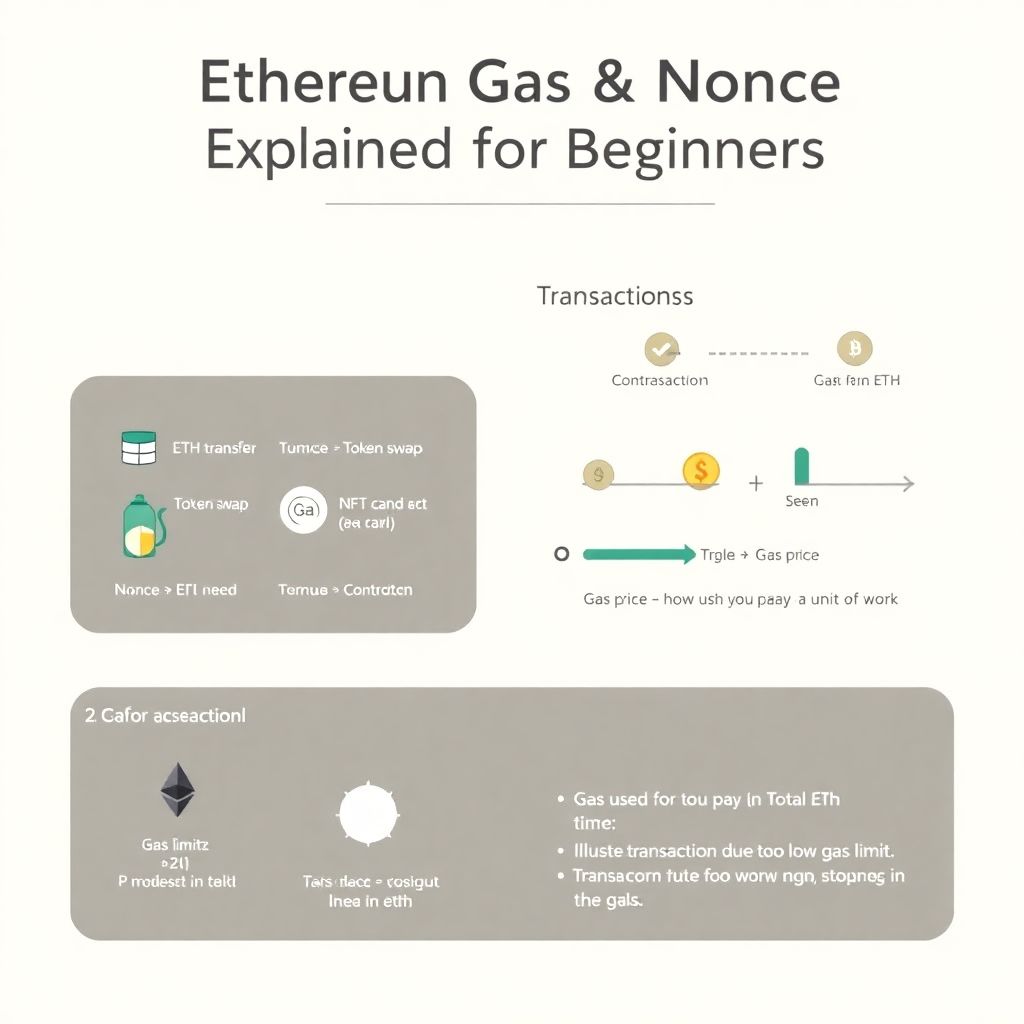
Gas is the fuel that pays for every operation on Ethereum: transfers, swaps, NFT mints, contract calls. Each action consumes a certain amount of gas units, and you decide how much you’re willing to pay per unit – the gas price. Together they form the total fee in ETH. When you see “ethereum gas fees explained for beginners”, what you really need to grasp is this: gas limit is “how much work the transaction might need”, and gas price is “how much you’re paying per unit of work”. If the gas limit is too low, the transaction can run out of gas and fail; if the gas price is too low, miners or validators may ignore it for a long time.
Nonce as your transaction counter
Nonce looks intimidating, but it’s simply a counter of how many transactions you’ve sent from a given address. The first transaction has nonce 0, the next one 1, then 2, and so on. Nodes use it to keep your transactions in the correct order and prevent replay attacks. If two transactions from the same address share the same nonce, only one can eventually succeed. That’s why messing with nonce without understanding it can freeze your funds temporarily. For most users, wallets manage nonce automatically, but when you start troubleshooting stuck transactions, you’ll inevitably deal with it directly.
Required tools for working with gas and nonce
Picking a wallet and basic setup
At minimum, you need a browser wallet, a gas tracker, and a block explorer. A good starting point is a crypto wallet low gas fees for beginners, or at least one that lets you easily customize gas settings. Popular options provide: adjustable gas price and limit, manual nonce editing (often hidden in advanced settings), and integration with common dApps. Install the wallet as a browser extension or mobile app, back up the seed phrase offline, and test it with very small amounts first. This “sandbox phase” saves a lot of stress when you start experimenting with fee tweaks and nonce overrides.
Monitoring fees and network conditions
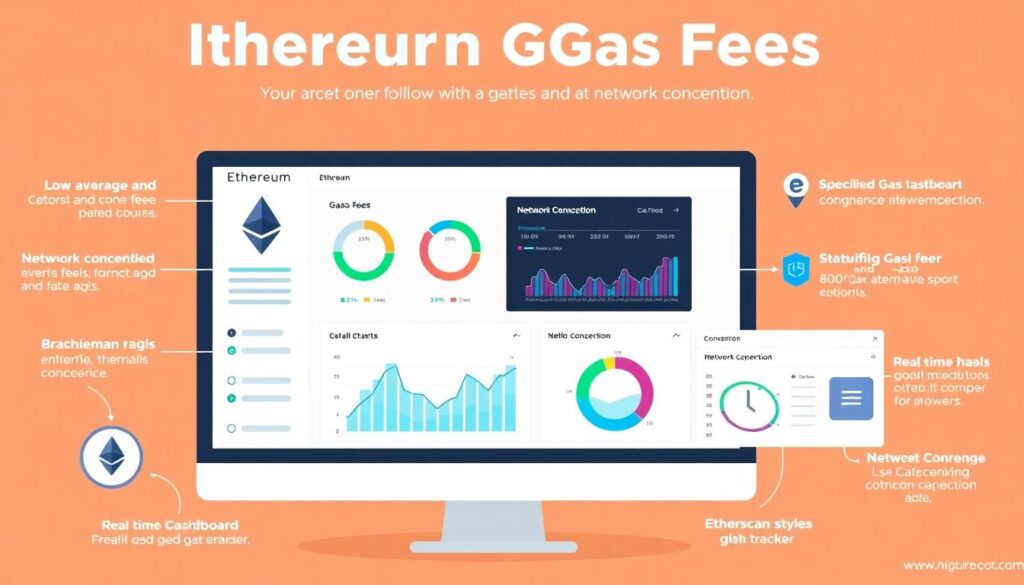
To avoid overpaying, you need visibility into current network congestion. The best gas fee tracker for ethereum transactions is the one you’ll actually check consistently: this may be Etherscan’s gas tracker, a specialized gas dashboard, or a browser plugin. They usually show low/average/high fee tiers plus estimated confirmation times. Combine that with a block explorer to inspect your own transactions, gas usage, and nonce sequence. Over time, you’ll develop intuition: for example, distinguishing rare network spikes from normal fluctuations, and recognizing when it’s worth waiting instead of rushing.
- Wallet with gas and nonce control
- Gas tracker website or plugin
- Block explorer (Etherscan or similar)
Step-by-step: sending a transaction consciously
Estimating gas and choosing fees
Before clicking “Confirm”, ask two questions: how complex is this action, and how fast do I need it done? Simple ETH transfers use much less gas than swaps on a busy DEX. Most wallets suggest an appropriate gas limit; beginners should rarely change it manually. Instead, focus on the fee level: standard, fast, or custom. When you try to optimize ethereum transaction nonce and gas cost, start by sending a small test transaction during calm network periods. Compare the gas suggested by your wallet with the gas tracker; if the wallet’s estimate looks far above the tracker’s “average”, reduce it slightly and see if confirmation time still suits you.
How to set gas price and gas limit Metamask
If you’re wondering how to set gas price and gas limit Metamask makes this relatively accessible. When you create a transaction, click on the gas edit option (often labeled “Market”, “Advanced”, or “Edit”). You’ll see suggested priority levels and, in advanced mode, direct fields for max fee, max priority fee, and gas limit. As a beginner, prefer the presets but learn to read the numbers: check that the gas limit matches typical values for the type of operation you’re doing, and only adjust the max fee if the gas tracker indicates your wallet is overestimating. Always re-check the total fee in ETH and, if possible, in USD before confirming.
- Use presets first, then experiment with small custom tweaks
- Always compare wallet estimates to an external gas tracker
- Never drastically reduce gas limit unless you know expected usage
Managing nonce values safely
Nonce tweaking is powerful but risky. Normally, you let the wallet handle it and never think about it. Manual nonce control becomes relevant when a transaction is stuck in the mempool with too low a gas price. You can send a new transaction with the same nonce but a higher fee to replace the old one, or with zero value to effectively cancel it. The key is to keep nonce strictly sequential: if you skip a value, all later transactions will wait until the “missing” nonce is filled. Start by enabling “Customize transaction nonce” in your wallet’s advanced settings, and practice only with tiny amounts.
Common mistakes and how to avoid them
Typical gas price pitfalls
New users often either wildly overpay or get stuck for hours. One common error is approving a dApp’s default “urgent” fee without checking a gas tracker, leading to unnecessary cost. At the opposite extreme, some beginners set gas price far below current network conditions because they misinterpret “safe low” recommendations from older articles. Another trap is misunderstanding the difference between gas price and gas limit: they lower the limit to “save money”, causing the transaction to run out of gas and fail, but still pay the partial fee. Systematically checking both fields before every transaction builds healthy habits.
Nonce-related errors
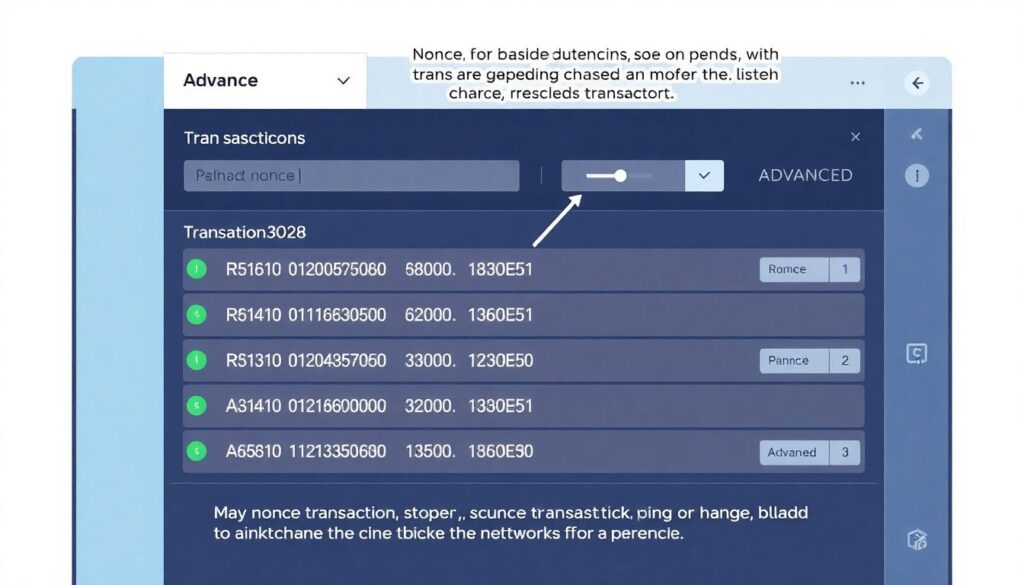
Nonce problems tend to appear only after people discover the “Advanced” menu. A frequent mistake is sending multiple transactions in a row and then editing nonce on just one of them, unintentionally creating a gap. All later transactions then hang, and the user blames the network or the dApp. Another issue is trying to cancel a stuck transaction but forgetting to increase the gas price enough, so the replacement never overtakes the original in the mempool. Sometimes newcomers panic, broadcast several conflicting replacements, and end up confused about which one actually confirmed.
Troubleshooting stuck or failed transactions
Replacing or canceling a transaction
When a transaction is pending for too long, first inspect it on a block explorer: confirm its gas price, nonce, and current status. If the fee is clearly below current network levels, you can craft a replacement transaction using the same nonce and a higher gas price. Often, wallets include a “Speed up” or “Cancel” button that does this automatically; behind the scenes, it simply resubmits with better parameters. If you cancel, it typically sends a 0 ETH transaction to yourself with identical nonce. Be patient after one replacement; flooding the network with many variations usually adds confusion without speeding confirmation.
Long-term strategy to reduce headaches
To genuinely optimize ethereum transaction nonce and gas cost over time, adopt a few habits rather than chasing every tiny saving. Batch operations when possible, transact during off-peak hours, and avoid manic fee tweaking for very small amounts where time is more valuable than a few cents. Maintain a simple spreadsheet or mental log of past gas costs for common actions, so you recognize outliers quickly. Finally, revisit your tools regularly: switch to a better gas tracker if your current one lags, and don’t hesitate to migrate to a wallet that offers clearer controls and a friendlier interface for everyday users.
Putting it all together for beginners
Once you’ve seen ethereum gas fees explained for beginners a few times, the concept stops being mystical and becomes more like paying for bandwidth. Your daily routine should look like this: check network conditions, use wallet presets as a baseline, adjust moderately if needed, and resist unnecessary nonce tinkering. If something gets stuck, pause, inspect it in a block explorer, and only then decide whether to replace or wait. Over time, this small, consistent discipline transforms you from a nervous first-timer into someone who treats gas and nonce as just another set of adjustable dials, not an opaque source of stress.