
Why cross-chain interoperability matters more than ever
If you’re new to Web3, “interoperability” probably sounds like a buzzword people use to raise funding. In reality, it’s just about one thing: letting blockchains talk to each other safely. Tokens, messages, proofs — all moving across networks without you constantly bridging by hand or trusting some sketchy UI. For users it means fewer hoops, for teams it means you design once and reach many chains. As we move into 2025, projects that ignore cross-chain from day one usually end up rewriting half their stack later, paying for rushed integrations and unexpected security reviews.
Key building blocks of cross‑chain communication
Under the hood, most systems do three simple things: they observe an event on chain A, verify it somehow, then trigger an action on chain B. The big questions are who does the observing, how the verification works, and where the trust assumptions sit. Some designs rely on external relayers or oracles; others use light clients or shared security. As a beginner, focus on understanding: who can forge messages, who can pause or upgrade the system, and how failures are handled when one chain halts or fees spike. That lens already filters out many risky ideas.
Comparing major approaches to interoperability
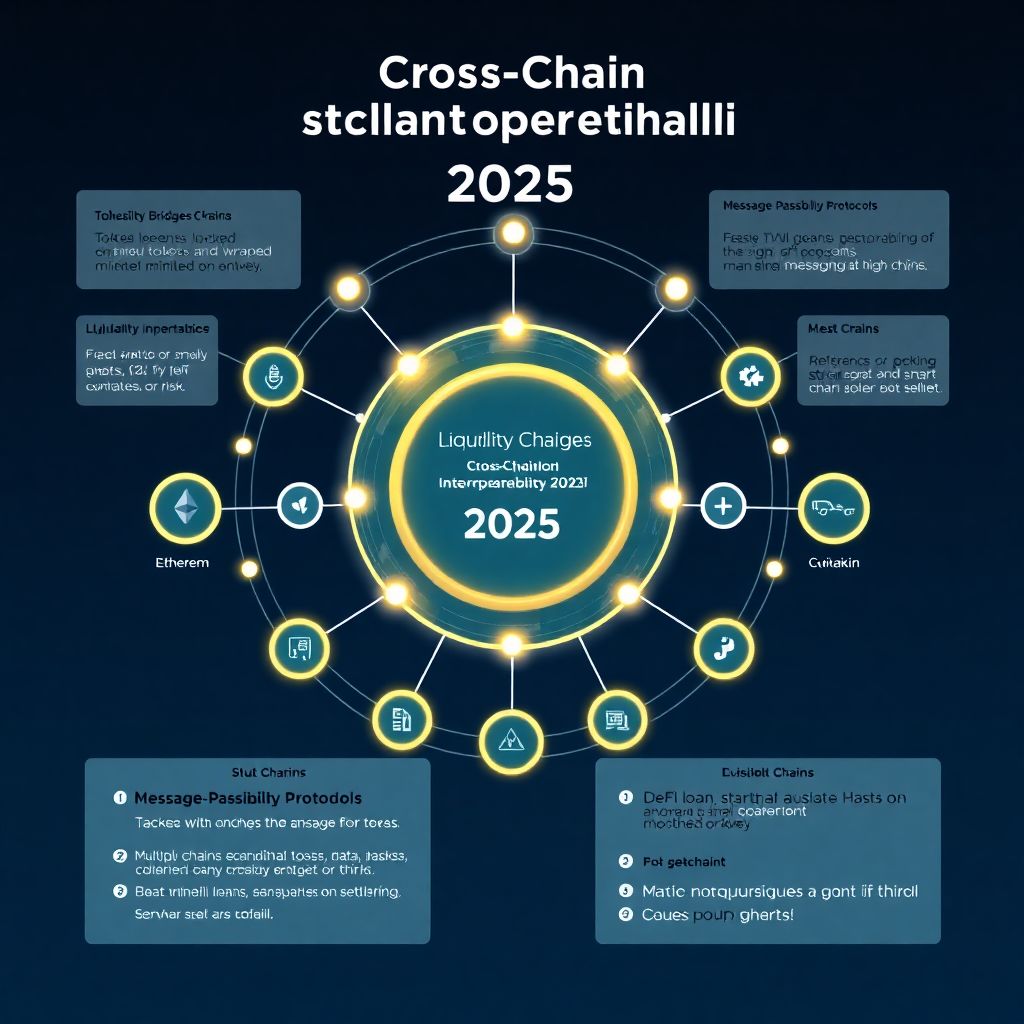
Today you’ll meet three broad families. First, liquidity bridges that lock tokens on one chain and mint wrapped versions on another; they’re simple to use but often depend on multisigs or external validators. Second, message‑passing protocols that send arbitrary data between chains, letting you trigger logic or update states remotely. Third, native ecosystems like Cosmos IBC or Polkadot XCMP, where chains are designed from day one to speak a shared language. Each family trades off flexibility, trust assumptions, and integration complexity in its own way.
Liquidity bridges: fast adoption, heavy trust

Liquidity bridges became the de facto cross chain interoperability solutions for crypto projects because they solved an obvious problem: “How do I get my tokens from Ethereum to this cheaper chain?” For beginners, they’re easy to integrate and quick to ship. The downside is security: many early hacks came from compromised multisigs, buggy bridge contracts, or poorly incentivized validators. If a bridge is holding a large TVL and relies on a small group of signers, treat it like a high‑risk dependency, not a neutral piece of plumbing you can ignore.
Message‑passing: flexibility with extra complexity
If you’re building real DeFi logic across chains, you’ll likely look at the best cross chain bridges for defi developers that support arbitrary messaging, not just token transfers. This lets you do things like initiate a loan on one chain, manage collateral on another, and settle on a third — all with minimal user clicks. The trade‑off is that your app must handle out‑of‑order messages, retries, and possible rollbacks. You also inherit the security model of the protocol, so your audits must explicitly cover how messages are verified and who can spoof or censor them.
Native ecosystems and shared security
In contrast, an enterprise blockchain cross chain interoperability platform built on a shared hub or relay chain reduces some integration pain. Chains built around Cosmos IBC or Polkadot style designs can verify each other more natively, relying less on external validators. For corporate or government pilots, this feels more predictable: governance, upgrades, and security policies can be coordinated across the stack. The catch is vendor lock‑in and reduced freedom: you often accept the ecosystem’s tooling, languages, and upgrade schedule, which may not match your startup velocity or experimental needs.
Pros and cons of popular technologies
The main upside of general‑purpose bridges is reach: one integration can open a path to many chains and users. They save time and let small teams appear “multichain” quickly. Yet dependency risk is huge; if the protocol halts or is hacked, your app becomes unusable in seconds. Native connections, on the other hand, tend to be more robust and transparent but might limit where you can go or require heavier engineering. For many early‑stage teams, a hybrid strategy — core logic native, optional reach via a bridge — turns out to be the most pragmatic compromise.
Security: where beginners underestimate risk
Security is not just about audits of your own contracts; it’s about the full trust graph. When you buy secure cross chain protocol implementation services, the best firms don’t just scan your code, they trace every external assumption: who can upgrade the bridge, how keys are stored, what happens if the oracle set colludes. Beginners often focus only on smart contract bugs, yet social engineering, compromised infrastructure, or misconfigured relayers are equally dangerous. Your job is to minimize the number of places where a single human mistake can drain everything.
How to choose the right approach for your project
Before asking which tech is coolest, ask what problem you actually need to solve. If your MVP only requires moving a governance token between two EVM chains, you might not need complex messaging at all. If you’re orchestrating lending or derivatives strategies across five networks, simple bridges will quickly become limits. A sensible path is to define your must‑have chains, regulatory constraints, and latency requirements, then shortlist two or three providers and walk through realistic attack scenarios for each choice, not just fee charts and marketing claims.
Practical checklist for early‑stage teams
For many founders, good cross chain interoperability consulting for blockchain startups pays for itself by avoiding dead ends. A consultant or experienced advisor should help you answer: can this protocol be permissionlessly extended to new chains, what is the on‑call model when messages fail, how do we rotate keys, and what’s the emergency playbook if the bridge pauses? For an internal checklist, write down how you’d unwind a stuck transaction, compensate users in case of partial failure, and migrate away from a provider without killing your product.
Real‑world case: DeFi app avoiding a bridge disaster
Consider a mid‑size lending protocol that originally planned to use a single bridge to expand from Ethereum to three L2s. During the design review, they realized the bridge required a 5‑of‑7 multisig with signers unknown to them, holding hundreds of millions in assets. Instead of committing, they split the strategy: core liquidity stayed on Ethereum and one L2 with native bridges, while the remaining chains were connected via a lower‑TVL opt‑in router. When that original third‑party bridge later suffered a critical exploit, their exposure was limited to optional user flows, not protocol‑level reserves.
Real‑world case: gaming project scaling across chains
A Web3 gaming studio wanted NFT assets to move seamlessly between a high‑throughput sidechain and a more decentralized L1. At first they tried to run their own validator‑based bridge, but operational overhead and compliance headaches piled up. They then migrated to a specialized interoperability provider with audited NFT messaging and staged rollouts. The key move was gradually redirecting new mints to the new system while keeping legacy assets supported via a one‑way migration path. This reduced confusion for players while allowing the team to retire brittle code without a dangerous big‑bang switch.
Emerging best practices heading into 2025

The direction for 2025 is clear: fewer bespoke bridges, more standardized stacks, and stronger shared security. Teams are experimenting with modular designs where execution, settlement, and data availability can each live on different layers, stitched together via battle‑tested messaging protocols. Regulators are also paying attention, which nudges serious players toward well‑governed, transparent systems rather than opaque multisigs. For you as a beginner, it means: choose fewer, higher‑quality integrations, document assumptions carefully, and prefer designs where a single failure degrades functionality instead of instantly wrecking your entire project.