

Why third‑party audits matter for your project’s security posture
If you’re trying to understand how secure your project really is, relying only on your own team’s opinion is risky. Third‑party audits give you an outside, relatively unbiased view of your security posture, using industry standards and hard evidence instead of gut feeling or wishful thinking.
In 2025, investors, regulators, and even savvy customers expect a security posture assessment for companies to be backed by some form of independent verification. That’s exactly where third party security audit services come in: they convert “we think we’re secure” into “we can prove our security level and we know what to fix next”.
—
Short historical background: how we got here
Thirty years ago, formal security audits were mostly a thing for banks, governments, and huge telecoms. They were compliance‑driven, slow, and usually done once a year on paper-heavy checklists.
Then a few things happened:
– Massive data breaches made headlines and wiped out brand reputation.
– Regulations like GDPR, HIPAA, PCI DSS and others pushed structured security controls.
– Cloud, SaaS, and supply‑chain attacks blurred the boundaries between “our systems” and “someone else’s”.
As a result, external cybersecurity audit for businesses stopped being a luxury and became a hygiene factor. Today, even early‑stage startups get asked in due diligence: “Have you had an independent audit? Can we see the report?”
The scope also changed. Audits went from “is your firewall configured?” to end‑to‑end views of architecture, processes, vendor dependencies, and incident readiness.
—
Basic idea: what a third‑party audit actually evaluates
At its core, a third‑party security audit tries to answer three practical questions:
1. What assets are you protecting?
2. What can go wrong, and how likely is it?
3. How well are your controls actually reducing that risk?
Modern independent IT security audit service providers don’t just tick checkboxes. They map your business logic, data flows, and threat landscape, then test whether your controls truly work in the real world, not just on paper.
Core principles of third‑party security audits
Let’s break down the underlying principles in plain language.
– Independence and objectivity
The auditors must be separate from your engineering and security teams. No involvement in building the systems they’re evaluating. This is what keeps the results trustworthy.
– Risk‑based, not checklist‑only
Mature auditors start from your business risks: what would actually hurt you—data theft, ransomware, fraud, service downtime, regulatory fines—then align tests with those scenarios instead of blindly following a generic list.
– Evidence‑driven evaluation
Claims like “we enforce MFA everywhere” or “we patch monthly” are validated with logs, configs, code, tickets, and interviews. If it isn’t evidenced, in security terms it effectively doesn’t exist.
– Repeatability and comparability
Using standards (ISO 27001, NIST CSF, CIS Controls, SOC 2 criteria, OWASP ASVS, etc.) lets you compare your security posture over time and benchmark against peers.
– Actionable output
A good audit should end with a prioritized, understandable remediation plan, not a 150‑page report that nobody reads.
—
Where third‑party risk and compliance fit in
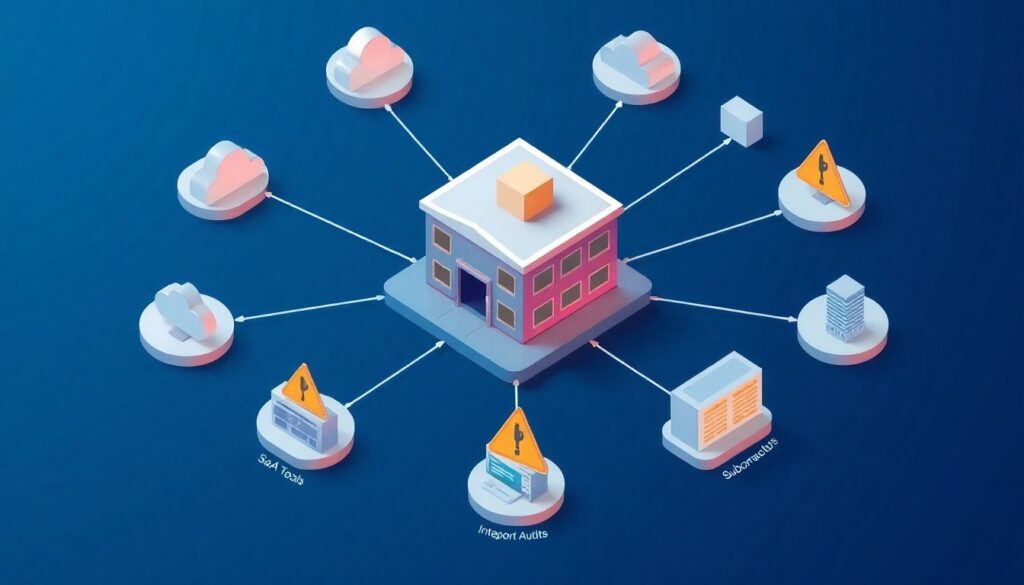
Today, your project almost never lives in isolation. You use cloud providers, SaaS tools, payment processors, AI APIs, and subcontractors. Each one is a potential weak link.
That’s why modern audits often embed third party risk assessment and compliance audit activities into the main engagement. The idea is:
– Map which vendors access sensitive data or critical functions.
– Check what proof they provide (SOC 2, ISO 27001, penetration tests, data processing agreements).
– Evaluate whether their risks are acceptable for your project’s risk appetite.
In other words, you’re not only assessing your own code and infrastructure, but also your ecosystem.
—
Types of third‑party audits you’ll encounter
Different projects need different depth and scope. Common flavors include:
– Gap assessments against standards
For example, “How far are we from being SOC 2 ready?” The output is a gap list and roadmap.
– Penetration testing / application security reviews
Focused on finding exploitable weaknesses in apps, APIs, mobile clients, or infrastructure.
– Comprehensive security posture assessments
These combine technical testing, process review, architecture analysis, and governance into a single, broad evaluation.
– Regulatory or certification audits
PCI DSS, ISO 27001 certification, or similar. These are more formal and often have strict pass/fail criteria.
Many third party security audit services will bundle several of these into a phased program, especially for larger projects or companies with complex environments.
—
How to prepare your project for an external audit
You’ll get more value (and less pain) from an audit if you do some groundwork first.
Clean up your basics
You don’t need perfection, but you should have your fundamentals in order so the audit time is spent on real risk, not on obvious housekeeping.
Focus on:
– Inventory: know your systems, environments, and data flows.
– Access control: use role‑based access, enforce MFA, remove stale accounts.
– Patch and change management: have at least lightweight processes.
– Logging: ensure you’re capturing authentication, admin actions, and security‑relevant events.
Document just enough
Auditors don’t need a novel, but they do need clarity.
Useful documents include:
– Architecture diagrams (including cloud resources and integrations).
– Data classification and handling rules (even if basic).
– Incident response procedure, however minimal.
– Secure development practices (code review, dependency scanning, etc.).
When you have that, external cybersecurity audit for businesses becomes more about validating and improving what you already do, instead of reconstructing your environment from scratch.
—
How a typical third‑party audit actually runs
The exact flow varies by provider, but most serious audits follow a similar pattern.
1. Scoping and planning
This stage defines:
– What systems, products, or business units are in scope.
– Which standards or frameworks will be used as reference.
– Timeframes, environments (prod/stage), and access needed.
Clear scope saves you from two common problems: an audit that’s too shallow to be useful, or one that becomes a never‑ending monster.
2. Discovery and information gathering
Auditors collect context via:
– Interviews with engineering, DevOps, security, and sometimes legal/compliance.
– Review of architectures, policies, and procedures.
– Analysis of CI/CD pipelines, cloud configs, and access models.
Good independent IT security audit service providers will adapt their questions to your tech stack—Kubernetes vs monoliths, serverless vs VMs, on‑prem vs multi‑cloud, and so on.
3. Technical testing and control validation
This includes:
– Vulnerability scanning plus targeted manual validation.
– Reviewing IAM policies, security groups, network rules, and encryption settings.
– Assessing code and configuration where needed (e.g., authentication flows, secret management).
– Testing your incident readiness: how you detect, triage, escalate, and recover.
For more advanced engagements, this can expand to red‑teaming or purple‑teaming, simulating real‑world attackers and measuring both prevention and detection.
4. Analysis and risk rating
Raw findings get normalized into risk levels. Instead of 200 separate issues, you might see:
– “Identity and access management controls are inconsistent across environments.”
– “Logging is insufficient to reconstruct incidents.”
– “Vendor due diligence is informal and untracked.”
This step converts technical noise into business‑understandable risk.
5. Reporting and remediation planning
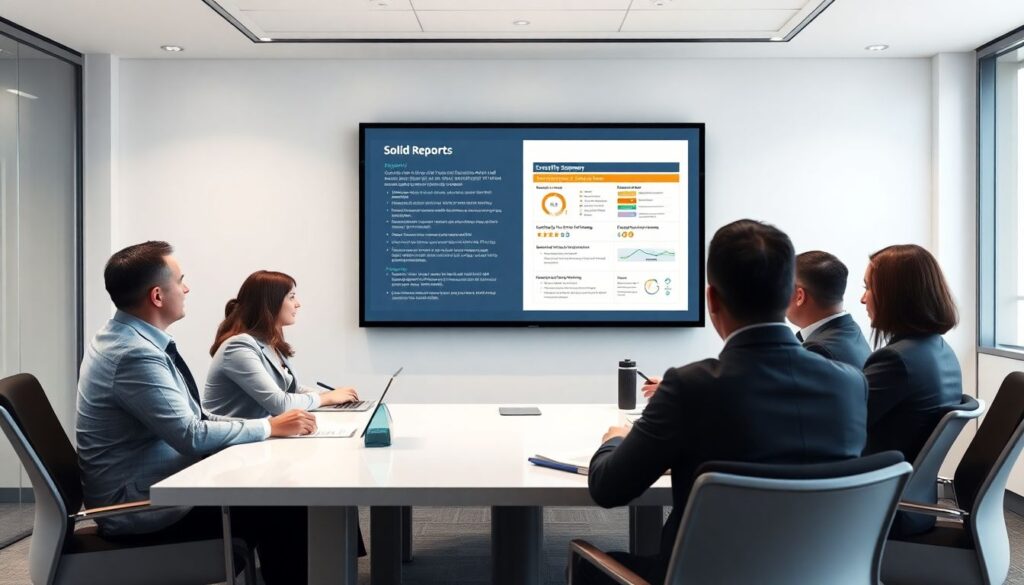
A solid report usually has:
– Executive summary (for leadership and stakeholders).
– Methodology and scope.
– Detailed findings with evidence and risk ratings.
– Concrete remediation steps and recommended timelines.
The best security posture assessment for companies doesn’t end here. Many providers offer follow‑up sessions to refine your remediation backlog and help you prioritize changes.
—
Practical examples: how projects use audits in real life
Let’s walk through a few realistic scenarios.
Example 1: SaaS startup seeking enterprise customers
A B2B SaaS platform is trying to land its first Fortune 500 client. The client’s security team asks for:
– SOC 2 or equivalent audit report.
– Penetration test results.
– Vendor security questionnaire responses.
The startup hires third party security audit services to perform:
– A SOC 2 readiness assessment.
– Web app and API penetration testing.
– Cloud security review (IAM, network segmentation, data encryption).
Result: They discover critical issues (over‑privileged cloud roles, weak logging, missing SSO for admins) before the customer does, fix them, and use the audit report in multiple sales cycles.
Example 2: Mature fintech improving incident readiness
A regulated fintech already passes annual audits and has solid technical controls. Still, they’re worried about response to a major attack.
They ask independent IT security audit service providers for:
– A focused review of detection and response capabilities.
– A tabletop exercise simulating a ransomware + data exfiltration incident.
– A gap analysis against NIST CSF for incident handling.
Outcome: They identify blind spots in monitoring and communication, refine playbooks, and prove to regulators and partners that they can handle complex incidents.
Example 3: Traditional manufacturing firm moving to cloud
A manufacturing company is modernizing: moving from on‑prem ERP to a cloud‑native stack with IoT integration.
They commission an external cybersecurity audit for businesses to:
– Assess the security of their new cloud environment.
– Review third‑party IoT vendors (firmware updates, encryption practices, support models).
– Define a baseline set of security controls for all future projects.
The audit uncovers insecure default configs on IoT devices and lack of strict segmentation between production and corporate networks. Fixing these early saves them from potentially very disruptive outages.
—
Frequent misconceptions about third‑party audits
Even experienced teams fall into some traps. Let’s tackle a few.
“An audit equals certification or full compliance”
Not always. An audit can be:
– A readiness or gap assessment (internal use).
– A formal certification (like ISO 27001).
– A customer‑requested review with no regulator attached.
Confusing the type of engagement leads to incorrect expectations and often disappointment on both sides.
“Once we pass an audit, we’re secure”
Security isn’t a one‑time achievement. Threats evolve, your architecture changes, people come and go. An audit reflects a point in time plus the maturity of your processes.
Think of it like a health check: good results are meaningful, but you still need ongoing habits—patching, monitoring, training, and regular third party risk assessment and compliance audit cycles.
“Auditors will magically fix our security”
Auditors point out problems and recommend mitigations. They don’t refactor your codebase, redesign your IAM, or rewrite your policies for you (unless you specifically pay for consulting services).
You’ll still need:
– Engineering and DevOps capacity.
– Product and business buy‑in.
– Someone to own the security roadmap internally.
“Audits slow down delivery too much”
They can, if you treat them as big‑bang events every few years. But smaller, more frequent assessments—aligned with release cycles and major architecture changes—tend to cause less friction and provide faster feedback loops.
When integrated well, audits actually reduce long‑term delivery friction by catching systemic flaws early.
—
How to choose the right audit provider
Not all third party security audit services are equal. When selecting a partner, look at:
– Domain expertise
Do they understand your tech stack (cloud provider, languages, frameworks, containers, serverless, AI/ML infrastructure) and your industry (fintech, healthtech, e‑commerce, industrial, Web3, etc.)?
– Methodology transparency
Can they clearly explain how they work, which standards they reference, and how they measure risk?
– Depth vs breadth
Do they only run automated scans, or can they perform deep manual testing and architecture reviews where needed?
– Track record and references
Especially important for regulated or high‑risk sectors. Ask how similar clients implemented their recommendations and what changed.
– Post‑audit support
Will they help interpret findings, talk to your stakeholders, and support re‑testing of fixes?
Selecting the right independent IT security audit service providers often matters more than the specific framework name on the report.
—
Looking ahead: how third‑party security audits will evolve (2025–2030)
Since it’s 2025, it’s worth looking a bit forward. Third‑party audits are already shifting noticeably, and the pace will only accelerate.
From static snapshots to continuous assurance
The old model of “one big audit per year” is becoming less useful in fast‑moving environments. Over the next 5 years you’ll see:
– Continuous integrations between your CI/CD, cloud accounts, and auditor platforms.
– Near‑real‑time verification of baselines: encryption, IAM hygiene, network exposure, vulnerability status.
– Dynamic risk scores that update as your infrastructure and code change.
Audits will feel less like big events and more like ongoing security posture assessment for companies that adapt to your release velocity.
Heavier focus on AI, data protection, and model integrity
AI is everywhere now, and regulators are starting to care how models are trained, what data they see, and how decisions are made.
Expect future external cybersecurity audit for businesses to include:
– Checks on data pipelines feeding ML/AI models: privacy, consent, lineage.
– Evaluation of model security: prompt injection resistance, abuse of model APIs, model exfiltration.
– Governance of AI decisions: explainability, bias, human‑in‑the‑loop where needed.
Auditors will need ML security expertise, not just classic network and appsec skills.
Deepening third‑party and supply‑chain scrutiny
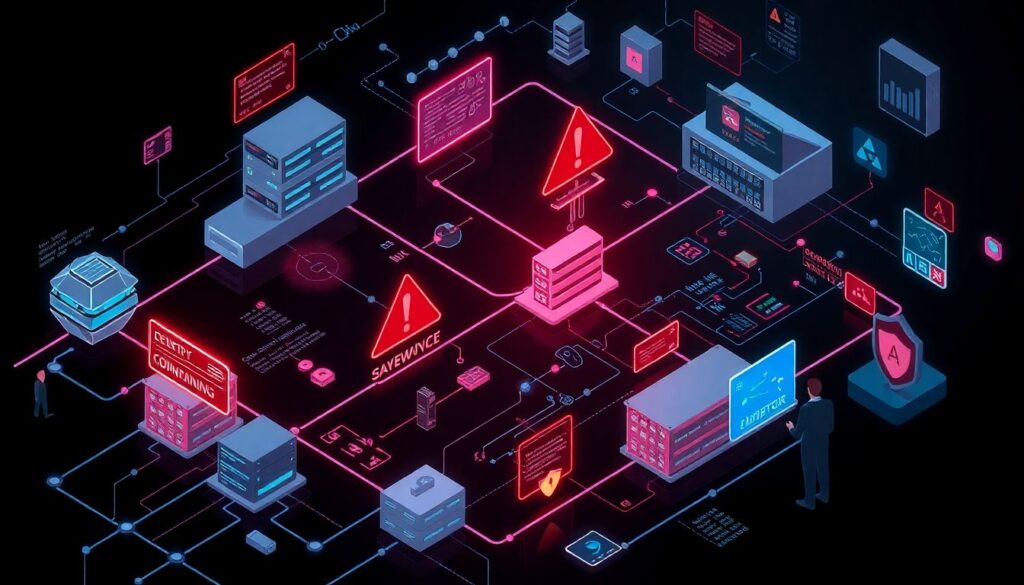
Supply‑chain attacks (compromised libraries, poisoned containers, backdoored CI/CD) are not going away. Audits will more systematically cover:
– Software supply‑chain: SBOMs, dependency management, code provenance, build integrity.
– Vendor ecosystems: shared responsibility across cloud, SaaS, and outsourcing partners.
– Formalized, repeatable third party risk assessment and compliance audit programs instead of one‑off vendor questionnaires.
For many projects, the biggest security risks will sit outside their own codebase.
Automation plus human expertise
We’ll see much more:
– Automated evidence collection and verification.
– Policy‑as‑code to enforce technical baselines.
– Real‑time dashboards for leadership, fed from continuous checks.
But the interpretive part—understanding your business context, trade‑offs, and threat model—will stay human‑driven. Automation will handle the routine so auditors and your teams can focus on the complex issues.
—
Wrapping it up: turning audits into a strategic advantage
Using third‑party audits just to “tick the compliance box” underuses their potential. Done right, they:
– Expose blind spots you can’t see from inside.
– Provide structured, prioritized remediation roadmaps.
– Build trust with customers, investors, and regulators.
– Help you make informed trade‑offs between risk, cost, and speed.
If you treat third party security audit services as a recurring, collaborative exercise rather than an adversarial one‑off test, you get something far more valuable than a PDF report: a clear, evolving understanding of how secure your project is today—and what you need to do to keep it secure tomorrow.