
Why wallet security matters more than ever in 2025
By 2025, over 500 million people worldwide are estimated to own some form of crypto, and a big chunk of them are using self-custody wallets instead of leaving everything on exchanges. That shift is great for sovereignty but brutal for security: analytics firms consistently report billions of dollars lost each year due to phishing, seed-phrase leaks and smart-contract exploits. For a newcomer, “just pick a wallet” is no longer responsible advice. You need a basic framework for crypto wallet security features comparison so that you understand what you’re actually trusting, rather than just following a random YouTube recommendation.
For beginners, the goal isn’t to become a cryptography expert. It’s to recognize red flags, make reasonable trade-offs between convenience and safety, and avoid obvious design flaws.
Core concepts: what “security” actually means for a wallet
Keys, attack surface and threat model in plain English
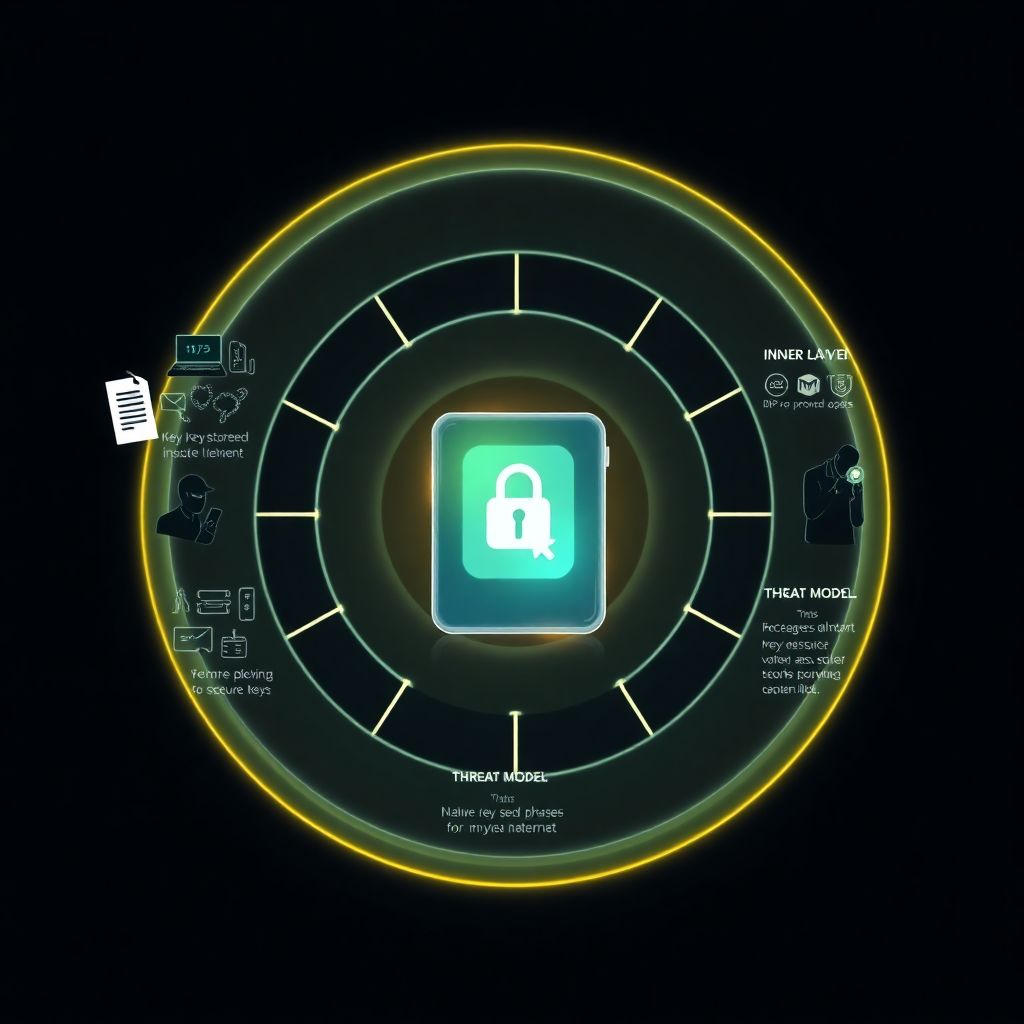
Every wallet, no matter how pretty the interface, ultimately does one thing: it manages your private keys. If the keys are exposed, your funds are gone. Security, therefore, is about where these keys live, who can access them, and how hard it is for malware, social engineers or even your own mistakes to leak them. When people argue about the best secure crypto wallet for beginners, they’re really arguing about acceptable risk: is it okay if keys touch an internet-connected device, or should they live only inside a dedicated chip that never reveals them?
For a beginner, a simple “threat model” helps: imagine three main risks—remote hackers, physical theft of your device, and you losing access. A decent wallet should mitigate all three at once.
Hardware vs software: the fundamental split
The classic hardware vs software crypto wallet security comparison boils down to isolation. Hardware wallets (like Ledger, Trezor, Keystone, Coldcard and others) store keys in a dedicated device that signs transactions internally; your laptop or phone never sees the raw private key. Software wallets (MetaMask, Phantom, Trust Wallet, etc.) run on general-purpose devices and often use the operating system’s secure enclave or encrypted storage. Statistically, most large-scale retail losses involve compromised phones and browsers, not hacked secure elements, which is why security professionals strongly favor hardware for anything above “coffee money” value.
That doesn’t mean software wallets are unsafe by definition; it means you must treat them as hot, not cold, storage.
Dissecting security features: what to actually compare
Seed phrases, backups and recovery paths
When you do a crypto wallet security features comparison, the recovery process is a critical piece. Most non-custodial wallets rely on a BIP‑39 seed phrase—usually 12 or 24 words—that can regenerate all derived keys. For beginners, this is both powerful and dangerous: a single photograph or cloud backup of that phrase completely bypasses fancy encryption. Surveys between 2020–2024 show that a large portion of user-side losses came from storing seed phrases in email drafts, messaging apps or shared notes. In 2025, some newer wallets offer social recovery or multi-party computation (MPC), where multiple devices or trusted contacts are needed to reconstruct control, reducing reliance on a single vulnerable piece of paper.
Still, paper plus a reasonable hiding strategy often beats clever schemes that you don’t fully understand.
PINs, biometrics and local device security
Once your keys are generated, the next layer is local access control: PIN codes, passphrases and biometric checks. Hardware devices typically enforce PIN retries and wipe themselves after several failed attempts, which mitigates brute-force attacks if someone steals the device. Software wallets rely heavily on the underlying phone or OS sandbox; Face ID or fingerprint unlock is convenient, but it mainly protects against casual snooping, not advanced malware. A robust design lets you add an optional passphrase on top of the seed, effectively creating hidden wallets; some of the most secure cryptocurrency wallets 2025 offer this feature as a way to separate “decoy” funds from long-term holdings.
For a newcomer, the minimum bar is clear: never use a wallet that lacks basic PIN or passcode protection on critical operations.
Hardware wallets in 2025: security, economics, and adoption
Why dedicated devices still dominate long-term storage
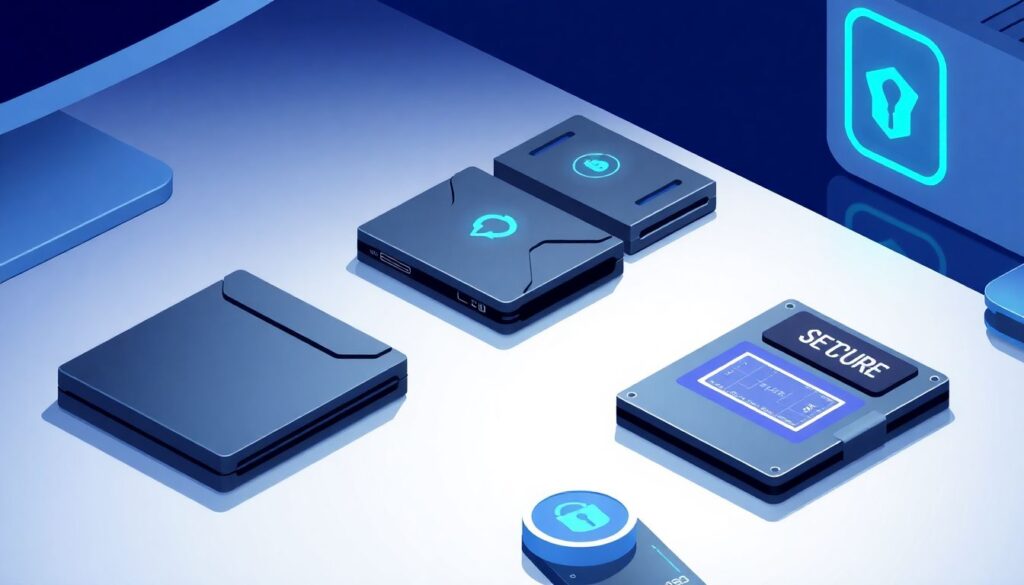
By 2025, hardware wallets have matured into a relatively standardized product class. Most leading models use secure elements (chips certified under standards like Common Criteria EAL5+), on-device transaction verification, and firmware signing to prevent unauthorized modifications. Industry data suggests that while targeted attacks against individuals exist, large-scale hardware wallet compromises remain rare compared with exchange hacks or phishing incidents. Economically, paying $70–$200 for a device that protects assets worth several thousand dollars is an asymmetrical bet in your favor, which is why institutional custodians emulate similar air‑gapped architectures at a larger scale.
The real cost for beginners is cognitive, not monetary: learning to verify addresses on a tiny screen and to keep the seed offline without losing it.
Future trends: secure elements, open firmware and regulations
Looking ahead to 2030, we can expect more convergence between consumer hardware and crypto-specific security modules. Phone manufacturers are already integrating stronger secure enclaves and hardware-backed key stores; that raises the bar for software wallets and narrows the gap with standalone devices. At the same time, open-source firmware and reproducible builds are becoming selling points, as privacy-conscious users demand verifiability instead of trusting vendor black boxes. Regulators may also start setting minimum security baselines for devices marketed to retail investors, particularly in jurisdictions where crypto is framed as a mainstream investment product rather than a niche hobby.
These trends will likely strengthen the case for consumer hardware wallets while making them feel less “expert only.”
Software wallets and MPC: evolving hot wallet security
Mobile and browser wallets: convenience versus risk
For daily use, software wallets remain indispensable. You need them to interact with DeFi, NFTs, gaming and on-chain identity systems. In a hardware vs software crypto wallet security comparison, the latter shine on usability: notifications, deep links from dApps, integrated token swaps and staking dashboards. The flaw is that phones and browsers are absolute malware magnets; keyloggers, clipboard hijackers and malicious browser extensions routinely drain wallets the moment a signing request is approved. That’s why many professionals advise a tiered approach: a mobile hot wallet with small balances for experimentation, and a hardware cold wallet for serious value.
From an economic standpoint, this segmentation mimics traditional finance: a checking account for spending and a vault for savings.
MPC and smart-contract wallets: a different security model
One of the more interesting directions in 2025 is the rise of MPC-based and smart-contract wallets. Instead of a single private key, MPC splits signing authority across multiple devices or servers; an attacker must compromise several components simultaneously. Smart-contract wallets on networks like Ethereum add programmable controls: spending limits, time locks, multi-signature rules and session keys for dApps. For beginners, these systems can reduce the risk of a single catastrophic mistake, but they introduce new dependencies: smart-contract bugs, backend services going offline, or complex recovery processes. As gas fees fall on L2s, on-chain security logic becomes economically viable even for small accounts.
Over the next five years, expect most beginner-friendly wallets to quietly adopt MPC or contract-based safety nets under the hood.
How to compare wallets as a beginner in 2025
Building a simple comparison checklist
If you’re wondering how to choose a safe crypto wallet for beginners without reading academic papers, start with a streamlined checklist. First, key custody: do you truly hold the keys, or is it a custodial account behind the scenes? Second, signing isolation: are transactions confirmed on a dedicated screen, or only inside a browser pop-up? Third, recovery: do you understand exactly how to restore access if your phone or hardware is lost? Fourth, transparency: is the code open-source or at least independently audited? Finally, ecosystem compatibility: does the wallet support the chains and dApps you actually want, without forcing risky workarounds like copy-pasting private keys between apps?
You don’t need perfection on every axis, but you should be able to answer each of these questions clearly.
Putting it all together: from features to practical choices
When people search for the best secure crypto wallet for beginners, they often hope for a single brand name. A more realistic approach is scenario-based: a hardware wallet plus a reputable mobile app is ideal for long-term holdings, while a well-maintained browser wallet with strong phishing protection suffices for low-stakes experimentation. As you conduct your own crypto wallet security features comparison, treat vendor marketing claims skeptically and prioritize documented audits, longevity of the project, and user reports of past incidents. For 2025 and the near future, hybrid setups—combining hardware signing with user-friendly software interfaces—are poised to dominate, balancing security with the convenience that mainstream adoption demands.
Instead of chasing the mythical “most secure cryptocurrency wallets 2025,” aim for coherent, layered defenses that match your actual behavior and risk tolerance.