
Why rug pulls and fake partnerships matter for beginners
When you open a wallet, join a Telegram, and buy your first tokens, you instantly become a target for low‑effort scams and more advanced rug pulls. Attackers rely on FOMO, lack of due diligence and the illusion of “big partners” to drain liquidity and disappear. Understanding how to avoid crypto rug pulls early saves you from learning the hard way. Instead of trusting hype, you’ll learn to check on‑chain data, verify claims and treat every unknown token like an unverified executable file in cybersecurity.
Step 1: Slow down your decision‑making
Newcomers often buy because a friend, influencer or anonymous admin says “it’s about to moon.” The core discipline is to slow the process: observe, collect data, verify, then decide. If a project can’t survive a 24‑hour pause while you research it, that’s already a negative signal. Scammers weaponize countdown timers, “last presale round” banners and emotional language. Build a habit: never connect your wallet or buy a token without a checklist, the same way you wouldn’t run unknown code on a production server.
Step 2: Read the tokenomics and contract basics
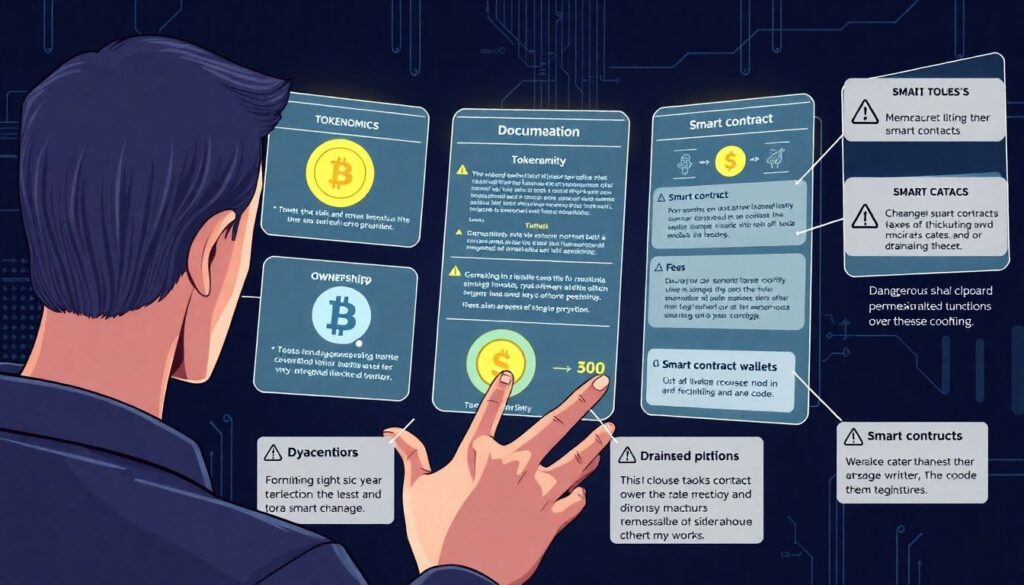
Before you even think about price, examine tokenomics and the smart contract. Look at total supply, minting rights, ownership and fee structure. A typical rookie error is ignoring functions that allow developers to change taxes, blacklist wallets or drain liquidity. These permissions are often hidden behind friendly marketing. If you can’t read Solidity, use blockchain explorers and audit summaries to see whether the owner can still modify critical variables. Red flags here usually matter more than any short‑term chart pattern or social buzz.
Step 3: Practical checks to avoid classic rug pull patterns
Start with objective, on‑chain checks, not Discord hype. Examine whether liquidity is locked, and for how long, through reputable lockers. Confirm that the deployer wallet is not the only major holder and that no single address has an outsized share of supply. For how to avoid crypto rug pulls in practice, you want predictable behavior: no stealth mints, no opaque bridge contracts, no unexplained dev wallets. If the project refuses to publish transaction hashes for claims like “liquidity locked,” assume the opposite until independently verified.
– Verify liquidity lock on chain, not via screenshots
– Check top holders and distribution in the block explorer
– Review recent contract interactions for suspicious admin actions
Step 4: Using tools and services instead of guessing
You don’t need to be a solidity engineer to spot many traps. The best tools to detect crypto rug pulls automate checks for high tax functions, mint authority, proxy contracts and ownership status. On top of scanners, there are crypto scam detection services for investors that score contracts, wallets and even Telegram groups based on historical abuse patterns. Treat these systems like antivirus: not perfect, sometimes overly cautious, but very useful for filtering obvious threats before you commit capital or connect your main wallet.
Step 5: Verifying “big name” partnerships
Fake partnerships are a favorite trick because they’re cheap to fabricate and hard for beginners to dispute. Learning how to verify crypto project partnerships starts with a simple principle: trust only what the alleged partner publishes on its own official channels. If a small token claims a deal with a Tier‑1 exchange, major protocol or big brand, look for confirmation on that partner’s website, X account or GitHub. Logos on a landing page mean nothing without reciprocal, time‑stamped announcements and, ideally, on‑chain collaboration you can actually see.
– Check official announcements on the partner’s verified channels
– Search for joint AMAs, GitHub commits or co‑signed blog posts
– Be suspicious of “stealth partnerships” and NDA excuses
Step 6: Recognizing typical newbie mistakes
New users often confuse polished design with legitimacy. A professional website, glossy pitch deck and slick Telegram bots do not equal security. Another mistake is over‑valuing KOLs and “crypto YouTube” as due diligence; many influencers are paid promoters with no liability. Beginners also disregard basic OPSEC: they connect their main wallet everywhere, sign random approvals and never revoke them. These behaviors turn even minor misjudgments into full capital loss. Assume every DApp could be malicious until it proves otherwise through audits and transparent operations.
Step 7: Leveraging protection platforms and safer workflows
Beyond scanners, there are rug pull protection platforms for crypto investors that offer monitored launchpads, insurance‑like pools or curated project lists with strict listing criteria. While none of them guarantee safety, they raise the bar for attackers and reduce exposure to blatant fraud. Combine that with a layered workflow: use a fresh wallet for testing new protocols, limit capital per experimental trade, and regularly review approvals. This “defense in depth” approach mirrors professional risk management and lowers the impact of any single failure.
Step 8: Building your personal risk checklist
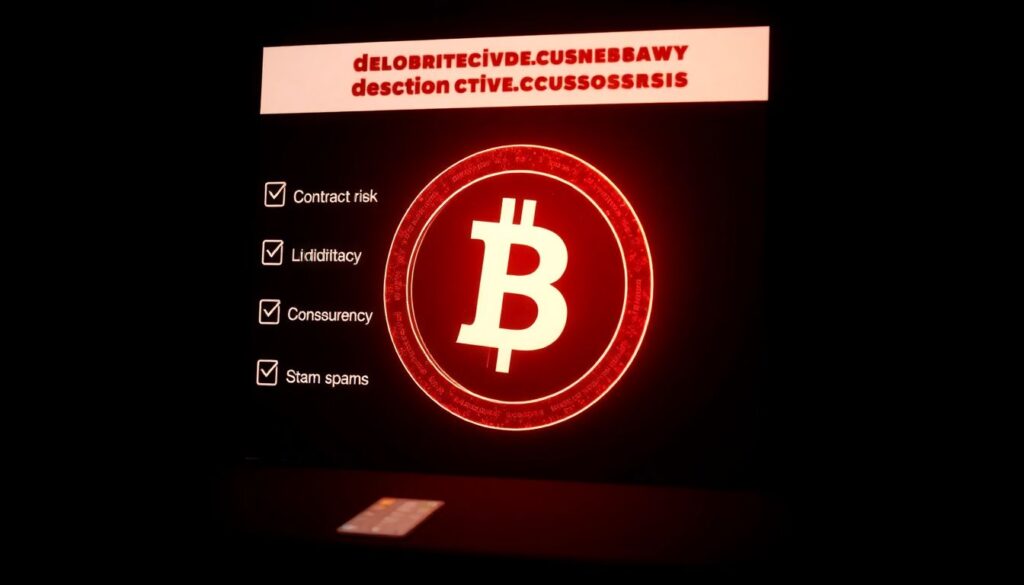
Over time, convert these principles into a repeatable checklist you follow mechanically, especially when excited or tired. Include contract risk, liquidity status, team transparency, partnership verification and external audits in your routine. Run projects through multiple crypto scam detection services for investors and compare outputs instead of trusting one score blindly. Keep logs of mistakes you’ve made and patterns that fooled you, then update your checklist. A disciplined, documented process is your main edge over impulsive traders who rely on vibes and social proof alone.
Step 9: When in doubt, size down or walk away
The cleanest protection is position sizing. If something looks promising but fails one or two checks, either skip it or size your exposure as if it could go to zero overnight. Accept that you’ll miss some genuine opportunities by being strict; that’s the trade‑off for surviving long term. Professionals don’t try to outsmart every scammer; they design systems that make scams statistically unprofitable against them. For a beginner, the combination of slower decisions, structured checks and smaller bets is the most realistic way to stay in the game.