
Why spot feels “safe” and why it still matters
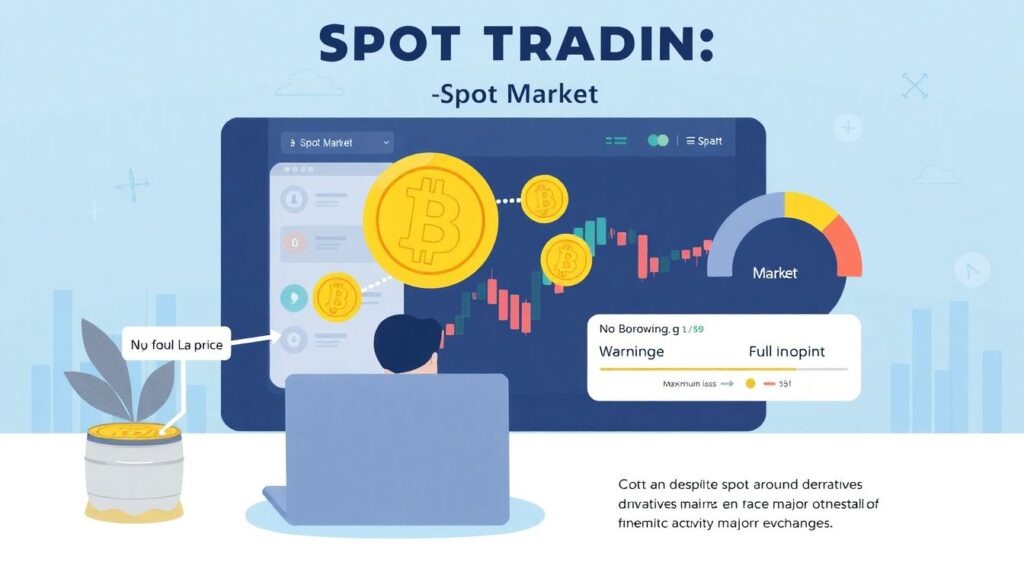
Spot trading is where you simply buy or sell an asset and fully own it, without borrowing or leverage. You pay the full price, receive the coins, and your maximum loss is limited to what you invested. Despite all the hype around derivatives, spot volumes still dominate retail activity: on major exchanges, spot often makes up 20–40% of total volume, while the rest comes from margin and futures. For beginners, spot is crucial because it builds intuition about order books, slippage, liquidity and fees. If you don’t clearly understand how a simple market or limit order behaves on spot, adding leverage will only amplify confusion, not profits. Many newcomers skip this phase, chasing fast gains, and then wonder why their leveraged positions get liquidated so quickly.
Leverage: why the same move hurts more
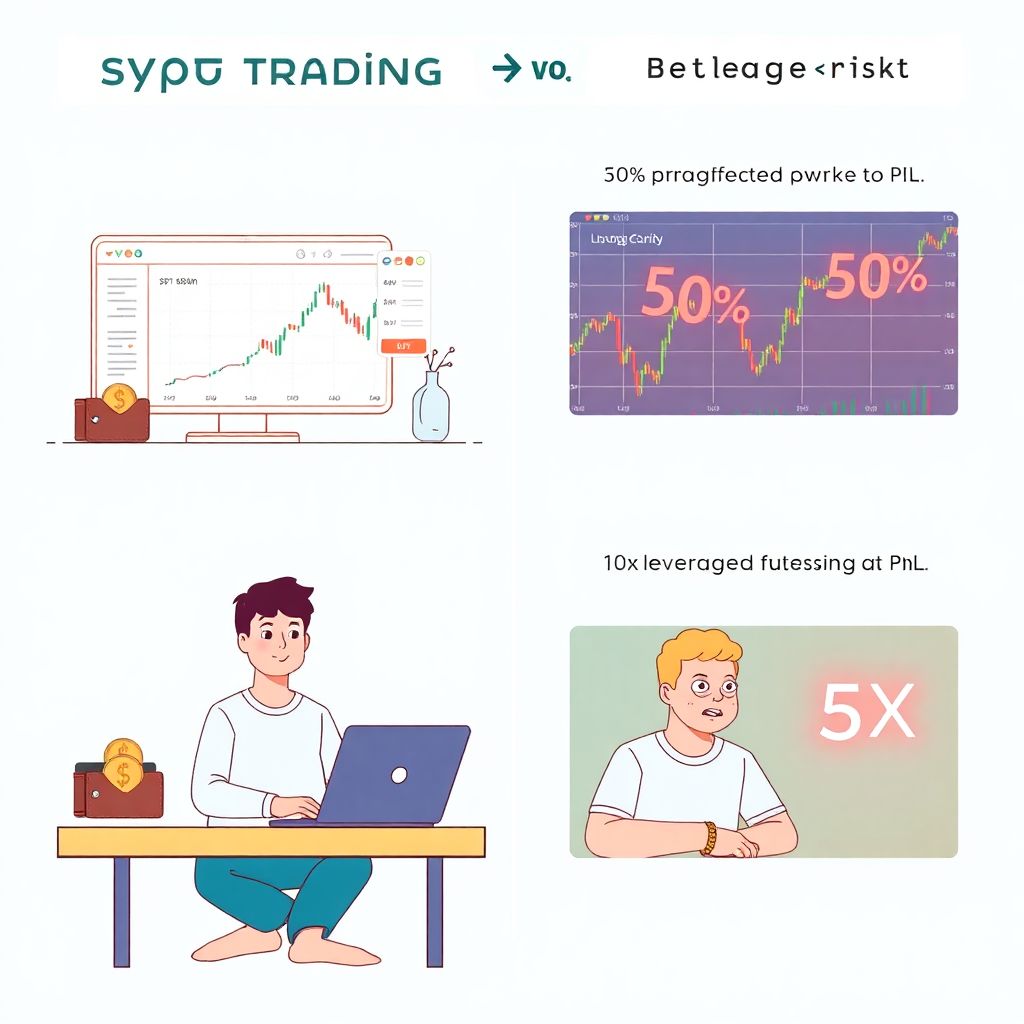
Leverage just scales everything. A 5% move on spot is mild; the same move at 10x leverage means roughly 50% gain or loss on your capital, before fees and funding. The asset didn’t become riskier; you did. New traders constantly underestimate how quickly leveraged PnL swings translate into emotional, irrational decisions.
spot vs margin vs futures trading: core mechanics and key risks
In margin trading, you borrow funds from the exchange or a lending pool to open a larger position than your balance allows. Your collateral backs this loan, and if the market moves against you, the platform can liquidate your position to repay itself. In futures trading, you don’t borrow the underlying asset; instead, you trade contracts that track its price, often with much higher available leverage. Perpetual futures add funding rates, periodically paid between longs and shorts to keep prices close to spot. Technically, margin risk is tied to loan-to-value ratios and interest, while futures risk depends on maintenance margin and volatility spikes. New traders often conflate the two and don’t read the exact liquidation formulas, assuming all leveraged products behave similarly, which leads to abrupt, “mysterious” blow‑ups of their accounts.
Classic beginner traps on margin platforms
On the best crypto margin trading platforms, newcomers repeat the same errors: using maximum leverage because it’s available, collateralizing with highly volatile tokens, ignoring margin interest, and averaging down losing trades without a defined exit. Many also think cross margin is “safer” because it uses the full balance, not realizing it exposes their entire account to one bad idea.
Futures, funding, and how to actually start using leverage

Futures contracts look simple on the interface, which hides the complexity under the hood. Perpetual swaps, now the dominant derivative, regularly charge or pay funding depending on whether the contract price is above or below spot. Overactive markets can see sharply positive funding, silently eroding the PnL of over‑leveraged longs who “win” on price but lose on funding and fees. If you wonder how to start futures trading with leverage in a sane way, the answer is boring but effective: begin with very low leverage, fixed‑size positions, hard stop‑losses and tiny allocation per trade. Backtest simple rules on historical data and learn how changes in volatility and funding would have impacted you. Systematically tracking this will teach you that survivability, not maximum theoretical profit, is what separates consistent traders from short‑lived gamblers.
Psychology, overtrading and the illusion of control
Leverage magnifies emotions as much as returns. New traders often revenge‑trade after a loss, double size “to make it back,” or move stops farther away, turning a planned intraday scalp into a multi‑day stress position. The illusion is that more analysis will fix bad risk management; in reality, position sizing and discipline matter more than predictions.
Numbers, forecasts and why leverage reshapes the industry
Over the last few years, derivatives volume has frequently exceeded spot by a factor of two to five on leading exchanges, signaling a structural shift toward speculative and hedging activity. In some months, more than 60% of total crypto trading volume came from futures, with perpetual contracts dominating. Analysts expect derivative markets to keep expanding as institutional players seek capital‑efficient hedging, potentially pushing leveraged products toward 70% of aggregate volume by the end of the decade. From an economic angle, well‑functioning derivatives improve price discovery and allow miners, treasuries and funds to hedge exposure more efficiently. At the same time, retail misuse amplifies boom‑bust cycles: cascades of forced liquidations can add billions in notional volume within hours, deepening short‑term volatility. This dual nature explains why regulators scrutinize spot trading vs leveraged trading benefits, trying to balance innovation with consumer protection and systemic stability.
Building realistic margin and futures habits from day one
For margin and futures trading strategies for beginners, the priority is not clever indicators but strict constraints: cap leverage (for example 2–3x initially), risk a tiny fixed percentage of capital per trade, and avoid holding highly leveraged positions through major news or low‑liquidity hours. Think in scenarios: where does your thesis fail, and can you accept that loss without emotional meltdown? If not, the position is too big. Study funding, liquidation prices and fee structures as carefully as charts. Leverage is just a tool; used methodically, it enables hedging and efficient capital use, but approached with impatience and FOMO, it turns into an expensive lesson most accounts don’t survive twice.