
Why sharding matters (and why you should care)
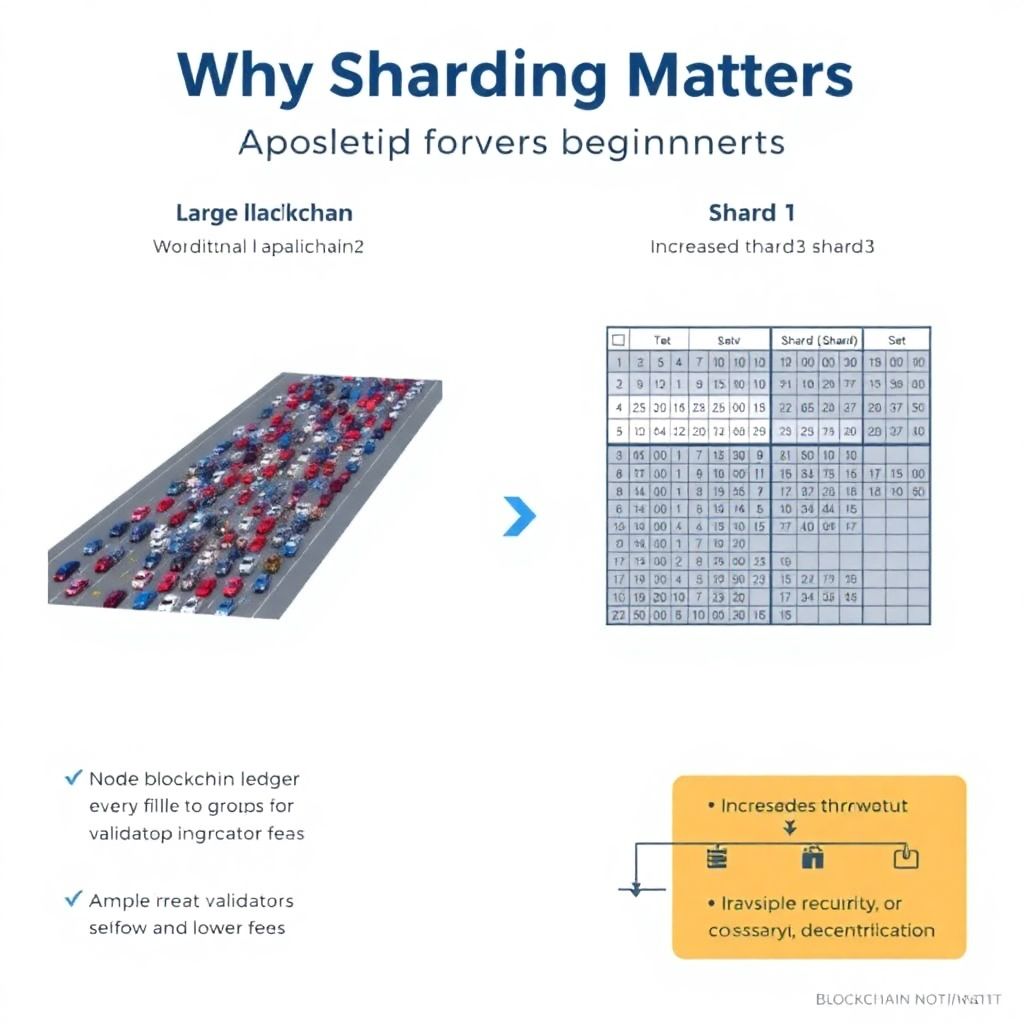
If you’ve ever wondered why some blockchains grind to a halt when many people use them, sharding is one of the big ideas trying to fix that. Think of it as breaking a huge, crowded highway into many parallel roads so more cars can move at once. This beginner guide is basically *blockchain sharding explained for beginners* without assuming you already speak “crypto dev” fluently.
In simple terms, sharding splits the network into smaller groups of nodes (shards). Each shard handles only a portion of the total data and transactions, and then the network stitches everything together so it still behaves like one chain. Done well, you keep security and decentralization, but you massively increase throughput and reduce fees.
The core idea behind sharding, in plain language
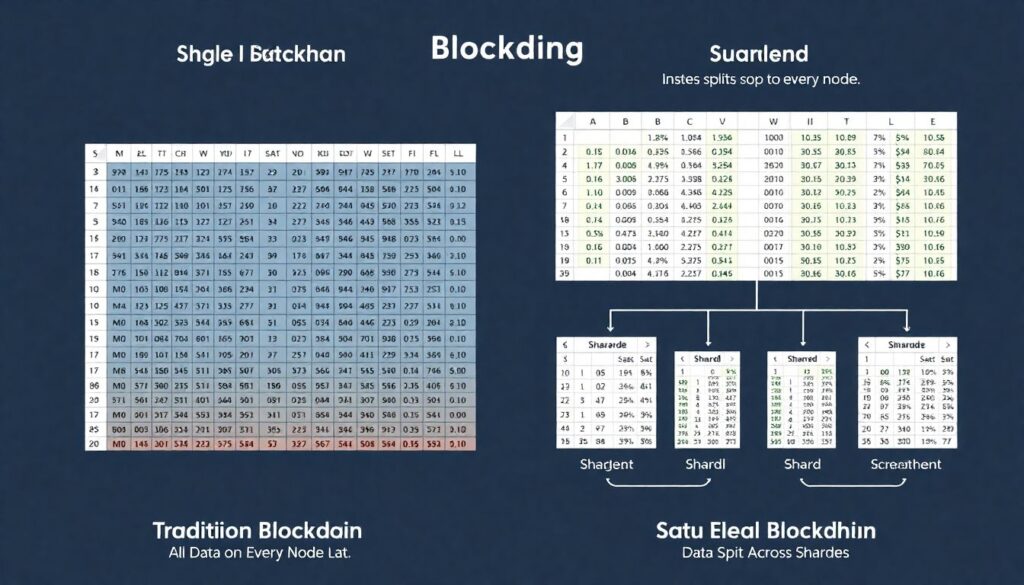
Imagine a massive spreadsheet that everyone on the network must store and update. Traditional blockchains make every full node keep *all* rows and verify *every* change. That’s safe, but it doesn’t scale.
With sharding, you split that spreadsheet into multiple smaller spreadsheets—shards. Node A might be responsible only for rows 1–1,000, Node B for 1,001–2,000, and so on. They still follow the same global rules, but each node processes only its slice instead of everything. Cross‑shard communication (how these slices talk to each other) is where the real engineering magic happens.
Real-world case #1: Public network struggling with congestion
A mid-sized DeFi ecosystem on a layer 1 chain (similar to early Ethereum) hit a wall: NFT drops and trading bots were spiking gas fees and slowing everything down. A team working with a *blockchain scalability solutions sharding service* set up a testnet where:
1. DeFi contracts lived mainly on one shard.
2. NFT activity moved to another shard.
3. Cross‑shard messaging handled transfers between DeFi and NFT users.
On the testnet, the network processed roughly 3–5x more transactions per second with notably lower fees, while validators still rotated between shards to maintain security. This experiment convinced the project to move toward a production sharded design instead of just endlessly increasing gas limits.
What you need before diving into sharding concepts
You don’t need to be a hardcore protocol engineer, but a few tools and basics will make everything easier. Treat this like your starter kit rather than a shopping list of fancy dev toys.
First, get comfortable with a block explorer (Etherscan, Polkadot/Substrate explorers, Near Explorer, etc.). These interfaces help you see how transactions flow today—so when you look at *layer 1 blockchain platforms with sharding* later, you can notice how they represent shards, segments, or parachains. A decent code editor (VS Code is popular), a terminal, and basic Git knowledge are enough if you want to experiment locally.
Minimal technical skills that actually help
You’ll understand sharding faster if you grasp:
– What a node is and what validation means.
– The difference between full nodes, light clients, and validators.
– How consensus (Proof of Stake, for example) roughly works.
You don’t have to write consensus algorithms yourself, but reading a few docs from a *blockchain development company sharding implementation* case study helps you see how theory becomes running code.
Step-by-step process: how to build your mental model of sharding
Let’s walk through a structured way to go from “I’ve heard the word sharding” to “I know exactly what each whitepaper is talking about.” Use this as a learning path rather than a strict curriculum.
1. Start with the scalability problem.
Learn why block size, block time, and node requirements can’t be increased indefinitely without centralizing the network. That’s the whole reason sharding and other scaling solutions exist.
2. Understand horizontal vs. vertical scaling.
Vertical scaling = making single nodes stronger (bigger servers). Horizontal scaling = using more nodes in parallel—a good mental anchor for sharding.
3. Read how a single-shard blockchain works today.
Pick a familiar chain and follow a transaction from wallet to mempool to block finalization. Once you see that every node checks everything, the role of shards will make more sense.
4. Add shard logic conceptually.
Now imagine that instead of all nodes checking all transactions, each transaction is assigned to a shard based on rules (user address, account range, or application type). Only some nodes validate it, while others simply trust proofs.
5. Study cross-shard communication patterns.
This is where designs differ: some use receipts, some rely on asynchronous messages, others on shared sequencing layers. Whenever you read a sharding paper, ask: “How do two accounts on different shards talk?”
6. Compare at least two real implementations.
Look at how one of the *layer 1 blockchain platforms with sharding* (like NEAR or the modular approach in some ecosystems) contrasts with rollup-style scaling on other chains. Seeing differences in validator assignment, data availability, and messaging clarifies trade-offs.
7. Map the theory to business use cases.
For enterprise systems, sharding may be more about regulatory boundaries, data locality, or throughput guarantees. That’s where *enterprise blockchain sharding consulting* projects usually focus.
Follow these steps and you’ll go from vague buzzwords to a solid, working understanding.
Real-world case #2: Enterprise consortium with “regulatory shards”
A logistics consortium—several shipping companies and customs brokers—needed a permissioned blockchain. Different regions (EU, US, Asia) had distinct data rules. One architecture workshop, led by an *enterprise blockchain sharding consulting* firm, landed on a sharded design:
– Each region ran its own shard with local validators (regulated entities in that jurisdiction).
– A global coordination shard processed only minimal metadata: shipment IDs, status flags, and hashes.
– Heavy, regulation‑sensitive data stayed inside each regional shard but could still be proven globally via cryptographic commitments.
The result: regulators in each region were satisfied that sensitive data didn’t “leak” across borders, while the consortium still shared a unified tracking view. Throughput grew linearly as new regions (new shards) joined, without forcing everyone to sync all regional data.
Tools and environments for hands-on learning
If you like learning by doing, there are a few practical environments worth exploring—even if your goal is mostly conceptual clarity. Some testnets and frameworks simulate how shards or parallel chains behave, letting you send transactions between them and observe the delays and costs.
At a minimum, set up:
– A local node or devnet for a chain that either supports sharding or parallel chains.
– CLI tools to deploy simple smart contracts.
– A block explorer (local or web) to inspect how the system stores your contracts and transactions.
How companies actually implement sharding
From the outside, sharding sounds like “just add more shards and go faster,” but inside any serious *blockchain development company sharding implementation* you’ll see a lot of careful, sometimes tedious work:
– Designing how validators rotate between shards so no shard becomes captured by bad actors.
– Creating light client proofs so users and apps on one shard can safely rely on data from another.
– Ensuring transaction fees and incentives stay aligned across shards and don’t push everyone to a “cheap but insecure” shard.
Talking to teams who have run production pilots will quickly reveal that sharding isn’t a magic button—it’s an ongoing balancing act.
Key design questions you should always ask
When you evaluate any sharded system—or read a whitepaper—keep these questions handy to avoid getting lost in jargon:
1. How are shards defined (accounts, applications, geography, random splitting)?
2. Who validates each shard, and how often do validators rotate?
3. How do cross-shard transactions work, and what is their latency?
4. How is data availability guaranteed so no shard can “hide” information?
5. What happens if one shard goes offline or gets attacked?
If a project can’t answer these questions clearly, it’s a red flag, no matter how shiny their diagrams look.
Real-world case #3: Startup using a sharding service instead of building from scratch
A gaming startup wanted to run large-scale in-game transactions and NFTs without paying L1 gas fees. Building its own chain was overkill, so it partnered with a *blockchain scalability solutions sharding service* that offered “app shards” as a managed product.
– The service granted them a dedicated shard for their game.
– The shard anchored periodically to a major L1 for security via checkpoints.
– Cross-shard messaging allowed players to move assets between the game shard and a general-purpose DeFi shard.
For the startup, the main benefit wasn’t just speed. It was outsourcing the heavy lifting—validator management, upgrades, monitoring—to specialists, while still getting much better performance than a crowded monolithic L1.
Typical pitfalls and how to avoid them
Once you start digging into sharding, a few recurring misunderstandings tend to pop up repeatedly.
Many newcomers assume that more shards always equal more safety and speed. In reality, too many under-populated shards can actually reduce security because each shard has fewer validators. Also, cross-shard transactions can become bottlenecks if the design doesn’t scale with the number of shards.
Troubleshooting your understanding and practice experiments
If you’re experimenting on a testnet or reading docs and something doesn’t add up, here’s how to debug your own learning:
1. You don’t see any mention of shards in the explorer.
Check whether the network actually uses sharding or just sidechains/rollups. Some marketing material uses “sharding” loosely; dig into technical docs to confirm.
2. Cross-shard transactions look slow or confusing.
Trace a single transaction across shards and note: where is it first accepted, where is it confirmed, and when is it final? Many implementations use asynchronous messaging, so finality can be multi-step.
3. Node resource usage seems high despite sharding.
Verify whether your node is running as a full validator for multiple shards or as a light client. In early testnets, it’s common to over‑provision nodes for simplicity, which doesn’t yet reflect the long-term scaling behavior.
4. Docs contradict each other.
Check the publication dates. Sharding designs evolve rapidly. Earlier papers might describe plans that have since changed, especially around consensus and security assumptions.
If you still feel stuck, read a “from scratch” piece labeled as *blockchain sharding explained for beginners* side by side with the project’s latest technical spec. Matching their terminology one-to-one often makes everything click.
When to consider sharding for a real project
You probably don’t need sharding if your application is small, internal, or can live happily on an existing rollup or single‑chain L1. Adding shards, or building on top of a sharded network, starts making sense when:
– You expect sustained, high transaction throughput.
– You have clear separation between user groups or regions.
– You need to keep some data isolated but still provable to the rest of the system.
At that stage, talking to experts or a *blockchain scalability solutions sharding service* or even a boutique *enterprise blockchain sharding consulting* team can save you months of trial and error.
How to keep learning without drowning in theory
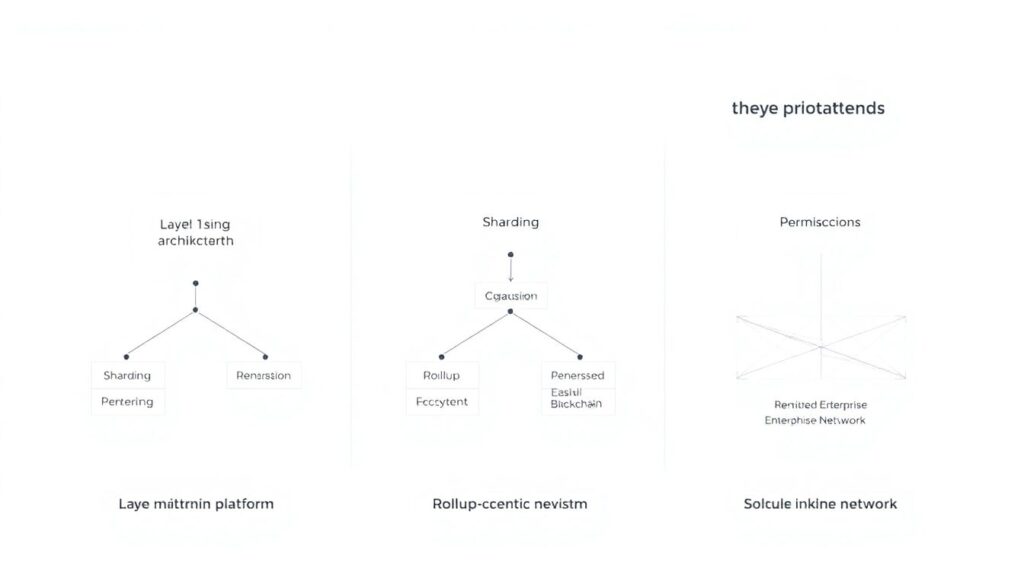
To continue building intuition, pick two or three concrete systems—one of the *layer 1 blockchain platforms with sharding*, a rollup-centric ecosystem, and maybe a permissioned enterprise network. Compare how they answer the same questions:
– What is a “shard” in our system?
– Who runs it?
– How do users move value across shards?
The more real case studies you see—from public networks under stress to private consortia juggling regulations—the clearer the trade-offs of sharding become. Over time you’ll not only understand the concepts, but also know when sharding is the right tool and when it’s just an overcomplicated answer to a simple problem.