
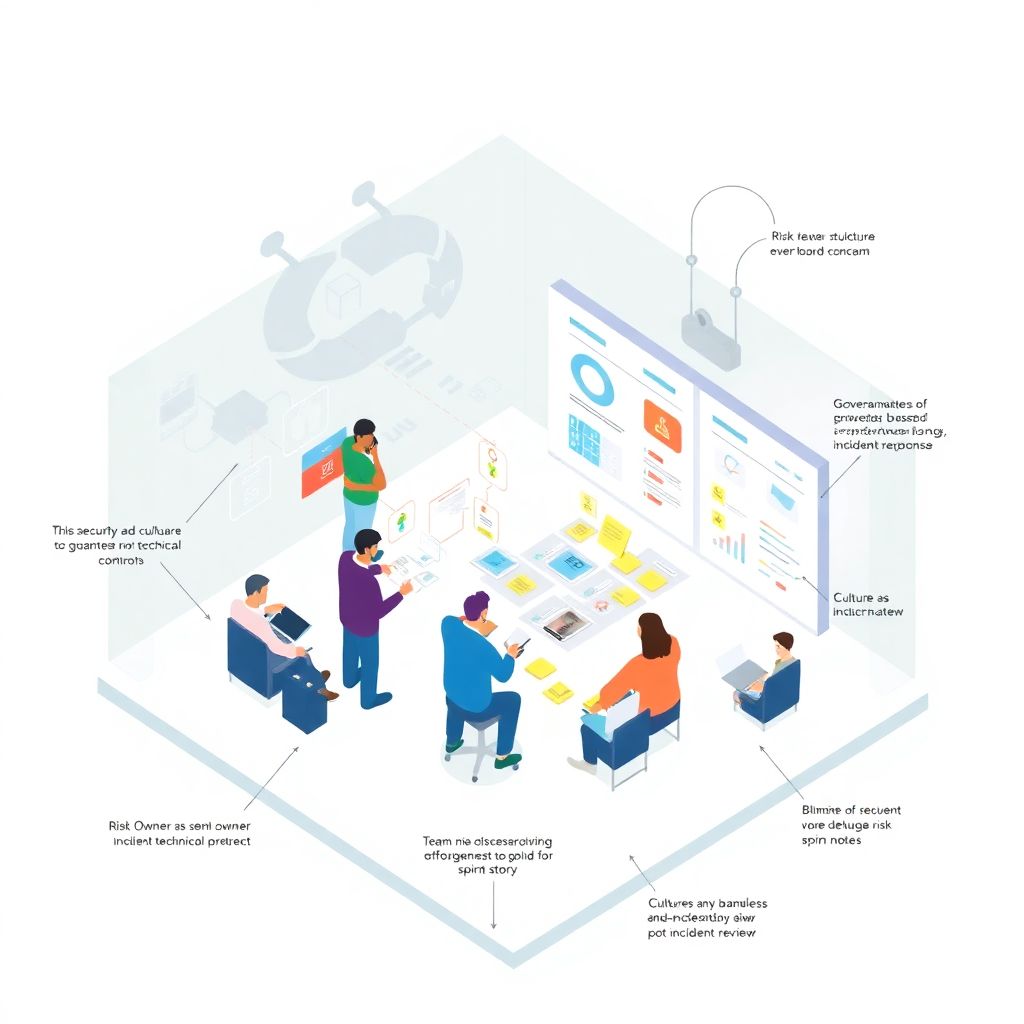
Why security culture and governance matter for every project
Even in 2025, many teams still treat security as “that thing the ops folks bolt on at the end”. In reality, every serious project now lives inside a dense web of regulations, supply‑chain dependencies and cloud services. Code quality, uptime and UX no longer tell the full story; you also need to know whether people make sane security decisions under pressure and whether rules are clear, realistic and enforced. This is exactly what a project‑level security culture and governance evaluation is about: understanding how people think, how decisions are made, and how well your guardrails actually work when the sprint board is on fire.
Historical background: from firewalls to culture metrics
In the early 2000s security management was mostly about perimeter defenses and technical controls. If you had hardened servers, patched systems and a competent admin, you were “secure enough”. As breaches became tied to phishing, insider mistakes and third‑party vendors, it became obvious that technology alone could not carry the load. Frameworks like ISO 27001 and NIST slowly pushed organizations toward governance, risk and compliance, but project teams still treated them as distant corporate bureaucracy. Over the last decade, high‑profile breaches traced back to bad decisions and toxic incentives forced companies to measure culture, not just controls.
Basic principles of evaluating security culture
When you start assessing security culture, forget about “Do we have MFA?” and focus on “How do people behave when nobody’s watching?”. A solid review looks at shared beliefs (“Security slows us down” vs “Security keeps us in business”), informal practices (Slack DMs with passwords, ad‑hoc data exports), and real incentives (is anyone rewarded for raising risks early?). Good security culture assessment services don’t just issue surveys; they combine interviews, workshop observations and incident post‑mortems to see how theory holds up in real sprints and releases, when deadlines and production bugs are pushing people to cut corners.
Governance: who decides, who owns, who is accountable
Security governance is the invisible scaffolding around your project: roles, processes and decision rights. Strong governance clarifies who can accept risk, who signs off on exceptions, how conflicts between product speed and safety are resolved, and what happens when something goes wrong. A mature security governance consulting firm will map your current decision flows, then highlight where risk ownership is fuzzy or where approvals are purely ceremonial. The outcome should not be more paperwork, but simpler, well‑understood paths for making and documenting risk decisions, aligned with the way your team already works.
Core steps for evaluating a project’s security culture and governance
1. Define scope and success criteria
Before diving into tools and workshops, pin down what “good” looks like for your specific project. Are you handling regulated data, critical infrastructure, or just a low‑risk internal app? Decide which dimensions you care about: speed of secure releases, number of self‑reported incidents, quality of risk discussions, or adherence to a chosen framework. Without explicit success criteria, even the best cyber security maturity assessment tools will only produce vague scores. Write down the business goals first, then derive your culture and governance questions from those goals, not from buzzwords or generic checklists.
2. Gather evidence from multiple angles
Relying on questionnaires alone is a trap; people often overestimate how secure their daily behavior is. Combine anonymous surveys with one‑on‑one interviews, shadowing of ceremonies (planning, stand‑ups, incident calls), and review of artifacts: playbooks, backlog items, post‑incident reviews. Blend this with lightweight information security audit and compliance services to verify whether what people say matches what logs and configurations show. The goal is triangulation: if developers claim they always do peer review for security‑sensitive changes, you should see that reflected in pull requests, checklists, and their CI/CD gating rules.
3. Analyze incentives, not just policies
On paper, most projects now have decent security policies. The real story lives in incentives. Are engineers praised for catching risky shortcuts, or only for shipping features? Do product owners get penalized for delays while security teams face no consequences for blocking releases? When evaluating governance, track how often risk exceptions are granted, who asks for them, and on what grounds. Look for patterns where security is consistently overridden for “business reasons” without a clear record of risk acceptance. Culture changes once you align performance metrics, recognition and career growth with secure behavior.
4. Run an enterprise‑grade risk lens over the project
Even small projects are now plugged into enterprise ecosystems: single sign‑on, shared data lakes, vendor APIs. An isolated view misses cascading effects. That’s where enterprise security risk assessment consulting becomes essential, even if the engagement is small. You want to understand how a compromise in this project could pivot into finance systems, leak customer data, or damage brand trust. Map your project’s dependencies—SaaS tools, cloud resources, internal services—and ask what happens if each of them fails or is abused. This reframing helps teams take security discussions more seriously, beyond “We’re just a small service”.
Practical examples of implementation
In a fintech startup, the security lead embedded a short “risk story” segment into every sprint review. Developers described one decision that had security implications—using a new third‑party component, exposing an internal API, or modifying logging. Over three months, this ritual normalized talking about risk early, and the number of surprise findings during audits dropped. In a larger enterprise, project teams piloted a lightweight governance model: a rotating “risk captain” per team, empowered to pause deployments for critical findings. This simple change shifted responsibility from a distant security office to people closest to the code.
How to work with external experts without losing control

Bringing in outside help is often the fastest way to spot blind spots, but you don’t want generic slide decks. When hiring a security governance consulting firm or culture assessment provider, be explicit: you need project‑level insights, not only corporate‑wide frameworks. Ask them to participate in your actual ceremonies, not just interview managers. Insist on co‑creating recommendations with your team so that the final guidance matches your tech stack, release cadence and team size. Use consultants to accelerate internal learning, but ensure ownership of security decisions and priorities remains within the project leadership.
Typical misconceptions and how to avoid them
One persistent misconception is that good technical controls automatically mean good security culture. You can have perfect SAST, DAST and WAF rules and still suffer because people share admin accounts or skip post‑incident reviews. Another myth is that only big organizations need structured governance; in reality, even a five‑person team benefits from clarity on who accepts which risks. Some believe that buying more cyber security maturity assessment tools equals progress. Tools help, but only if they feed into decisions, priorities and habits. Evaluation without follow‑up actions just generates guilt and pretty dashboards.
Using tools wisely without drowning in data
The market is flooded with cyber security maturity assessment tools, culture surveys and automated policy checkers. Start small: pick one or two instruments that match your project’s size and regulatory landscape. Integrate them into existing workflows—Jira, CI/CD, Slack—so they surface insights where people already work. Treat outputs as conversation starters, not verdicts. If a tool flags poor vulnerability management, ask how priorities are set, what trade‑offs teams face, and which governance gaps allow issues to linger. Over time, adjust metrics to focus on leading indicators—early risk identification, self‑reported mistakes—rather than vanity scores.
Step‑by‑step mini‑framework you can apply this quarter
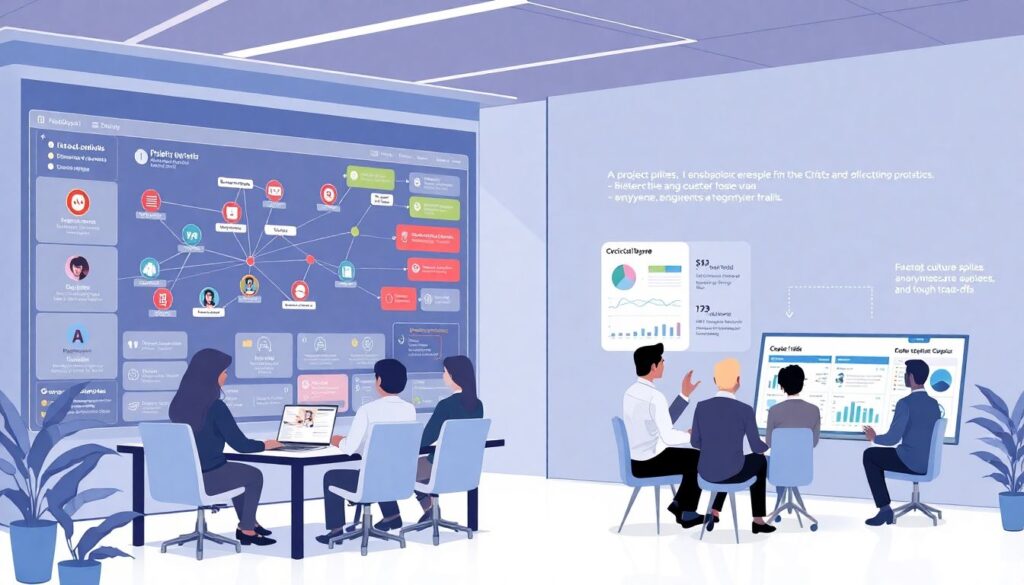
1. Map your project’s stakeholders and critical assets, then define a short list of risks that would actually hurt: data loss, downtime, fraud, regulatory trouble.
2. Run a quick culture pulse: anonymous survey plus three to five interviews across roles, focusing on recent incidents and tough trade‑offs.
3. Review current governance: who approves releases, who signs off risk exceptions, how incidents are escalated and documented.
4. Pick two to three concrete improvements—e.g. add security criteria to “definition of done”, introduce blameless incident reviews, clarify risk ownership.
5. Re‑evaluate after two sprints and adjust; treat this as an ongoing practice, not a one‑off project.
Forecast: where security culture and governance are heading by 2030
By 2030, evaluations will be far more continuous and data‑driven. Collaboration tools already capture how teams communicate about risk; expect AI‑assisted analysis of incident channels, pull‑request comments and ticket histories to highlight cultural weak spots in near real time. Regulations will likely demand clearer evidence that projects not only have controls, but actively measure and improve their security behavior. information security audit and compliance services will expand to include culture metrics, such as frequency and quality of post‑incident reviews. Teams that treat security culture as a living system rather than a checkbox will gain a serious competitive edge.
Final thoughts: making evaluation a normal part of project life
Evaluating security culture and governance doesn’t need to be a heavy, corporate ritual. If you keep it close to day‑to‑day work, focus on real decisions and align incentives, it becomes just another aspect of running a healthy project. In 2025 the gap between teams that do this well and those that ignore it is already visible in breach statistics and customer trust. Build simple, repeatable practices, invite honest feedback, and use external support—whether security culture assessment services or enterprise security risk assessment consulting—as a catalyst, not a crutch. Over time, security becomes part of how your team naturally gets work done.