

Why a crypto learning plan matters more than hype
Most people enter crypto fueled by headlines and leave after the first drawdown. A structured learning plan flips that script: instead of chasing signals, you build skills that survive bull and bear markets alike. Experienced traders I’ve interviewed say the real edge is not a secret indicator, but a repeatable way to learn, test, and adapt. This guide will help you turn scattered videos and threads into a practical roadmap you can actually follow, without needing a PhD in finance or computer science.
—
Setting realistic goals before you dive in
Clarify what “success” means for you
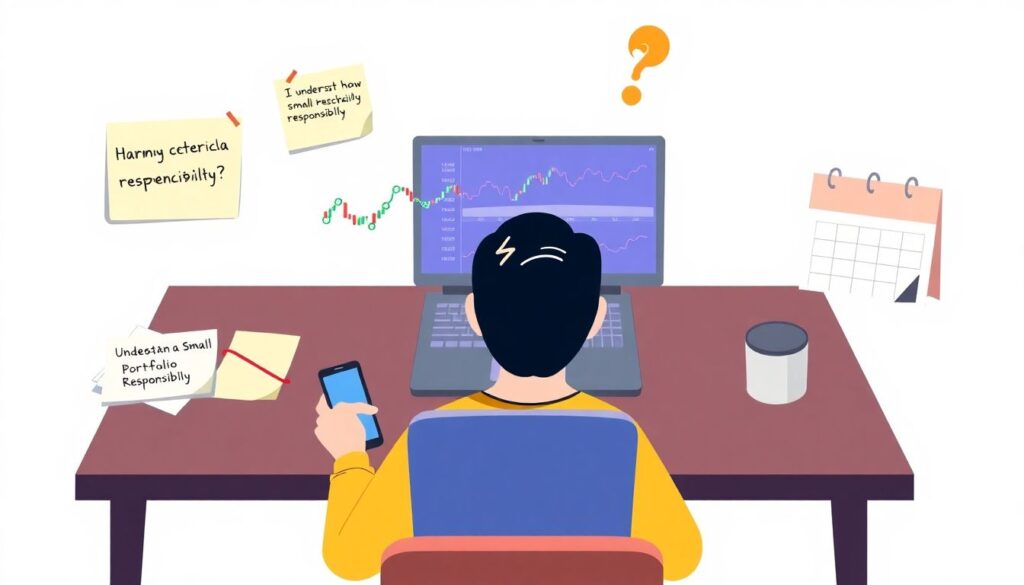
Before opening an exchange account, decide what you’re actually trying to achieve. “I want to get rich” is not a plan; “I want to understand how blockchains work and manage a small portfolio responsibly” is. Pros suggest defining measurable, time‑bound goals: for example, “In three months I want to explain Bitcoin vs. Ethereum to a friend, read a chart without panic, and place a limit order confidently.” Clarity like this lets you screen resources and ignore noise that doesn’t serve your path.
– Long‑term goal: e.g. “Become a part‑time systematic trader in 2–3 years”
– Medium‑term goals: skills for the next 3–6 months
– Weekly goals: concrete tasks you can tick off (chapters, videos, practice trades)
Pick your learning path: investor, trader, or builder
Crypto is an ecosystem, not a single skill. A DeFi yield farmer, a Bitcoin swing trader, and a Solidity developer all need different toolkits. That’s why expert mentors insist on choosing a primary role for your first 6–12 months. If you lean toward long‑term investing, focus on macro, tokenomics, and risk management. If crypto trading grabs you, emphasize chart literacy, order types, and journaling. If you’re technically curious, add protocol whitepapers and basic coding. You can always broaden later, but depth beats superficial variety at the start.
—
Essential tools for a sticky learning routine
Knowledge tools: where you’ll actually study
Instead of 20 random bookmarks, assemble a small, curated “learning stack.” That might include an introductory crypto trading course for beginners, a couple of well‑written books on Bitcoin and Ethereum, and one or two podcasts known for sober analysis. Experts recommend one core course and one reference book for your first quarter; more resources just increase distraction. When evaluating an online cryptocurrency investing class, look for transparent syllabi, real‑world case studies, and instructors who share their track record and risk philosophy, not just screenshots of wins.
– 1–2 structured courses (recorded or live)
– 1–2 books for fundamentals and background
– 1–2 long‑running podcasts or YouTube channels you trust
Practice tools: the lab for your experiments
Learning stays abstract until you put skin in the game—intellectually and financially. At the same time, you don’t want tuition paid entirely in losses. The compromise pros suggest is a sandbox setup: a reliable exchange account, a demo or paper‑trading environment, and a tiny “tuition portfolio” you can afford to lose completely. Combine these with a basic portfolio tracker and a note‑taking app. Treat every mistake as data to log and analyze, not a reason to rage‑quit; the goal is to learn cryptocurrency trading step by step, not to nail every trade from day one.
—
Building your step‑by‑step learning plan
Phase 1: Foundations (Weeks 1–4)
Your first month is all about orientation. By the end of this phase, you should understand what a blockchain is, why scarcity matters, and how exchanges and wallets interact. Many beginners use an online cryptocurrency investing class as a spine for this stage, filling gaps with articles from reputable research firms and official project docs. A simple weekly structure works well: two study sessions on fundamentals, one on market structure (order books, liquidity, volatility), and one hands‑on block where you move small amounts of crypto between a centralized exchange and a non‑custodial wallet.
Phase 2: Market literacy (Weeks 5–8)
Once terminology stops feeling alien, shift your focus to reading the market instead of reacting to price. This is where charts, timeframes, and basic technical analysis enter the picture. Seasoned instructors suggest picking at most three indicators—like volume, moving averages, and RSI—and learning their limitations deeply instead of stacking a dozen tools you barely understand. You’ll also want to grasp position sizing, fees, and slippage. During this phase, start journaling every trade idea, even if you don’t execute it yet: write the thesis, entry and exit plan, and what would invalidate your view.
—
Learning from structured programs (without becoming dependent)
How to choose courses and academies wisely
Structured programs can save months of trial and error, but only if you pick them with care. The best crypto trading academy for you is not necessarily the loudest on social media; it’s the one whose risk philosophy matches your temperament and whose content is transparent enough to critique. Check whether they teach position sizing, drawdowns, and psychological resilience, not just pattern names. Talk to alumni if possible, and scan their materials for survivorship bias. A good crypto education platform for investors will emphasize process over prediction, showing losing trades and decision trees, not just highlight reels.
Using courses as a backbone, not a crutch
An effective strategy is to treat any crypto trading course for beginners as scaffolding: something that supports you while you’re building but doesn’t become the building itself. Follow the main structure of the course, but supplement each module with one independent activity: reading a neutral research report, testing the idea on historical charts, or discussing it in a critical community. Experts stress: never copy strategies blindly, even from brilliant mentors. Adapt them to your time constraints, risk tolerance, and psychological profile, and document every tweak so you know what’s actually yours.
—
Daily and weekly habits that make learning “stick”
Designing a realistic study schedule

Consistency beats intensity. A full‑time job plus three kids probably means you’ll never manage three‑hour daily deep dives, and that’s fine. Many professional traders started with 30–45 minutes a day of focused, distraction‑free learning. Build a simple recurring block in your calendar: for example, Monday, Wednesday, Friday evenings for study; Saturday morning for practice and review. Use a timer and close all non‑essential tabs during that time. When your brain knows “this is my crypto slot,” it becomes easier to enter a learning mindset quickly, instead of constantly warming up.
– 3–4 short sessions per week beat one long marathon
– Protect your learning time the way you’d protect a meeting with your boss
– End each session by writing one question to investigate next time
The power of journaling and feedback loops
Traders who last a decade almost all share one unglamorous habit: meticulous records. Maintain two journals: a learning journal and a trading journal. In the learning journal, summarize new ideas in your own words and jot down how they connect to what you already know. In the trading journal, capture entry, exit, rationale, emotions, and outcome. Set a weekly “review ritual” where you skim both journals, highlight recurring mistakes, and decide on one small behavior to change next week. Over time, this feedback loop quietly compounds into genuine competence.
—
Troubleshooting: fixing the most common learning pitfalls
When you feel overwhelmed by information
Information overload is practically guaranteed in crypto. If you’re drowning in threads and videos, experts recommend an aggressive “information diet.” Unfollow accounts that shout but never explain. Limit yourself to a short, curated list of sources for a month and see how your stress changes. Re‑anchor on your plan: if a concept doesn’t connect to your current phase—foundations, market literacy, or strategy design—park it in a “later” list. Overwhelm is usually a sign that your intake grew faster than your ability to integrate, not that you’re incapable.
When you’re learning but not improving results
Another common complaint: “I study constantly, but my PnL still sucks.” This is where a more scientific mindset helps. First, separate market noise from genuine mistakes; you can follow your plan perfectly and still lose on a given trade. Next, categorize your errors: was it analysis (misreading structure), execution (late fills, fat‑fingered orders), or psychology (panic exits, revenge trading)? Seasoned coaches advise changing only one variable at a time—position size, entry trigger, or timeframe—so you can see cause and effect. Randomly mixing tweaks is how people stay stuck.
—
Staying ethical, skeptical, and adaptable
Guarding against scams and magical thinking
Because crypto sits at the intersection of money and novelty, it attracts both innovators and opportunists. Anchor yourself in skepticism: if a promise sounds outrageously good—“guaranteed yield,” secret arbitrage bot, insider signal group—assume it’s either incomplete or dishonest. Use your learning tools to analyze incentives: who profits if you believe this? Who bears the risk? Reputable platforms and online cryptocurrency investing classes will disclose risks plainly and discourage leverage abuse. Treat every new opportunity as a research assignment: outline pros, cons, assumptions, and failure modes before committing capital.
Evolving your plan as markets and tech change
Finally, remember that a learning plan is a living document. Protocols, regulations, and trading venues will keep changing; your schedule, capital, and interests will too. Experts recommend a quarterly “strategy offsite” with yourself: step back, review what you’ve actually learned, compare it to your original goals, and deliberately prune activities that no longer serve you. Maybe you started in short‑term trading and realize you’re happier as a long‑horizon allocator. That’s not failure; it’s successful iteration. The only real mistake is letting markets change while your thinking stays frozen.
—
By combining clear goals, a lean set of tools, structured programs, and honest self‑review, you turn crypto from a chaotic casino into an ongoing craft. Stick to the plan long enough, and you’ll notice the shift: instead of reacting to every price spike, you’ll see a complex but navigable system—one you’re finally equipped to learn from, on purpose.