

Why credibility in crypto matters more than hype
When you put money into a token, you’re not just buying “coins” — you’re buying into a set of assumptions: that the code works, the team is honest, the tokenomics make sense, and the market narrative isn’t pure fiction. Evaluating a crypto project’s credibility and legitimacy is the difference between catching early entries in the *best crypto projects to invest in 2025* and becoming exit liquidity for a cleverly marketed rug pull.
In practical terms, you’re doing three things: validating that the project is real, checking that incentives are aligned, and stress‑testing the story the team is selling. That’s what this guide is about: turning vague “DYOR” slogans into a clear, repeatable process.
—
Short historical backdrop: from cypherpunks to industrial‑scale scams
Early Bitcoin and Ethereum days were dominated by technically driven, open projects where contributors were often anonymous but reputations were earned in code repositories and mailing lists. Credibility was rooted in open-source culture and peer review.
The ICO boom of 2017–2018 changed the game. Thousands of tokens launched with glossy whitepapers, almost no working code, and very little oversight. Many collapsed, some were outright frauds, but a few — like early DeFi and infrastructure plays — turned into real ecosystems. Since then, regulators, auditors, and analytics platforms have stepped in, but the core problem hasn’t gone away: asymmetric information between project teams and retail investors.
Today, meme coins can hit nine-figure market caps in days, influencers can move markets in minutes, and smart contracts can lock billions. That’s why knowing *how to research a cryptocurrency before investing* is no longer optional — it’s survival.
—
Core principles of evaluating a crypto project
At a high level, credibility analysis rests on four pillars: transparency, verifiability, economic soundness, and operational discipline. If a project fails two or more of these, walk away.
Long version: each pillar corresponds to a set of concrete checks that should form your personal *crypto due diligence checklist before investing*. The goal isn’t perfection — even good projects can be messy — but consistency: your process should catch obvious red flags before you send a single transaction.
—
Team, identity and track record
The team is your first major signal. In crypto, anonymity isn’t an automatic red flag, but it does raise the bar for everything else.
Look for:
– Clear information about founders and key contributors
– Verifiable professional or open-source history
– Public presence that goes beyond hype (talks, GitHub, technical blogs)
If the founders are public, cross-check their LinkedIn, previous startups, and old GitHub activity. Does their past experience match what they claim to be building now? A complex L2 project led by people with zero prior infra or protocol experience is a mismatch.
When the team is pseudonymous, experts suggest compensating with harsher technical and on-chain scrutiny: check contract ownership, upgradeability, multi-sig signers, and whether control is gradually decentralizing. Anonymous teams with full unilateral control over contracts and treasuries are a high‑risk combination.
—
Technology and code: what actually exists today
Marketing pages are cheap. Repositories, testnets, and running code are harder to fake. This is where you shift from “do they sound smart?” to “have they actually shipped anything that works?”
For non‑developers, follow this simplified approach:
– Look for a public GitHub/GitLab with consistent commit history over months, not days
– Check if core contracts are verified on-chain (Etherscan or similar)
– See if there’s a public testnet or at least detailed docs and SDKs
Experienced auditors emphasize a basic rule: avoid putting serious capital into unaudited, upgradeable contracts controlled by a single EOA (externally owned account). Even if you can’t read Solidity, you can verify:
– Is there a published audit from a known firm?
– Is the audit recent and does it reference the exact contract addresses live on-chain?
– Were critical issues listed, and is there evidence they were fixed?
If the project claims multiple audits but refuses to link full reports, or the “audit PDF” is just a logo + one-page marketing sheet, that’s not an audit — that’s theater.
—
Tokenomics and incentives: where the money really flows
Tokenomics is where many otherwise decent ideas turn into slow-motion disasters. Even promising products can be terrible *investments* if the token is structurally misdesigned.
Key aspects to dissect:
– Supply schedule: total supply, emissions, vesting timelines
– Allocation: team, investors, community, treasury, ecosystem funds
– Utility: does the token actually do anything economically relevant?
Expert recommendation: always map token unlocks against your time horizon. If most of the supply unlocks within 6–18 months and you’re treating it as a multi‑year hold, you’re likely underestimating sell pressure. Projects that quietly delay publishing detailed tokenomics often turn out to have highly dilutive structures once the information finally appears.
A credible project will publish transparent vesting schedules, ideally with on-chain vesting contracts you can verify. If all team and investor tokens are sitting in freely movable wallets from day one, you’re trusting them not to dump — that’s a big assumption.
—
Market narrative and product–market fit
Not every good technology makes a good token investment. Some protocols accrue value to users but not to token holders. Others depend entirely on speculative narratives.
When people talk about *how to find legit crypto projects to invest in*, seasoned investors often point to three overlapping signals:
– The project solves a specific, non-hand-wavy problem
– There is visible, organic usage (on-chain transactions, TVL, active addresses)
– The token has a clear role in capturing part of the value created
Ask yourself:
– If this token disappeared tomorrow, would the product still work?
– Would users notice, or can everything be done with ETH, stablecoins, or BTC?
– Is “governance” the only utility, and is that governance actually used?
A credible narrative connects technology, real users, and a token that participates in the economic loop — not just a governance buzzword stapled onto an otherwise centralized service.
—
On-chain signals: reading behavior instead of promises
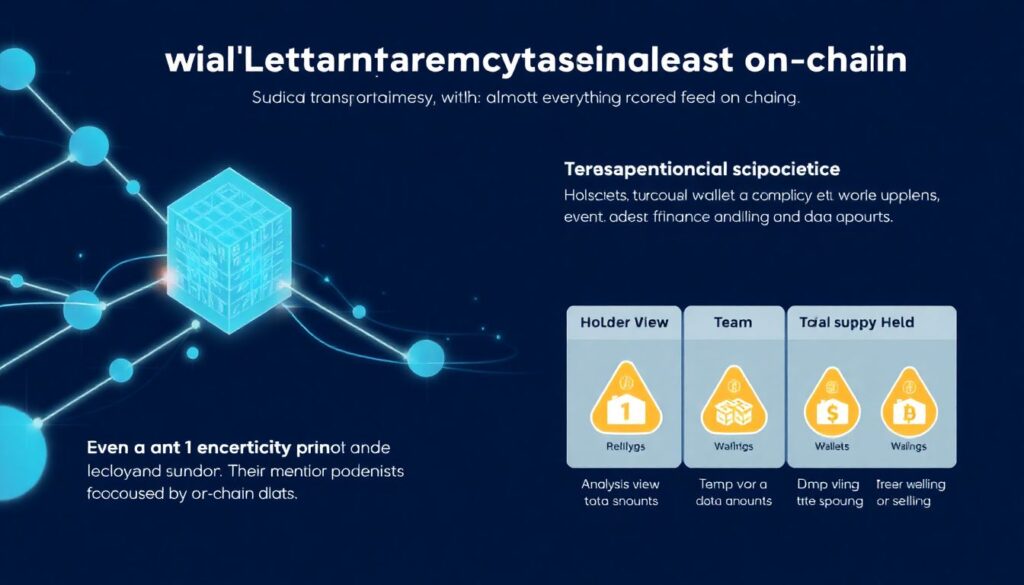
One of the advantages of crypto is radical transparency: almost everything is on-chain. For evaluating credibility, this is gold.
Even without being a data scientist, you can:
– Check holder concentration: how much supply is in the top 10 wallets?
– Inspect whether team/treasury wallets are dumping on DEXes
– Track contract interactions to see if usage is real or wash‑traded
Experts often highlight a practical heuristic: if 60–80% of the liquid supply is effectively controlled by a handful of wallets linked to the team or early insiders, it’s structurally dangerous, no matter how good the branding looks. Combined with aggressive marketing, this is a strong rug‑pull profile.
On-chain tools (like Etherscan, DeBank, Dune dashboards, etc.) let you see if liquidity is locked, if LP tokens are burned, and whether contract ownership was renounced or moved to a multi‑sig. These technical details directly affect *how to avoid crypto scams and rug pulls* in practice.
—
The human layer: communication, governance, and culture
Crypto is socio‑technical. Even perfect smart contracts can be steered poorly by humans. That means communication quality is a real credibility signal.
Look for:
– Detailed, regular updates instead of only hype posts
– Clear explanations of risks, not just upside scenarios
– Evidence the team responds to critical questions — not only praise
In governance-centric projects, check participation rates, distribution of voting power, and whether proposals are substantive or just rubber‑stamping team decisions. A DAO where 90% of votes are controlled by the core team isn’t decentralized governance — it’s a branding layer.
Experts advise paying particular attention to how teams behave under stress: exploits, market crashes, listing problems. Projects that publish transparent post‑mortems and compensate users where possible signal long‑term thinking. Those that disappear for days or blame “FUD” for everything are showing you exactly how future crises will be handled.
—
Building your own crypto due diligence checklist
Instead of relying on vibes, convert all this into a simple, repeatable process you can apply in under an hour as a first pass.
Example items you might include:
– Team & identity: verifiable founders or, if anonymous, strong technical footprint and robust contract controls
– Code & audits: public repos, verified contracts, at least one reputable audit tied to current contracts
– Tokenomics: transparent allocation, clear vesting, credible token utility
– On-chain data: holder distribution, liquidity status, contract ownership, real usage
– Communication: consistent, transparent updates; realistic timelines; honest discussion of risks
Treat this as your personal firewall. Any project failing multiple checks moves into the “speculative flier” bucket at best — and for most people, that bucket should be small.
—
Examples of credible vs. fragile patterns in the wild
Rather than naming specific tokens, let’s talk patterns experts see repeatedly.
Credible pattern:
– Multi‑year public track record from the team in open-source or crypto
– Core protocol launched on testnet first, then mainnet with limited features
– Audits published before major TVL arrives, with follow‑up assessments
– Gradual decentralization: multi‑sig control early, then governance distribution
– Token utility directly tied to fees, security, or resource allocation in the system
Fragile or dubious pattern:
– Token first, product later — or never
– No verifiable team history, heavy use of stock photos and generic bios
– Aggressive marketing and influencer campaigns before any working code
– Extremely skewed token allocation (e.g., >40% to team and insiders)
– Sudden liquidity withdrawals or contract changes with no advance notice
When people try to spot the *best crypto projects to invest in 2025*, the projects that tend to survive and compound are closer to the first pattern: slower marketing, more shipping, clearer alignment between token and protocol.
—
Frequent misconceptions that cost people money
Several myths keep getting investors wrecked because they’re comforting, but wrong.
1. “Audited means safe.”
Audits reduce risk; they don’t eliminate it. Scope can be limited, and exploits often emerge from integration points or post-audit changes. Always verify that the deployed contracts match the audited ones.
2. “Big backers = guaranteed success.”
Top VCs and funds are fallible. They often invest in baskets, expecting some to go to zero. Their presence is a signal, not a guarantee. Also, their vesting schedules might create future sell pressure.
3. “High APY = great opportunity.”
Triple‑digit yields are almost always compensating for smart contract or token risk. If the yield is paid in a token with no sustainable demand, you’re effectively getting more of something that may trend to zero.
4. “Anonymous = scam; doxxed = safe.”
There are reputable anonymous teams and fully doxxed founders who have rug‑pulled. Identity affects *how* you evaluate a project, but it’s just one axis, not a binary filter.
5. “If it’s on a big exchange, it must be legit.”
Listings reflect business decisions, not regulatory approval or code safety. You still need to know *how to research a cryptocurrency before investing* — the exchange doesn’t do full due diligence for you.
—
Putting it all together: a practical process you can reuse
To operationalize this, think in stages:
– Stage 1 — Fast filter (10–20 minutes):
Scan the website, whitepaper, docs, and basic tokenomics. Check team claims, quick on-chain stats, and any audits. If you hit hard red flags (no clarity on token supply, anonymous team + full contract control, zero code), stop.
– Stage 2 — Structured review (30–60 minutes):
Run through your full checklist: deeper on-chain inspection, community channels, commit history, governance activity. Compare what’s claimed in marketing with what’s verifiable on-chain.
– Stage 3 — Position sizing and timing:
If it passes, decide how much risk it deserves. Early-stage, unproven but interesting? Maybe a small experimental allocation. More mature, audited, with real usage? Maybe a core position. Tie your decision to vesting schedules and major unlocks.
This approach doesn’t guarantee outcomes, but it systematically improves your odds and drastically lowers your exposure to obvious frauds. It’s the practical foundation of *how to avoid crypto scams and rug pulls* without having to be a full‑time analyst.
—
Final expert pointers
A few closing recommendations distilled from seasoned investors and auditors:
– Treat every new project as guilty until proven otherwise by evidence
– Be more skeptical when marketing intensity is inversely proportional to shipped code
– Never ignore token unlock calendars — they’re gravity for price action
– Diversify across narratives and timeframes, not just token tickers
– Size positions so you can survive being wrong without emotional or financial damage
Crypto will always have a speculative layer, but your process doesn’t have to be speculative. With a disciplined, evidence‑driven framework, you can filter noise, spot structurally sound ecosystems, and decide for yourself which might realistically become the *best crypto projects to invest in 2025* — without relying on hype cycles or anonymous tips.