
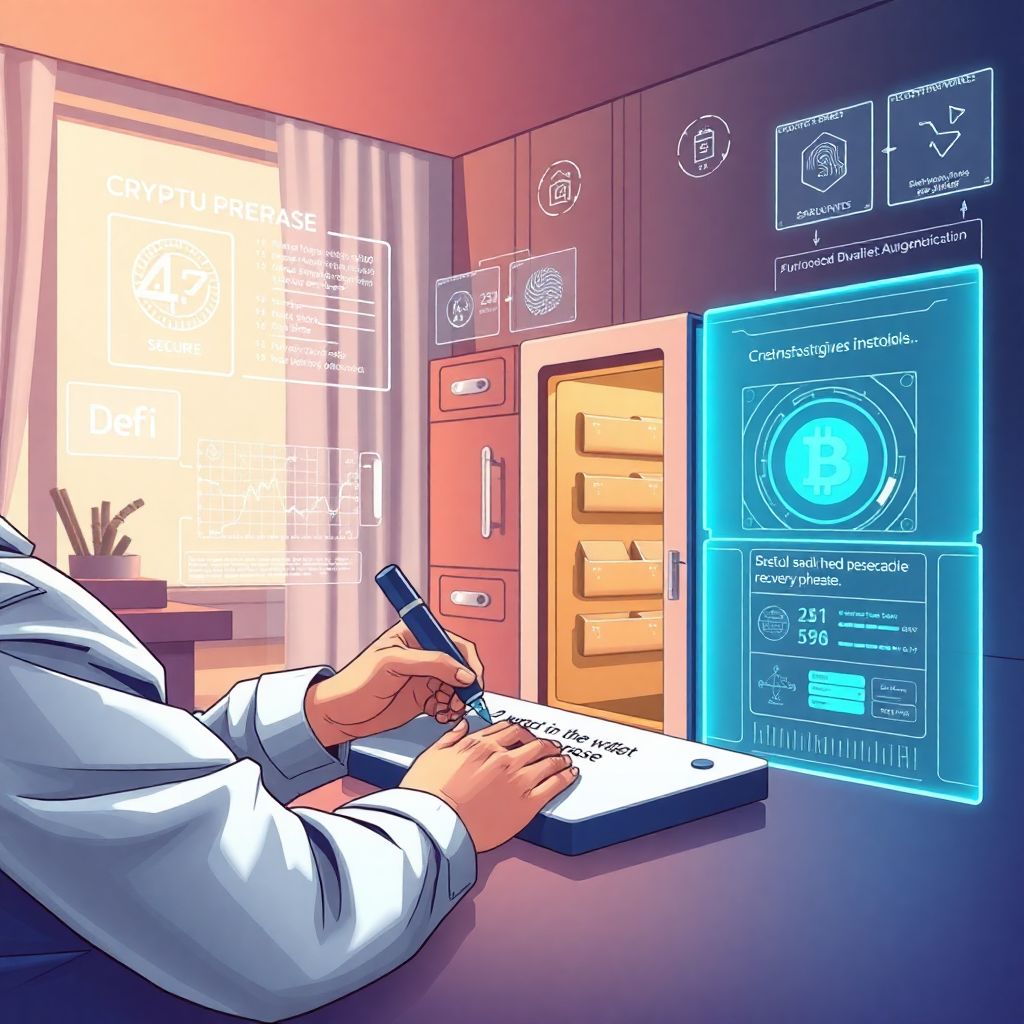
Understanding Crypto Hardware Wallet Recovery Phrases: A 2025 Beginner’s Guide
Historical Context and Evolution of Wallet Recovery
The concept of a recovery phrase, also known as a seed phrase or mnemonic phrase, emerged alongside the development of hierarchical deterministic (HD) wallets, standardized through BIP-32 and BIP-39 proposals in Bitcoin’s early years. Before 2013, users typically had to back up individual private keys for each address, a cumbersome and error-prone process. The introduction of BIP-39 in 2013 revolutionized wallet backup procedures by enabling users to secure all their crypto assets with a single human-readable phrase.
By 2025, the use of recovery phrases has become a cornerstone of self-custody in the crypto ecosystem. As decentralized finance (DeFi) and non-custodial services grow in adoption, understanding how to manage and protect recovery phrases is now more critical than ever.
What Is a Recovery Phrase?

A recovery phrase is a sequence of 12, 18, or 24 words generated by a hardware wallet during initial setup. It represents the root of the cryptographic key tree from which all private keys and addresses are derived. These words are selected from a predefined wordlist (typically the English BIP-39 list of 2048 words) and must be stored securely offline.
The recovery phrase enables users to restore access to their wallet and funds if the physical device is lost, damaged, or stolen. It is essentially the master key to all associated crypto assets.
Statistical Insights: Usage and Risks
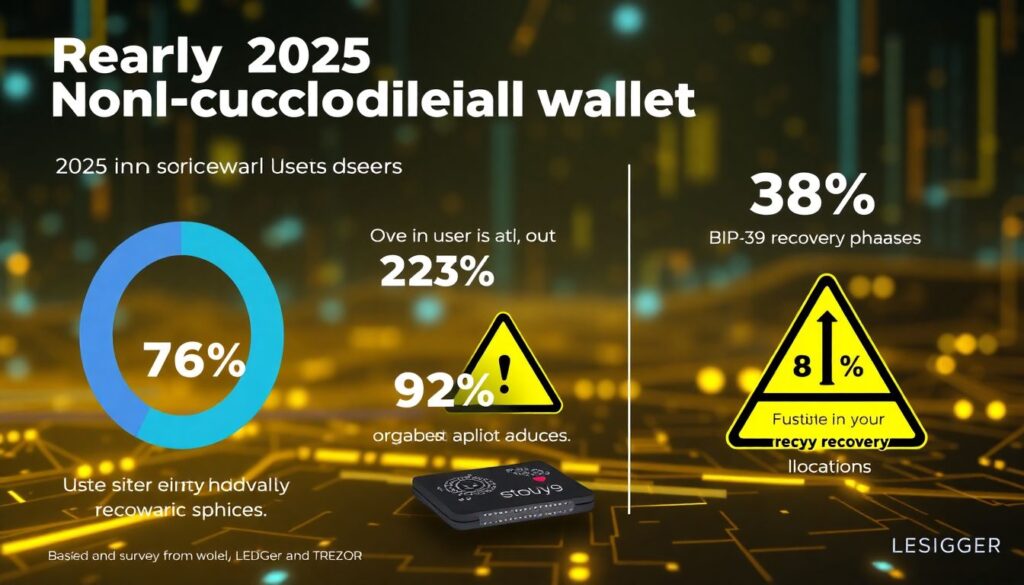
As of early 2025, over 76% of non-custodial wallet users rely on hardware wallets, according to data from Chainalysis. Among these, 92% utilize BIP-39-compatible recovery phrases. However, surveys conducted by Ledger and Trezor indicate that 38% of users store their recovery phrases in insecure locations, such as cloud services or unencrypted digital notes.
Furthermore, a report by CipherTrace in late 2024 revealed that approximately $1.2 billion in crypto assets were irretrievably lost due to mishandling or loss of recovery phrases. This underscores the importance of user education and secure storage practices.
Economic Implications of Recovery Phrase Mismanagement
The economic impact of lost or compromised recovery phrases is profound. Unlike traditional banking systems, where lost credentials can often be recovered through centralized authorities, blockchain-based systems are immutable and decentralized. If a recovery phrase is lost, the associated assets become permanently inaccessible.
This phenomenon has led to the emergence of ancillary markets and services, including:
– Secure backup solutions: Companies like Cryptosteel, Billfodl, and SafePal offer fireproof and waterproof metal plates for phrase storage.
– Key inheritance platforms: Services like Casa and Nunchuk provide multi-signature schemes that incorporate inheritance planning.
– Insurance mechanisms: Some custodial wallets now offer insurance against seed phrase loss, though this contradicts the principle of full self-custody.
The demand for such services is expected to grow as more institutional and retail investors enter the crypto space.
Forecast: Future Trends in Wallet Recovery
Looking ahead, the industry is shifting towards more user-friendly and secure recovery methods. Emerging standards include:
– Shamir’s Secret Sharing (BIP-39 alternative): Splits a recovery phrase into multiple parts requiring a threshold to reconstruct.
– Biometric and hardware-bound authentication: Future wallets may integrate secure enclave chips and biometric verification to eliminate or augment seed phrases.
– Social recovery protocols: Used in smart contract wallets like Argent, these allow trusted parties to assist in account recovery without revealing the seed.
By 2027, analysts from Messari predict that over 40% of new wallets will adopt non-BIP-39 recovery mechanisms, reducing reliance on static seed phrases.
Best Practices for Beginners
For those new to crypto hardware wallets, understanding and securing your recovery phrase is non-negotiable. Follow these guidelines:
– Do:
– Write down your recovery phrase on paper or engrave it on metal.
– Store it in a physically secure location, such as a safe or vault.
– Consider using a geographically distributed backup strategy.
– Don’t:
– Take a photo or screenshot of your recovery phrase.
– Store it in cloud services or on internet-connected devices.
– Share it with anyone, including support personnel.
Industry Impact and Standardization
The widespread adoption of recovery phrases has shaped the broader crypto industry by reinforcing the ethos of decentralization and self-sovereignty. However, it has also introduced usability challenges for mainstream adoption. Wallet manufacturers are now collaborating on open standards like SLIP-39 and BIP-85 to enhance recovery flexibility and interoperability.
As regulatory frameworks mature, especially in jurisdictions like the EU and South Korea, wallet providers may be required to offer user education modules on recovery phrase management as part of compliance with consumer protection laws.
Conclusion
Recovery phrases remain a fundamental component of crypto asset security in 2025. While they empower users with full control over their funds, they also impose a high responsibility for secure handling. As the industry evolves, so too will the methods of safeguarding digital wealth. For beginners, mastering the basics of recovery phrases is the first step toward responsible participation in the decentralized economy.